Green bean harvest in central Arkansas

Jul 8, 2008 10:26 AM, By David Bennett
Farm Press Editorial Staff

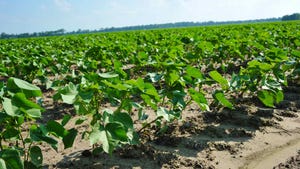
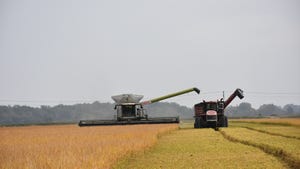
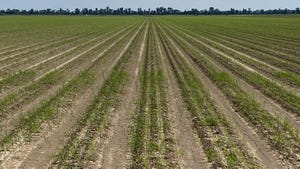
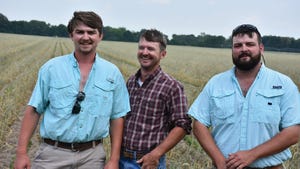
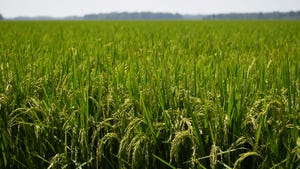
It’s the middle of June and a fleet of green bean harvesting machinery is working central Arkansas fields. Today, they’re harvesting Mark Luebke’s 70 acres in eastern Pulaski County.

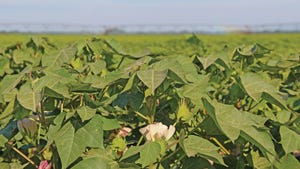
SOME 10 DAYS later than usual, the green bean harvest in central Arkansas was under way. Mark Luebke and his son, Brandon, worked 70 acres of the crop in east Pulaski County.

As with other crops, the green beans are late. “We were about 10 days late planting,” says Luebke, who has grown green beans for a decade. “All that early spring rain kept us out of the field. Green beans are usually about a 58-day crop for us.”

The green bean crop is tied to the canning/processing industry. The largest processor in Arkansas is Allen Canning out of Siloam Springs, Ark.

“Green beans are grown all over the United States under contract,” says Craig Andersen, Arkansas Extension horticulture specialist. “The harvest starts way in the south and moves north. The harvest window right now is around Scott, Ark.

“Green beans are a pretty fast crop, usually 54 to 57 days, depending on heat units. There are some historic diseases — both fungal and bacterial — a couple of viruses that could show up. But we seem able to manage them without any big problems.”

Most of the crop goes to canning. However, some eastern Arkansas green beans are grown for freezing.

The green bean industry has been largely stable for years, says Andersen. “The contractors stick with a large family of growers. I know some growers have been working with Allen Canning for generations. Those are strong relationships.”

Like others growing green beans, Luebke has his acreage under contract. “The seed is provided to us. When we settle up, all that is calculated. The people we contract with usually provide the recommendations for management.

“We have about 330 acres of rice, 1,200 acres of soybeans, 70 acres of green beans, 280 acres of corn, and 160 acres of wheat.”

What does a typical green bean season look like?

“Usually, you start planting the first of April,” says Luebke. “We used to put out a pre-emerge herbicide like Dual. Usually, we then have to go back in with a grass and broadleaf material. So, we’ve gotten to where we don’t worry much about the preplant herbicide.

“So, we plant them and cultivate them a couple of times. We pull the middles right before lay-by with a center-furrow plow. That means they water a lot easier.”

The bean field receives a preplant fertilizer and another mid-season shot of ammonium sulfate. Barring a herbicide treatment and irrigation, “we watch them closely and wait for harvest.”

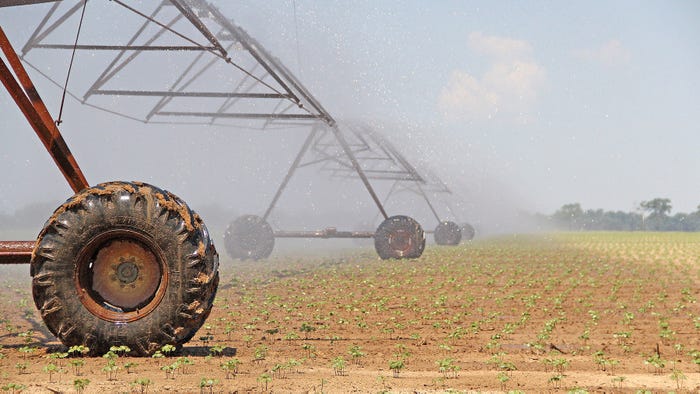
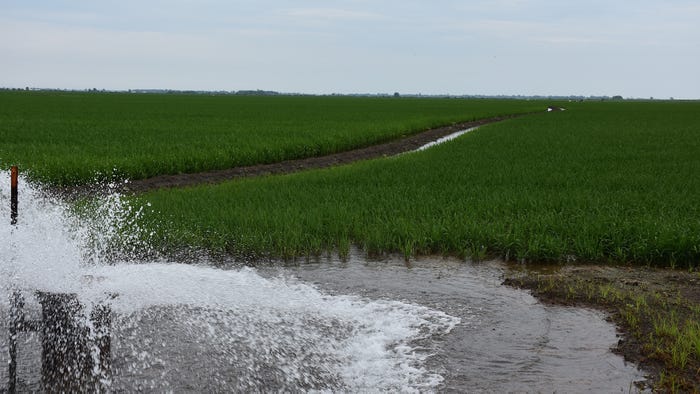
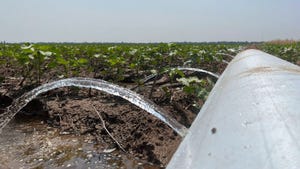
This year, Luebke had to irrigate twice. “You don’t want them to slow down in 90-degree weather. And you’ve got to be very careful watering green beans. They can’t stand more than about 10 hours at a time.”

A typical yield is from 3 tons to 5 tons per acre.

“We rotate the beans around the farm. Last year, we had 85 acres.” Usually, Arkansas row-crop farmers will grow green beans on 100 acres, or less.

“If they’re using a pivot, they’ll grow just one pivot worth,” says Andersen. “Bigger acreage probably wouldn’t work. The canners and processors have to calculate their plant capacity. So the harvest needs to be staggered and all the logistics must be considered. The acreage needed in a given area is tied to all that.”

Green beans require “a specialized type of growing and they aren’t for everyone,” says Andersen. “The crop is so fast, there’s little margin for error. It’s hard to recover from a mistake. That means growers must pay very close attention to detail.”

e-mail: dbennett@farmpress.com

Get Copyright ClearanceWant to use this article? Click here for options!
© 2008 Penton Media, Inc.


Latest Jobs

Read More Daily News

Louisiana: post-hurricane insurance, contract concerns

Oct 6, 2008 10:30 AM

Early-season and late-season weather-related disasters badly impacted Mid-South growers. ...

U.S. seeks monitoring of Chinese textile imports

Oct 6, 2008 10:27 AM

Cotton Belt congressional members joined their colleagues and the U.S. cotton and textile industry in a call to broaden a key textile import monitoring program....

Rice protein moderates resistance to infectious disease

Oct 6, 2008 10:25 AM

Researchers at the University of California, Davis, have identified a plant protein that is a key player in moderating resistance to infectious disease. ...

Alternative crops conference Nov. 12-13 in Memphis

Oct 6, 2008 10:21 AM

AgBioworks, an initiative of the Memphis Bioworks Foundation, and the Tennessee Department of Agriculture are sponsoring an alternative crops conference at the Fogelman Executive Conference Center at the University of Memphis, Nov. 12-13, 2008. ...

Becker Underwood: will expand inoculant production capacity

Oct 6, 2008 10:18 AM

Becker Underwood will significantly expand the production capacity of its St. Joseph, Mo., facility to meet increasing demand for inoculants for soybeans, peanuts, peas and lentils grown in North America....

Delta Farm Press News
Southeast Farm Press News
Southwest Farm Press News
Western Farm Press News

resources

events icon events

product info icon tradeshows

tradeshow icon digests

research icon photos

Continuing Education

For National Certified Crop Advisers

A free American Society of Agronomy-accredited one-CEU course on spray drift management.

Back to Top

Continuing Education

For National Certified Crop Advisers

A free American Society of Agronomy-accredited one-CEU course on spray drift management.

Browse Print Issues

Additional Resources

subscribe to Farm Press Daily Southeast Farm Press Southwest Farm Press Western Farm Press