USDA announces new Office Of Ecosystem Services And Markets

Dec 29, 2008 10:16 AM

USDA has announced plans to establish a new USDA Office of Ecosystem Services and Markets and to create a federal government-wide Conservation and Land Management Environmental Services Board to assist the secretary of agriculture in the development of new technical guidelines and science-based methods to assess environmental service benefits which will in turn promote markets for ecosystem services including carbon trading to mitigate climate change.

“Our nation’s farms, ranches and forests provide goods and services that are vital to society — natural assets we call “ecosystem services,” said Agriculture Secretary Ed Schafer. “The Office of Ecosystem Services and Markets will enable America’s agriculture producers to better compete, trade their services around the world, and make significant contributions to help improve the environment.”

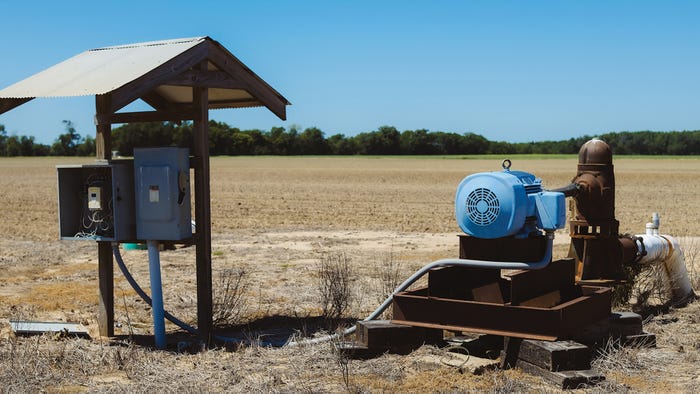
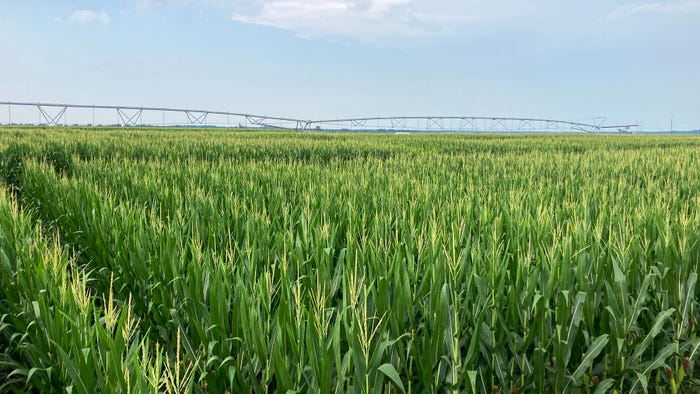
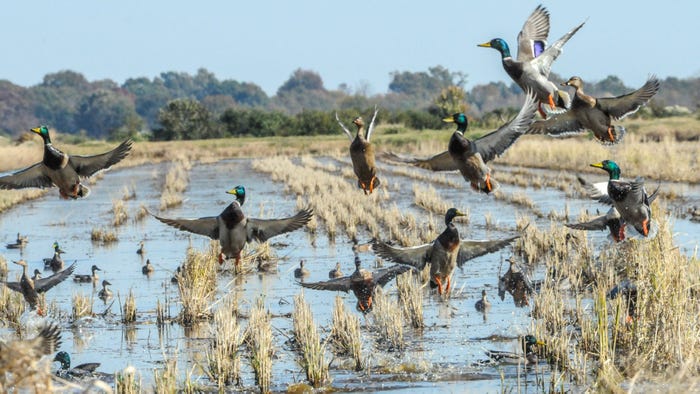
Agriculture producers provide many ecosystem services which have historically been viewed as free benefits to society — clean water and air, wildlife habitat, carbon storage, and scenic landscapes. Lacking a formal structure to market these services, farmers, ranchers and forest landowners are not generally compensated for providing these critical public benefits.

Market-based approaches to conservation are cost-effective methods to achieve environmental goals and sustain working and natural landscapes. Without financial incentives, these ecosystem services may be lost as privately-owned lands are sold or converted to development.

Shafer said he will name Sally Collins as the director of the Office of Ecosystem Services and Markets. Organizationally, OESM will have direct access to the secretary. Collins will assume this position after serving as associate chief of the USDA Forest Service for the past eight years, where she pioneered concepts for ecosystem services and markets as part of that agency’s sustainable land management mission.

OESM will provide administrative and technical assistance to the secretary in developing guidelines and tools needed to create and expand markets for ecosystem services and will support the work of the Conservation and Land Management Environmental Services Board.

As directed by the authorizing legislation, the first ecosystem services to be examined will be carbon sequestration. The Office of Ecosystem Services and Markets and the Conservation and Land Management Environmental Services Board will be established to implement actions authorized by the 2008 farm bill.

The Conservation and Land Management Environmental Services Board will be comprised of the secretaries of Interior, Energy, Commerce, Transportation, and Defense; the chairman of the Council of Economic Advisors; the director of the White House Office of Science and Technology ; the administrator of the Environmental Protection Agency; and the commander of the Army Corps of Engineers. The secretary of agriculture will chair the board. The chairman of the White House Council on Environmental Quality and the Administrator of Office of Information and Regulatory Affairs will serve as vice-chairs.

Nominations will be sought in the near future for a federally chartered public advisory committee to advise the board. The advisory committee will include farmers, ranchers, and forest landowners, tribal representatives, as well as representatives from state natural resource and environmental agencies, agriculture departments, and conservation and environmental organizations.

“Ecosystem service markets will be one of the most important and exciting new tools to improve our nation’s environment — reducing greenhouse gasses, improving water quality and expanding wildlife habitat,” said Jon Scholl, American Farmland Trust president. “The new Office of Ecosystem Services and Markets — the activities of which were authorized in the farm bill passed in June — will help make these markets a reality.”

“As the single largest user of land and water resources in the United States, agriculture has a significant impact on the nation’s environment. Agriculture also is one of the most cost effective ways to improve two of our nation’s most pressing environmental challenges — water quality and climate change. Creating markets for environmental benefits will result in enormous new opportunities for farmers and ranchers to improve the environment while expanding their sources of revenue.

“Our vision for the future is one where producers see ecosystem services as a commodity just like corn, soybeans or wheat,” Scholl said.

“We look forward to providing assistance and expertise to Susan Collins, the new USDA director, in developing these markets. We can end up with cleaner water, cleaner air, and a more economically viable agriculture sector if we do this right,” Scholl said.

Get Copyright ClearanceWant to use this article? Click here for options!
© 2009 Penton Media, Inc.


Latest Jobs

Read More Daily News

WTO awards Brazil retaliation authority

Nov 20, 2009 11:01 AM

The World Trade Organization has authorized Brazil to seek retaliation against the United States for it support of two U.S. commodity programs....

Precision ag – online course

Nov 20, 2009 10:53 AM

University of Missouri Extension is offering an eight-week online course on managing farm machinery using precision agriculture, Jan. 12 through March 4....

Soybeans — U.S. key export supplier

Nov 20, 2009 10:48 AM

Weather problems are now thought to be factored into market prices. ...

$485 million loss – Mississippi

Nov 19, 2009 3:57 PM

Mississippi State University agricultural economists calculate Mississippi farmers are suffering an estimated $485 million value loss in 2009. ...

Biofuels goal beyond ethanol

Nov 19, 2009 10:05 AM

If the U.S. is to reach the government-mandated target of producing 36 billion gallons of biofuels annually by 2022, “We will need to change the way we do business,” says a USDA official....

Delta Farm Press News
Southeast Farm Press News
Southwest Farm Press News
Western Farm Press News

resources

events icon events

product info icon tradeshows

tradeshow icon digests

research icon photos

Continuing Education


(New Course)
Weed Resistance Management in Cotton

This course covers a wide range of options to effectively control weeds in cotton and reduce the risk of weed resistance management. It is accredited for hours/units for licensed/accredited applicators in 7 U.S. Cotton Belt states (Florida, Georgia, New Mexico, Oklahoma, Texas, South Carolina an d Tennessee. CCA credit is pending).

This course is accredited in Texas, Oklahoma, New Mexico, Virginia, West Virginia and Wyoming as well as for CCA credits:

(New Course)
Spray Drift Management

Keeping crop protection chemicals on the crop for which they are intended has been a cornerstone of farming not only to protect neighboring crops, but to not waste money allowing products to drift off the intended target. This accredited online continuing education course covers the critical elements of spray drift management.

Back to Top

Browse Print Issues

Additional Resources

subscribe to Farm Press Daily Southeast Farm Press Southwest Farm Press Western Farm Press