Paying too much at the trough

Jan 15, 2008 9:18 AM, From the Arkansas Cooperative Extension Service

Paying too much at the pump has transitioned into paying too much at the feed trough.

“Like fuel, some feedstuffs today are twice as expensive compared to a few years ago,” says Shane Gadberry, assistant professor-livestock specialist with the University of Arkansas Cooperative Extension Service. Because of this, producers should shop for the most economical sources of protein and energy this winter.

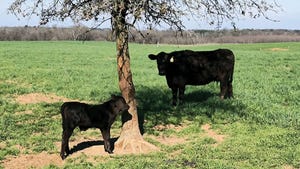
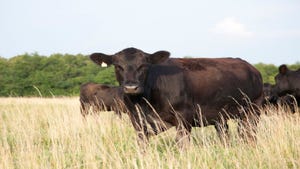
Routine hay analysis at the U of A Diagnostic lab suggests that hay is rarely deficient in protein for pregnant cows, but 40 percent of the hays are inadequate for lactating, or milk-producing, beef cows, Gadberry said. Low-intake protein supplements — like protein blocks and lick tanks — provide unnecessary protein when fed to gestating cows.

While these products are effective at providing supplemental protein, limitations on intake often results in lactating beef cattle remaining energy deficient when wintered on a hay based diet.

“The average hay won’t provide enough energy for milk-producing beef cows this winter’” Gadberry said. “To compensate for this energy deficit, these cows should either be allowed to graze winter annual pasture at least two days a week or provided calories in the form of grain or byproduct feed.”

To avoid under- or over-feeding store-purchased grain or byproducts, feeding rates should be based on a forage analysis.

A routine forage test provides enough detail to determine if the protein and energy content of the hay TDN (total digestible nutrients) are adequate. If a deficiency occurs, knowledge of forage quality can then be used to determine how many pounds of supplemental feed are required.

“Feedstuffs today vary in price as much as they do in nutrient content. In some instances, price may be more of a reflection of supply versus demand than a reflection of food value.”

As a result, knowing what nutrients are deficient and the amount of deficiency can help determine the most economical option for maintain cow body condition and reproductive performance.

Gadberry used an example of a milk-producing beef cow fed a 12 percent protein and 56 percent TDN hay.

“To overcome the energy shortfall of the hay the cow would need to consume 5 pounds of corn gluten feed or 8 pounds of rice bran a day. If corn gluten feed costs $143 a ton delivered, rice bran would need to cost no more than $89 a ton delivered.”

Get Copyright ClearanceWant to use this article? Click here for options!
© 2009 Penton Media, Inc.


Latest Jobs

Read More Daily News

Climate change not aberration

Jul 1, 2009 1:06 PM

The world’s climate is getting warmer, and that could have a profound impact on U.S. agriculture, says Jerry Hatfield, supervisory plant physiologist with USDA’s National Soil Tilth Research Laboratory at Iowa State University....

Ag tech field day at Agricenter

Jul 1, 2009 1:04 PM

Agricenter International will again host the biggest field day in the Mid-South for commercial agricultural technology at the 2009 Mid-South Ag-Technology Field Day July 16 in Memphis....

100 years: LSU AgCenter Rice Research Station

Jul 1, 2009 1:02 PM

The LSU AgCenter Rice Research Station at Crowley, La., is celebrating a century of operation this year, making it the oldest facility of its kind in the Western Hemisphere....

Glyphosate-resistance shocking

Jul 1, 2009 1:00 PM

I recently wrote in an article that I would sure like to get called out to a “normal-looking” rice field because I have looked at so many messes this year....

Downside of wildlife programs

Jul 1, 2009 10:18 AM

We quickly learn in this business that one man’s caviar and Champagne may well be just smelly fish eggs and icky grape juice to another....

Delta Farm Press News

Southeast Farm Press News

Southwest Farm Press News

Western Farm Press News

resources

events icon events

product info icon tradeshows

tradeshow icon digests

research icon photos

Continuing Education


(New Course)
Weed Resistance Management in Cotton

This course covers a wide range of options to effectively control weeds in cotton and reduce the risk of weed resistance management. It is accredited for hours/units for licensed/accredited applicators in 7 U.S. Cotton Belt states (Florida, Georgia, New Mexico, Oklahoma, Texas, South Carolina an d Tennessee. CCA credit is pending).

This course is accredited in Texas, Oklahoma, New Mexico, Virginia, West Virginia and Wyoming as well as for CCA credits:

(New Course)
Spray Drift Management

Keeping crop protection chemicals on the crop for which they are intended has been a cornerstone of farming not only to protect neighboring crops, but to not waste money allowing products to drift off the intended target. This accredited online continuing education course covers the critical elements of spray drift management.

Back to Top

Continuing Education


(New Course)
Weed Resistance Management in Cotton

This course covers a wide range of options to effectively control weeds in cotton and reduce the risk of weed resistance management. It is accredited for hours/units for licensed/accredited applicators in 7 U.S. Cotton Belt states (Florida, Georgia, New Mexico, Oklahoma, Texas, South Carolina an d Tennessee. CCA credit is pending).

This course is accredited in Texas, Oklahoma, New Mexico, Virginia, West Virginia and Wyoming as well as for CCA credits:

(New Course)
Spray Drift Management

Keeping crop protection chemicals on the crop for which they are intended has been a cornerstone of farming not only to protect neighboring crops, but to not waste money allowing products to drift off the intended target. This accredited online continuing education course covers the critical elements of spray drift management.

Browse Print Issues

Additional Resources

subscribe to Farm Press Daily Southeast Farm Press Southwest Farm Press Western Farm Press