GMO rejection — ‘fatal rush to judgment’

May 21, 2009 9:47 AM, By Hembree Brandon
Farm Press Editorial Staff

In all the controversy surrounding genetically modified crops in recent years, perhaps no segment has been more vocal in opposition than the organic foods industry.

A public comment period in 2000 generated 275,000 letters against GMOs being included in the National Organic Program.

“Many scientists, and even a few organic farmers, now believe (this) rejection was a fatal rush to judgment,” says James McWilliams, who writes widely on history and the ethics of food. He has been described as “a centrist and a reasonable voice in the middle of the food debate.”

An associate professor at Texas State University and the author of a forthcoming book, “Just Food,” McWilliams says in a article in the online magazine, Slate, entitled “The Green Monster — Could Frankenfoods be good for the environment?,” that there may be “a hidden realm of opportunity to feed the world’s impending 9 billion a diet produced in an environmentally responsible way.”

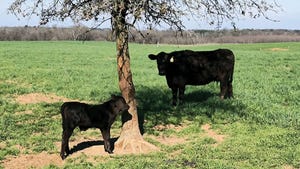
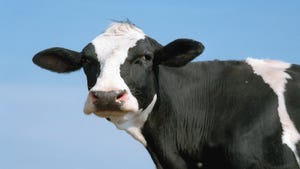
Noting that grass-fed cows are touted as a sustainable alternative to feedlot beef, he says “one overlooked drawback” to grass-fed cows is that they emit four times more methane — a greenhouse gas that’s more than 20 times as powerful as carbon dioxide — than feedlot cows.

That’s because grass contains lignin, which triggers a cow’s digestive system to secrete a methane-producing enzyme.

But, McWilliams says, an Australian biotech company, Gramina, has developed a genetically modified grass with lower amounts of lignin, resulting in less methane from cows and reduced contributions to global warming.

“Thus, environmentalists can eat their beef without hanging up their green stripes.”

He notes also that when plants fail to absorb all the nutrients from fertilizer, there can be harmful accumulations of nitrogen in the soil and leaching into rivers and streets, producing dead zones choked with algae, where marine life collapses.

Syngenta and other companies are genetically engineering crops such as rice, wheat, and potatoes to improve nitrogen uptake efficiency, McWilliams points out, suggesting that “one day farmers might have the option of planting crops that mitigate the harmful effects of this long-vilified source of agricultural pollution.”

He also cites the “enviropig,” a genetically modified pig developed by Canadian scientists that reduces “the notoriously high phosphorous level of pig manure by 60 percent.”

Also in the works are crops that can produce higher yields with less water; a dust from genetically modified ferns that can remove heavy metals from the soil; gossypol-free cottonseeds that represent a new, high protein food source; and other GM technologies that “have the potential not only to streamline production, but to play a meaningful role in reducing their carbon footprint.”

Unfortunately, McWilliams says, “the cutting room floors of research laboratories all over the world are littered with successful examples of genetically engineered products that have enormous potential to further the goals of sustainable agriculture.”

Demand for these products by farmers is high, he says, but in many cases the companies fear the “anti-GMO invective that would result.”

Given the potential of these products to reduce the environmental impact of farming, “it’s ironic that traditional advocates for sustainable agriculture have led a successful campaign to blacklist GMOs, irrespective of their applications,” McWilliams says. “At the very least, they might treat them as legitimate ethical and scientific matters deserving of a fair public hearing.”

His article can be accessed at http://www.slate.com/id/2209168/pagenum/all/ and there is an interesting National Public Radio interview with him at http://www.hereandnow.org/shows/2009/03/rundown-331/.

e-mail: hbrandon@farmpress.com

Get Copyright ClearanceWant to use this article? Click here for options!
© 2010 Penton Media, Inc.


Latest Jobs

Read More Daily News

Reduced-till and cotton seedling diseases

Feb 9, 2010 9:43 AM

Managing no-till or reduced-till cotton production properly, including following appropriate planting recommendations and taking care of early weed problems, may reduce potential for disease outbreaks....

Chicken litter — ‘smell of success’

Feb 9, 2010 9:33 AM

Having used poultry litter on his family’s Jonesboro, Ark.-area farm for years, Wayne Wiggins III is a proponent of the practice. ...

NCC: 10.1 million cotton acres

Feb 8, 2010 10:30 AM

After three straight years of declines, U.S. cotton acreage could be headed back up, according to the National Cotton Council’s 27th annual Early Season Planting Intentions Survey....

Weed resistance, Washington headline Farm & Gin Show

Feb 8, 2010 10:24 AM

This year’s Mid-South Farm and Gin Show offers “perhaps the best set of exhibits ever,” says Tim Price, manager of the annual event to be held Feb. 26-27 at the downtown Memphis Cook Convention Center....

Darneille elected CCI president

Feb 8, 2010 10:22 AM

Wallace L. (Wally) Darneille, a Lubbock, Texas, cooperative official, will serve as 2010 president of Cotton Council International, the National Cotton Council’s export promotions arm....

Delta Farm Press News
Southeast Farm Press News
Southwest Farm Press News
Western Farm Press News

resources

events icon events

product info icon tradeshows

tradeshow icon digests

research icon photos

Continuing Education


(New Course)
Weed Resistance Management in Cotton

This course covers a wide range of options to effectively control weeds in cotton and reduce the risk of weed resistance management. It is accredited for hours/units for licensed/accredited applicators in 7 U.S. Cotton Belt states (Florida, Georgia, New Mexico, Oklahoma, Texas, South Carolina an d Tennessee. CCA credit is pending).

This course is accredited in Texas, Oklahoma, New Mexico, Virginia, West Virginia and Wyoming as well as for CCA credits:

(New Course)
Spray Drift Management

Keeping crop protection chemicals on the crop for which they are intended has been a cornerstone of farming not only to protect neighboring crops, but to not waste money allowing products to drift off the intended target. This accredited online continuing education course covers the critical elements of spray drift management.

Back to Top

Browse Print Issues

Additional Resources

subscribe to Farm Press Daily Southeast Farm Press Southwest Farm Press Western Farm Press