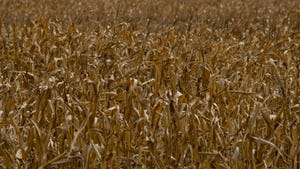
Drought tolerance can conserve water, energy

Nov 13, 2007 10:20 AM, By Hembree Brandon
Farm Press Editorial Staff

Whether you think global climate change is a serious concern that warrants an international corrective effort, or you contend it’s all a bunch of hooey dreamed up by Al Gore and a bunch of pointy-headed liberals, the incontrovertible fact is that regional climate changes — both natural and man-caused — are proceeding apace.

As rainfall patterns shift, desertification claims hundreds of thousands of additional acres; as more and more rain forest acres fall to bulldozers, erosion increases and the water cycle from plant transpiration is reduced.

These changes are focusing more attention and research on development of crop plants that can grow and produce acceptable yields with less water.

For too long in this country water has been considered an inexhaustible resource. But as with petroleum, we’re finding that isn’t the case, and we’re beginning to pay the piper in terms of scarcer, more expensive water.

Even in areas where yearly rainfall is traditionally ample, deficits are occurring (much of the Mid-South is 15 inches to 20 inches below normal thus far in 2007), droughts have been increasingly frequent and severe, and water tables have fallen. Major lakes, rivers, and streams, once water rich, have in many cases shrunk to the point that supplies are in a crisis situation for urban and rural uses alike.

The anti-agriculture folks are quick to denounce crop production as a disproportionately large user of water. The USDA says agriculture accounts for 80 percent of the nation’s consumptive water use, and over 90 percent in some western states (where many farmers are finding it more profitable to sell their water to cities than to use it for farming).

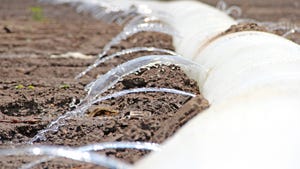
Confronted with increasing cost and scarcity, farmers have quickly adapted conservation/recovery practices and irrigation systems that use less water and distribute it more efficiently.

But that can only go so far. Developing crop plants that need less water to produce acceptable yields will be another key to keeping agriculture viable.

As genome projects for major crops provide complete maps of the plants’ chromosomal makeup, gene manipulation techniques become more sophisticated, and plant growth modeling becomes more powerful, scientists foresee crops that not only need less water, but offer tolerance to salt, temperature stresses (both heat and cold), and other environmental factors.

Significant strides are being made. In 2002, Cornell University researchers announced the development of a hardier strain of biotech rice that offers drought resistance and is more adaptable to marginal soils.

Shortly after that, USDA Agricultural Research Service scientists announced two new lines of salt-tolerant plants related to wheat (in the U.S., saline soils reduce crop yields by about 25 percent).

It takes about 125 gallons of water to produce a pound of wheat. Researchers in Egypt have been working toward commercialization of a wheat variety with a barley gene that has enabled them to cut irrigations from eight to only one.

Crops with tolerance to drought and other environmental stresses will enable farmers to not only use less precious water, but also to reduce energy costs associated with pumping.

e-mail: hbrandon@farmpress.com

Get Copyright ClearanceWant to use this article? Click here for options!
© 2010 Penton Media, Inc.


Latest Jobs

Read More Daily News

Tillage tests — ‘trash farm for profit’

Feb 9, 2010 9:47 AM

As he speaks, Merle Anders has a small prop on the table behind him: a baseball cap inscribed with “Trash Farming for Profit.” ...

Reduced-till and cotton seedling diseases

Feb 9, 2010 9:43 AM

Managing no-till or reduced-till cotton production properly, including following appropriate planting recommendations and taking care of early weed problems, may reduce potential for disease outbreaks....

Chicken litter — ‘smell of success’

Feb 9, 2010 9:33 AM

Having used poultry litter on his family’s Jonesboro, Ark.-area farm for years, Wayne Wiggins III is a proponent of the practice. ...

NCC: 10.1 million cotton acres

Feb 8, 2010 10:30 AM

After three straight years of declines, U.S. cotton acreage could be headed back up, according to the National Cotton Council’s 27th annual Early Season Planting Intentions Survey....

Weed resistance, Washington headline Farm & Gin Show

Feb 8, 2010 10:24 AM

This year’s Mid-South Farm and Gin Show offers “perhaps the best set of exhibits ever,” says Tim Price, manager of the annual event to be held Feb. 26-27 at the downtown Memphis Cook Convention Center....

Delta Farm Press News
Southeast Farm Press News
Southwest Farm Press News

Western Farm Press News
resources

events icon events

product info icon tradeshows

tradeshow icon digests

research icon photos

Continuing Education


(New Course)
Weed Resistance Management in Cotton

This course covers a wide range of options to effectively control weeds in cotton and reduce the risk of weed resistance management. It is accredited for hours/units for licensed/accredited applicators in 7 U.S. Cotton Belt states (Florida, Georgia, New Mexico, Oklahoma, Texas, South Carolina an d Tennessee. CCA credit is pending).

This course is accredited in Texas, Oklahoma, New Mexico, Virginia, West Virginia and Wyoming as well as for CCA credits:

(New Course)
Spray Drift Management

Keeping crop protection chemicals on the crop for which they are intended has been a cornerstone of farming not only to protect neighboring crops, but to not waste money allowing products to drift off the intended target. This accredited online continuing education course covers the critical elements of spray drift management.

Back to Top

Browse Print Issues

Additional Resources

subscribe to Farm Press Daily Southeast Farm Press Southwest Farm Press Western Farm Press