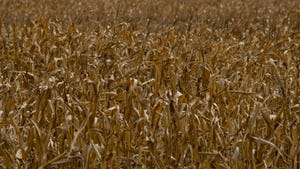
Corn demand causes catfish prices to rise

Jan 18, 2007 10:38 AM, By Robert H. Wells
Delta Research and Extension Center

The increasing global demand for corn, a primary ingredient in catfish feed, will cause production costs to continue to rise, making it more difficult for producers to earn a profit. “Our feed prices are not going to go down,” said Mississippi State University agricultural economist Terry Hanson. He was speaking to a crowd of catfish farmers and researchers at the recent National Warmwater Aquaculture Center seminar at the MSU Delta Research and Extension Center in Stoneville, Miss. “We are in an interconnecting, global environment, and things that happen around the world affect us, as do things that happen inside the United States.”

“This year, Australia had a terrible drought, and their wheat production is down by 75 percent,” Hanson said. “They’re one of the countries in the world that feed wheat to their animals. They’re not going to have that wheat available now, so they are going to switch to corn.

“And people that used to buy exports of wheat from Australia to feed their animals are now going to scramble to find other supplies to feed, and they’re going to be looking for corn as well.”

Further increasing the market value of corn, Hanson said, are the nation’s lower corn production for 2006 and the national push for more biofuel usage of corn.

“There’s been a lot of talk recently about being secure in our own fuel supply, so Congress has put quite a few dollars into encouraging ethanol production,” Hanson said. “We’re going to see more and more demand on corn, which is going to increase the price.”

Hanson also predicts that U.S. producers will be planting more corn in 2007 to take advantage of the high market value, which will remove more soybean acreage from production. Soybeans are another major ingredient in catfish feed.

“That will increase the supply of corn, but it leaves us short in the soybean area, which is another major input,” Hanson said. “So probably we’re going to see an increase in soybean costs as well. With these two going up, our catfish feed is probably going to go up in price.”

Hanson said farmers may want to consider advance booking a portion of next year’s catfish feed to avoid paying higher prices later.

“Think hard about that and check the futures prices of corn and soybeans, and get an idea of where you think prices of corn and soybeans will be next year. Advance booking a portion of your feed may be a good idea,” Hanson said.

Steve Fratesi, a catfish farmer who raises fingerlings in Leland, Miss., said he has already booked a portion of his catfish feed in anticipation of higher prices.

“I feel lucky that we booked about two-thirds of what we will use at a good price,” Fratesi said. “I just wish that I had gone 100 percent or better.”

Fratesi said he does not plan to advance book the last third of his catfish feed requirement because he wants to see if prices will eventually come down.

“I think I’m going to ride it out,” Fratesi said. “I’m holding off. I’m not going to book scared right now.”

Fratesi said he is counting on a possible increase in production of corn, soybeans and wheat from North America and South America to help drive the price of catfish feed down by summer.

Roger Yant, a catfish fingerling producer in Sunflower, Miss., said he also will hold off on booking his feed at the current price.

“I think we’ll just watch the market and hope that it will come down before next year,” Yant said.

Hanson said lower catfish prices also may be on the horizon.

“Inventories seem to be stable for the foodsize fish,” Hanson said. “You’ve got increasing fingerlings and stockers, so that indicates we’re going to be seeing more foodfish on the market by end of next year. That may lead to stable or lower prices than we’re seeing right now at 85 cents per pound,” Hanson said.

Hanson said 4.2 million pounds of basa and tra, competing fish from Asia, are being shipped into the United States each month. He said this is a 235 percent increase from last year. Despite rising feed prices and concerns about imports, Hanson reminded the crowd that catfish is No. 5 in the top 10 U.S.-consumed fish and seafood species. About 330 million pounds of catfish are consumed annually.

“From the demand side, consumers really do like catfish,” Hanson said. “Price, availability and recipes are three things that consumers have said would increase their consumption. If we can get creative with the price, availability and recipes, we can increase consumption.”

The economist said consumption of catfish has more than doubled in the last two decades from less than half a pound of catfish consumed per person per year in 1985 to 1.1 pounds per person in 2004.

Hanson also reported that pond-bank value is up 18.4 percent and pond-bank price is up 11 cents per pound from September 2005.

e-mail: rwells@drec.msstate.edu

Get Copyright ClearanceWant to use this article? Click here for options!
© 2010 Penton Media, Inc.


Latest Jobs

Read More Daily News

Tillage tests — ‘trash farm for profit’

Feb 9, 2010 9:47 AM

As he speaks, Merle Anders has a small prop on the table behind him: a baseball cap inscribed with “Trash Farming for Profit.” ...

Reduced-till and cotton seedling diseases

Feb 9, 2010 9:43 AM

Managing no-till or reduced-till cotton production properly, including following appropriate planting recommendations and taking care of early weed problems, may reduce potential for disease outbreaks....

Chicken litter — ‘smell of success’

Feb 9, 2010 9:33 AM

Having used poultry litter on his family’s Jonesboro, Ark.-area farm for years, Wayne Wiggins III is a proponent of the practice. ...

NCC: 10.1 million cotton acres

Feb 8, 2010 10:30 AM

After three straight years of declines, U.S. cotton acreage could be headed back up, according to the National Cotton Council’s 27th annual Early Season Planting Intentions Survey....

Weed resistance, Washington headline Farm & Gin Show

Feb 8, 2010 10:24 AM

This year’s Mid-South Farm and Gin Show offers “perhaps the best set of exhibits ever,” says Tim Price, manager of the annual event to be held Feb. 26-27 at the downtown Memphis Cook Convention Center....

Delta Farm Press News

Southeast Farm Press News

Southwest Farm Press News
Western Farm Press News

resources

events icon events

product info icon tradeshows

tradeshow icon digests

research icon photos

Continuing Education


(New Course)
Weed Resistance Management in Cotton

This course covers a wide range of options to effectively control weeds in cotton and reduce the risk of weed resistance management. It is accredited for hours/units for licensed/accredited applicators in 7 U.S. Cotton Belt states (Florida, Georgia, New Mexico, Oklahoma, Texas, South Carolina an d Tennessee. CCA credit is pending).

This course is accredited in Texas, Oklahoma, New Mexico, Virginia, West Virginia and Wyoming as well as for CCA credits:

(New Course)
Spray Drift Management

Keeping crop protection chemicals on the crop for which they are intended has been a cornerstone of farming not only to protect neighboring crops, but to not waste money allowing products to drift off the intended target. This accredited online continuing education course covers the critical elements of spray drift management.

Back to Top

Browse Print Issues

Additional Resources

subscribe to Farm Press Daily Southeast Farm Press Southwest Farm Press Western Farm Press