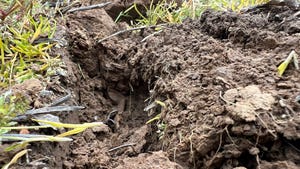
Louisiana soybean farmers face another challenging year

Jul 27, 2006 7:00 AM, By David Bennett
Farm Press Editorial Staff

While more exact soybean acreage numbers were still a few days away, Louisiana’s planting intentions were at 950,000 to 980,000 acres.

LANCLOS

“Those numbers appear to be realistic if not on the low side,” said David Lanclos, LSU AgCenter soybean specialist at the Rice Research Station field day in Crowley, La., in late June.

The big story in 2006 is the whooping Mother Nature is again administering to Louisiana farmers.

“Statewide, this is one of the worst years we’ve experienced. The entire state is struggling. (Producers) who aren’t accustomed to being dry are definitely suffering. Those not irrigating are suffering the most.”

Southwest Louisiana has been the hardest hit, by far.

“Not only have hurricanes hit here but (numerous) bad environmental conditions. We’ve taken some bad blows but we’re going to keep (moving forward).”

On the positive side of the ledger, insects and disease have been relatively quiet in the state’s crop.

“While we’re seeing some of the same traditional problems, most have been agronomically related,” he said.

Date of planting is always a concern for farmers.

“Overall, we’re in pretty good shape. (Producers) are spending more time on variety selection and are doing a better job of picking maturity groups and deciding when to plant. In these drought conditions many have delayed planting. We have guys continuing to plant even now (late June), primarily in southwest Louisiana.”

As it’s late June, producers are definitely outside the recommended planting date window. What to do if they still need to plant?

“You need to plant a Group 5…You want to watch the plant population and make sure it’s at least 130,000-plus. In addition, if possible, you need to decrease your row-spacing. Narrow it if possible…and remain vigilant on IPM practices.”

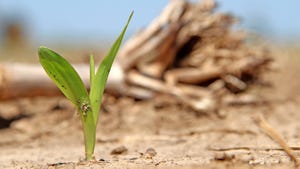
Two things have shown up more this year than Lanclos has seen during his tenure: stunting and premature blooms.

“They’re causing quite a bit of alarm. Right now, we’re essentially over the hump with this. We’ve had some rainfall in certain areas that’s alleviated the situation. Even so, the crop is shorter in stature.”

Will that mean yield loss?

“Not necessarily — especially in Group 4s. If you planted them in the proper window, they have a tremendous resiliency to branch out and increase yields.

“We’ve had a lot of guys calling, ‘Man, my Group 4s are 4 inches tall and they’re already blooming. What’s the problem here?’ I said, ‘Don’t be too alarmed.’”

It’s a rule of thumb that when Group 4s hit R-1, they’ll eventually double in height.

“By R-1, they’ve reached 40 to 50 percent of their plant height. In contrast, when Group 5s reach R-1, they’re already at 80 to 90 percent of their eventual height.”

Lanclos rates the collective soybean crop fair to good.

“I’m still optimistic about where we’re going. But we need rainfall.”

e-mail: dbennett@farmpress.com

Get Copyright ClearanceWant to use this article? Click here for options!
© 2009 Penton Media, Inc.


Latest Jobs

Read More Daily News

Arkansas loss near quarter billion dollars

Nov 6, 2009 2:56 PM

A wetter-than-normal growing season has cut into Arkansas’ farm receipts by more than $224.8 million as of Nov. 1, according to a preliminary report issued by the University of Arkansas Division of Agriculture....

Cotton: a lot on the ground

Nov 6, 2009 11:13 AM

Cotton losses due to record rainfall during September and October in Mississippi totaled $71 million by early November, or nearly half the value of the expected crop, according to the Mississippi Department of Agriculture and Commerce....

Rep. Cassidy: rethink conservation efforts

Nov 6, 2009 11:02 AM

The only Louisianan on the House Agriculture Committee, Rep. Bill Cassidy tries to keep his state’s agricultural interests at the forefront....

Residuals in LibertyLink program

Nov 6, 2009 10:57 AM

Before continuing with my pigweed control articles, I have tried to think of something encouraging to say about trying to get a crop out with the weather we are having. ...

Letter: Mule-headed bunch of farmers

Nov 6, 2009 10:54 AM

I was greatly disappointed in Morgan Freeman’s recent comments referring to the base stock of this state as a mule-headed bunch of farmers (see Behind the curtain: ‘mule-headed farmers’?). ...

Delta Farm Press News
Southeast Farm Press News

Southwest Farm Press News

Western Farm Press News
resources

events icon events

product info icon tradeshows

tradeshow icon digests

research icon photos

Continuing Education


(New Course)
Weed Resistance Management in Cotton

This course covers a wide range of options to effectively control weeds in cotton and reduce the risk of weed resistance management. It is accredited for hours/units for licensed/accredited applicators in 7 U.S. Cotton Belt states (Florida, Georgia, New Mexico, Oklahoma, Texas, South Carolina an d Tennessee. CCA credit is pending).

This course is accredited in Texas, Oklahoma, New Mexico, Virginia, West Virginia and Wyoming as well as for CCA credits:

(New Course)
Spray Drift Management

Keeping crop protection chemicals on the crop for which they are intended has been a cornerstone of farming not only to protect neighboring crops, but to not waste money allowing products to drift off the intended target. This accredited online continuing education course covers the critical elements of spray drift management.

Back to Top

Continuing Education


(New Course)
Weed Resistance Management in Cotton

This course covers a wide range of options to effectively control weeds in cotton and reduce the risk of weed resistance management. It is accredited for hours/units for licensed/accredited applicators in 7 U.S. Cotton Belt states (Florida, Georgia, New Mexico, Oklahoma, Texas, South Carolina an d Tennessee. CCA credit is pending).

This course is accredited in Texas, Oklahoma, New Mexico, Virginia, West Virginia and Wyoming as well as for CCA credits:

(New Course)
Spray Drift Management

Keeping crop protection chemicals on the crop for which they are intended has been a cornerstone of farming not only to protect neighboring crops, but to not waste money allowing products to drift off the intended target. This accredited online continuing education course covers the critical elements of spray drift management.

Browse Print Issues

Additional Resources

subscribe to Farm Press Daily Southeast Farm Press Southwest Farm Press Western Farm Press