Brandon: A vision for rural America

Aug 25, 2005 5:27 AM, By Hembree Brandon

When Tom Dorr finished high school, he went away to college, and after earning his degree, returned to the family farm in the heartland of rural America.

BRANDON

He went on to run the farm and other businesses, was active in state and national commodity organizations, was a director of the Federal Reserve Bank of Chicago, and then was named by President Bush to the post of Under Secretary for Rural Development at USDA.

“I was the only one in my high school class to come back after college,” he says. “The others felt their opportunities were elsewhere.”

That is a scenario Dorr would like there to be less of in the years ahead, and he wants USDA’s rural development programs to be a catalyst for making the nation’s non-metropolitan areas more attractive for people to live, work, and raise families.

With almost missionary zeal, he passionately paints a picture of a rural America that can be reawakened and revitalized through technology, education, economic opportunities, and an increasing desire of urbanites to relocate to the countryside.

“If we see agriculture’s future as just traditional farming, I think we’re spinning our wheels,” Dorr said in recent conversation with a group of agricultural journalists.

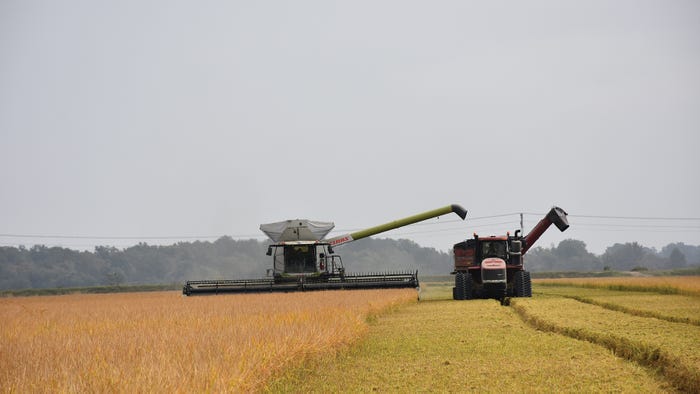
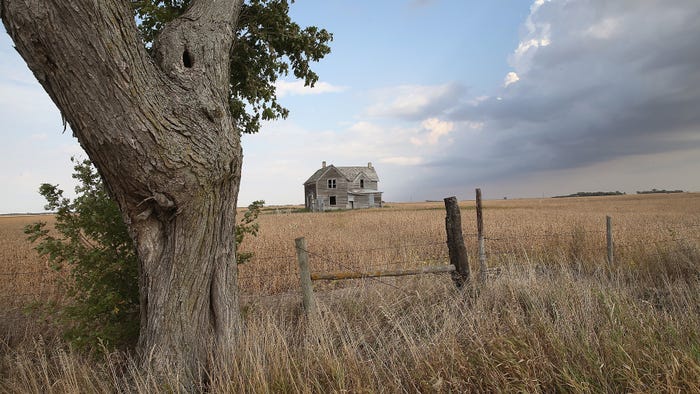
Too many people, he says, have “a mental picture of an isolated, timeless world — American gothic. But that image has evolved to one of mechanization, hybridization, biotechnology, and world markets. It’s a brave new world.”

Intellectually-driven opportunities, aided by the Internet and broadband communications, “can take place anywhere,” Dorr says, and USDA’s rural development programs can help facilitate the acquisition of skills and resources to foster those opportunities.

“Rural areas have an enormous competitive advantage in abundant land, clean environment, and a highly motivated workforce. Thanks to modern communications and transportation, the traditional barriers of time, distance, and rural isolation are crumbling.”

President Bush early on in his administration set “a fairly aggressive policy for rural America,” he says, and further demonstrating its importance, of the questions Secretary of Agriculture Johanns has been asking in his listening sessions preliminary to a new farm bill, “two of the six deal with rural development.”

More importantly, Dorr notes, is that funding for rural development programs has gone from $5.8 billion in 1995 to $14.8 billion last year.

“Not many years ago, rural development was handled by three separate agencies, and efforts were more reactive than proactive. Today, it’s a substantially different agency, with a very aggressive branding campaign and an expanded mission to make our programs more market-driven.”

Two of the “great opportunities” for rural America, Dorr says, are energy and place. The recently-passed energy bill has $2.6 billion for ethanol and funding for other alternate energy projects, including biomass. The challenge is to position rural America to recognize and capitalize on the “enormous upside potential” in these opportunities, he says.

And says Dorr, as technology and communications free more people to work and live anywhere, with access to capital and markets, “one of the great advantages for rural America is a sense of place” and a wish to enjoy the benefits of life outside the cities.

e-mail: hbrandon@primediabusiness.com

Get Copyright ClearanceWant to use this article? Click here for options!
© 2010 Penton Media, Inc.


Latest Jobs

Read More Daily News

Reduced-till and cotton seedling diseases

Feb 9, 2010 9:43 AM

Managing no-till or reduced-till cotton production properly, including following appropriate planting recommendations and taking care of early weed problems, may reduce potential for disease outbreaks....

Chicken litter — ‘smell of success’

Feb 9, 2010 9:33 AM

Having used poultry litter on his family’s Jonesboro, Ark.-area farm for years, Wayne Wiggins III is a proponent of the practice. ...

NCC: 10.1 million cotton acres

Feb 8, 2010 10:30 AM

After three straight years of declines, U.S. cotton acreage could be headed back up, according to the National Cotton Council’s 27th annual Early Season Planting Intentions Survey....

Weed resistance, Washington headline Farm & Gin Show

Feb 8, 2010 10:24 AM

This year’s Mid-South Farm and Gin Show offers “perhaps the best set of exhibits ever,” says Tim Price, manager of the annual event to be held Feb. 26-27 at the downtown Memphis Cook Convention Center....

Darneille elected CCI president

Feb 8, 2010 10:22 AM

Wallace L. (Wally) Darneille, a Lubbock, Texas, cooperative official, will serve as 2010 president of Cotton Council International, the National Cotton Council’s export promotions arm....

Delta Farm Press News
Southeast Farm Press News

Southwest Farm Press News

Western Farm Press News

resources

events icon events

product info icon tradeshows

tradeshow icon digests

research icon photos

Continuing Education


(New Course)
Weed Resistance Management in Cotton

This course covers a wide range of options to effectively control weeds in cotton and reduce the risk of weed resistance management. It is accredited for hours/units for licensed/accredited applicators in 7 U.S. Cotton Belt states (Florida, Georgia, New Mexico, Oklahoma, Texas, South Carolina an d Tennessee. CCA credit is pending).

This course is accredited in Texas, Oklahoma, New Mexico, Virginia, West Virginia and Wyoming as well as for CCA credits:

(New Course)
Spray Drift Management

Keeping crop protection chemicals on the crop for which they are intended has been a cornerstone of farming not only to protect neighboring crops, but to not waste money allowing products to drift off the intended target. This accredited online continuing education course covers the critical elements of spray drift management.

Back to Top

Browse Print Issues

Additional Resources

subscribe to Farm Press Daily Southeast Farm Press Southwest Farm Press Western Farm Press