No way to till out of soil problem

What is in this article?:

• It is important to understand there is no single tillage tool, crop or management practice that will solve a soil quality problem. Building soil quality means managing the entire farming system — tillage and planting practices, cropping systems and rotations, harvest and traffic patterns.

You cannot till, nor can you no-till your way out of a soil quality problem.

Additional organic inputs such as crop residue, manure and cover crops are needed to increase organic matter and water holding capacity, improve aggregate stability and water infiltration and build soil quality in many other ways.

Cropping systems that reduce tillage intensity, incorporate cover crops when practical and make efficient use of manure or other organic inputs in the crop rotation can build soil quality and productivity and protect the environment in many ways.

Low-disturbance tillage and soil conservation practices that stabilize soil will keep nutrients in the root zone and protect surface waters from runoff and sedimentation. Cover crops trap and recycle crop nutrients and filter contaminants in runoff. They also increase water infiltration compared to soil without cover crops.

What is soil quality?

Soil quality brings together the physical, chemical and biological characteristics that enhance the soil’s ability to produce quality crops and protect the environment.

Some of the physical characteristics of good quality soil are an optimal structure for stand establishment and crop/root growth, stable aggregate structure and the ability to provide for water infiltration, drainage and aeration.

Some of the biological factors are the ability to mobilize nutrients when needed for crop growth yet minimize leaching loss, and the ability to maintain a balance of pests and pathogens.

Finally, some of thechemical factors indicating good soil quality are the ability to supply the nutrients needed for crop growth and the ability to retain nutrients in the upper soil layer.

If cropping systems are managed to create conditions that build and protect soil quality, the soil will be more resilient and productive. If the soil is overwhelmed by excessive tillage, traffic or erosion from wind and water, loss of nutrients and organic matter, or crop rotations that upset the biological balance of pests, pathogens and soil microbes, efficient and profitable crop production will be a challenge.

Create a comfortable seed environment

A goal in efficient crop production is to create an optimal seed environment. An optimal environment provides the right soil temperature and moisture and allows seed-to-soil contact for rapid germination and emergence, maintains good soil tilth for root growth and drainage, and conserves moisture for plant use.

Managing the farming system for soil quality can be a challenge, yet many producers are changing their farming systems with soil quality in mind.

It is important to understand there is no single tillage tool, crop or management practice that will solve a soil quality problem. Building soil quality means managing the entire farming system — tillage and planting practices, cropping systems and rotations, harvest and traffic patterns.

Discuss this Article 6

Tim Gieseke (not verified)
on Dec 8, 2011

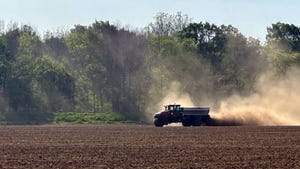
You may want to follow the tillage experiment conducted in southern Minnesota this fall. Many of us have not received rain since late July and after harvest most farmers did heavy tillage ripping out large chunks of adobe-style soil. Some fields look like they are covered with large, rugged bowling balls with about the same density. Tillage equipment was ripped apart - be cautious when buying used rippers and plows in the next few years. Some ag producers went back into the fields with discs and rollers, I imagine to put Humpty Dumpty back together again. I have only been farming 15 years, so I can't tell you how the soil will be this spring, but I could not bring myself to treat my ground like that. I went with a disc - and powdered up the top 4-5 inches.

RHH from Minnesota (not verified)
on Feb 22, 2012

The worst possible thing you did was to disc those huge lumps. Mother Nature has a way to soften those chunks, so leave well enough alone. By having a rough, rough surface, you will absorb all snow melt, future rains, as well as stopping some snow from blowing away in the winter. In the spring, the soil will be very mellow, just waiting for plants to grow. Pay more attention to what your older, successful farmers have been doing. Having a pretty field is not all that great for growing crops. Watching those huge, huge farmers is not always the right thing to do. They make their living on quantity, not quality. You will see that a rough, rough field in the spring, will have a much better seedbed after tilling, than your rock hard disced field. Some famers just make their fields smooth in the fall, so they can drive faster, and race against their neighbors, to see who can get done first in the spring.

I have farmer friends in Ohio who no-till everything, and their crops always out yield the neighbor's conventional planting. On top of that, they have no tillage equipment investment, and are not constantly uprooting 40 year old weeds seeds that remain in the ground. All they have are tractors to pull the planting equipment, spray equipment, a combine, grain trucks, grain augers and grain handling equip, etc. The first time I went into their machine shed, I could not believe how little machinery invertment they actually needed. No till does not work for everyone, especially in the northern climate, where the soils do not warm as fast in the spring, as soils in Ohio.

Good luck.

carl wayne hardeman (not verified)
on Jan 31, 2013

AMEN

Anonymous (not verified)
on Dec 14, 2011

Deep tillage if next season is dry will let moisture rise. And let water get away after a big rain. Powder 4-5 inches deep may look pretty but pretty doesn't always mean money. Watch ur neighbors sometime u might learn something.sometimes try a little of what ur neighbors r doing

carl wayne hardeman (not verified)
on Jan 31, 2013

Agreed and its counterintuitive but water will only penetrate 2-3 inches in tilled soil but untilled soil will soak up much more as the water enters the tiny soil structure channels left by last years decomposed roots.

carl wayne hardeman (not verified)
on Jan 31, 2013

Plant a cover crop of plants like parsnips and turnips and red clover and rye and turn cows and goats and pigs into it and watch them get fat and turn the soil into a nice organic mixture. Lets cows and goats graze then move them and let the pigs in.

Post new comment
Sign In or register to use your Delta Farm Press ID

(optional)

Continuing Education
Potassium nitrate has a positive effect in controlling plant pests and diseases when applied...

This online CE course details sound mechanical irrigation design and management practices to...

Newsletter Signup