Twin-row beans marries wide-row and narrow row

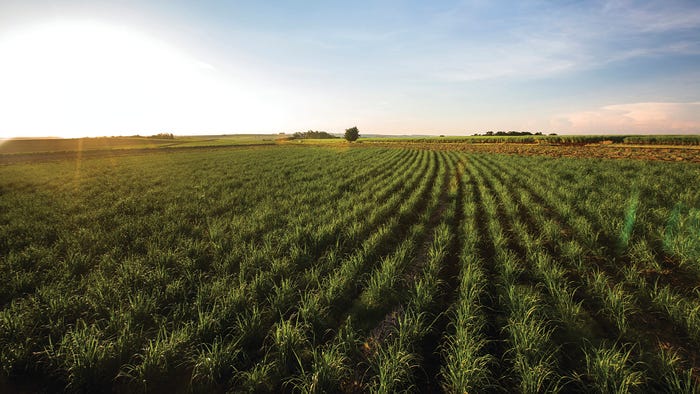
TUNICA, Miss. -- Twin-row soybeans can provide the same yield advantage as 30-inch soybeans without significant changes to wide-row equipment, according Trey Koger, agronomist at the USDA/ARS, Stoneville, Miss.

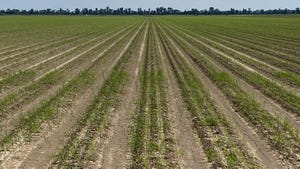
“We can plant the twin-row pattern on an 80-inch bed or a 40-inch bed, giving us a narrow-row spacing of somewhere around 30 inches, and we can still use our existing production system set up on 38- or 40-inch beds. The twin-row system is a narrow-row spacing in a wide-row system,” Koger said.

Koger spoke about his research on twin-row soybeans versus wide-row soybeans during the Conservation Systems Cotton and Rice Conference, in Tunica, Miss.

Two varieties were selected for the study, both early-season Group 4 varieties. One was short stature and bushy, Asgrow 4201. The other was a tall, slender upright, Asgrow 4403.

For the single-row, 40-inch system, researchers planted 8, 10 and 12 seeds per foot of row. In the twin-row pattern, they planted at 4, 5 and 6 seeds per foot of row. “We did that to compare the twin-row system with the single-row system at the same seeding rates.”

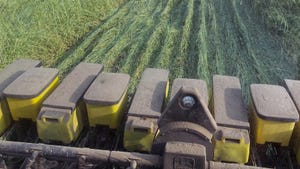
The experiment was planted on a heavy clay soil at the experiment station. Beds were 80 inches wide and accommodated two, twin-row plantings or two single-row plantings. They sprayed the entire study with a strobilurin fungicide at R-3 to R-4. The twin-row study was planted with a Great Plains twin-row drill. The single-row study was planted with a John Deere vacuum planter.

“We did not see any plant population differences between the twin-row system and the single-row system. This told us that the twin-row drill did just as good a job as the planter in getting a stand. This also meant that since there was no difference in plant population, we could compare the yield.”

Yield data across all three plant populations indicated the twin-row pattern out-yielded the single wide-row pattern by 8 percent, or 7 bushels.

“The twin-row pattern yielded more, but there was not a seeding rate response. This is good information because there is some data out there that suggests that you increase your seeding rate by 20 percent with a twin-row pattern.”

Twin-row plants canopied about 10 days earlier than single-row plants, according to Koger. “That might save you a herbicide application, but more importantly, we intercepted more light in the twin-row system. The increased light interception allowed the plants in the twin-row system to produce five more pods per plant.

“That doesn’t sound like a lot, but if you extrapolate that out on an acre basis, it’s about a half-million more pods per acre. That’s what’s accounting for the increased yield.”

Early findings also indicate the twin-row system won’t out-yield a 30-inch system if drainage is the same across both systems. “But we’re going to conduct some more research on that this coming season.”

Studies by USDA/ARS in Stoneville, Miss., indicate that as row spacing increases above 30-inches, soybean yields tend to go down. Conversely, yields trend higher as you move from a wide row to a 30-inch spacing. However, studies indicate that you don’t gain appreciable yield by going narrower than 30 inches.

e-mail: erobinson@prismb2b.com

Discuss this article 0

Post new comment
Sign In or register to use your Delta Farm Press ID

(optional)
Connect With Us
Continuing Education Courses
Potassium nitrate has a positive effect in controlling plant pests and diseases when applied...
This online CE course details sound mechanical irrigation design and management practices to...
Keeping crop protection chemicals on the crop for which they are intended has been a...