Mid-South crop production unclear

Nov 10, 2009 2:38 PM, By Elton Robinson, Farm Press Editorial Staff

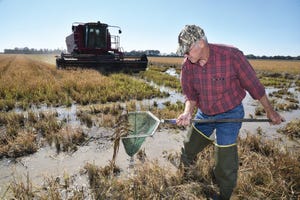
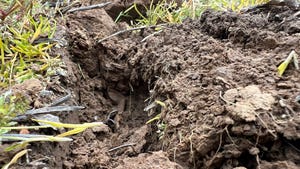
A statistical picture of the impact of wet weather on Mid-South crops still has not come into focus, although USDA is acknowledging significant problems with a portion of the Mid-South cotton crop.

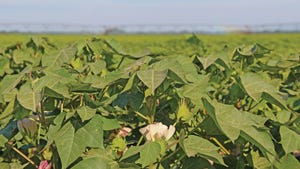
In its Nov. 9 Crop Production Report, USDA projects cotton yield declines from last month of 144 pounds for Arkansas and 183 pounds for Missouri, but smaller declines for Louisiana, 43 pounds; Tennessee, 27 pounds; and Mississippi, 67 pounds.

Texas producers also expect lower yields due to the effects of the cool, wet weather on the late-planted crop. Upland growers in Georgia, North Carolina, and Oklahoma are expecting record high yields.

Nationwide, cotton production is forecast at 12.5 million bales, down 4 percent from last month and down 2 percent from last year. Upland cotton production is forecast at 12.1 million bales, down 4 percent from last month and down 2 percent from last year. The American-Pima production is forecast at 367,000 bales.

For soybeans, despite estimates of 50 percent loss in some parts of Arkansas, USDA projected a decline of only 1 bushel per acre for the state. USDA projected a 3-bushel per acre decline for Mississippi while projected soybean yield remained the same or rose in other Mid-South states.

U.S. soybean production is forecast at a record high 3.32 billion bushels, up 2 percent from October and up 12 percent from last year. Based on Nov. 1 conditions, yields are expected to average 43.3 bushels per acre, up 0.9 bushel from last month and up 3.6 bushels from 2008.

If realized, this will be the highest U.S. soybean yield on record. Compared with last month, yields are forecast higher or unchanged in all states except Arkansas, Georgia, Iowa, Mississippi, and Texas. Increases of 3 bushels are expected in Delaware, Indiana, Kansas, and Maryland.

The largest decrease in yield from the October forecast is expected in Mississippi where excessive rain during October hindered yield expectations. If realized, the forecasted yield in Alabama, Kansas, Kentucky, Nebraska, Ohio, and Pennsylvania will be a record high and the forecasted yield in Georgia, Maryland, and North Carolina will tie the previous record high.

Area for harvest is forecast at 76.6 million acres, unchanged from last month but up 3 percent from 2008.

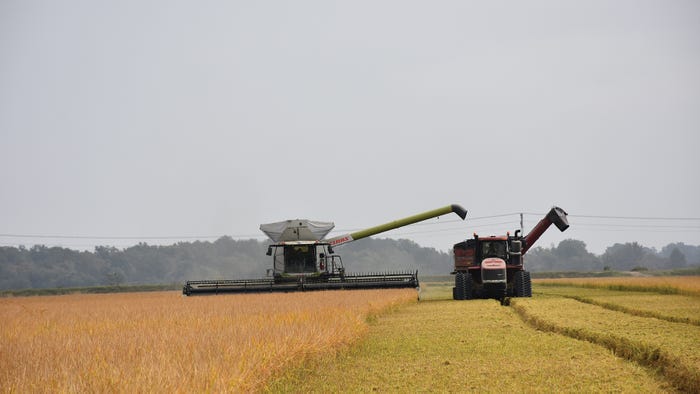
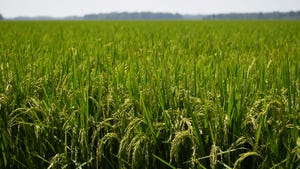
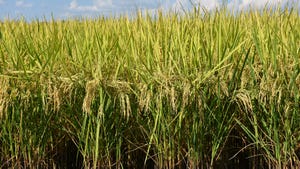
U.S. rice harvest is projected at 218 million hundredweight, down a little over 2 million hundredweight from October. Projected rice yields declined from last month in Mississippi, Arkansas and Texas, but increased for Louisiana.

U.S. corn production is forecast at 12.9 billion bushels, down 1 percent from last month but 7 percent higher than 2008. Based on conditions as of Nov. 1, yields are expected to average 162.9 bushels per acre, down 1.3 bushels from October but 9 bushels above last year.

Despite the drop in yield from October, this yield will be the highest on record if realized. Total production will be second highest on record, only behind 2007. Within the Corn Belt, forecasted yields in Minnesota and Wisconsin increased, while Illinois, Iowa, and Michigan yields decreased.

e-mail: erobinson@farmpress.com

Get Copyright ClearanceWant to use this article? Click here for options!
© 2010 Penton Media, Inc.


Latest Jobs

resources

events icon events

product info icon tradeshows

tradeshow icon digests

research icon photos

Continuing Education


(New Course)
Weed Resistance Management in Cotton

This course covers a wide range of options to effectively control weeds in cotton and reduce the risk of weed resistance management. It is accredited for hours/units for licensed/accredited applicators in 7 U.S. Cotton Belt states (Florida, Georgia, New Mexico, Oklahoma, Texas, South Carolina an d Tennessee. CCA credit is pending).

This course is accredited in Texas, Oklahoma, New Mexico, Virginia, West Virginia and Wyoming as well as for CCA credits:

(New Course)
Spray Drift Management

Keeping crop protection chemicals on the crop for which they are intended has been a cornerstone of farming not only to protect neighboring crops, but to not waste money allowing products to drift off the intended target. This accredited online continuing education course covers the critical elements of spray drift management.

Back to Top

Browse Print Issues

Additional Resources

subscribe to Farm Press Daily Southeast Farm Press Southwest Farm Press Western Farm Press