USDA: lower corn stocks, record rice yields

Jan 11, 2008 2:43 PM, By Elton Robinson
Farm Press Editorial Staff

USDA reported lower U.S. corn ending stocks and soybean production from last month and record U.S. rice yields, in its Jan. 11 world supply and demand estimates.

U.S. corn ending stocks were reduced 359 million bushels in January based on lower estimated production and increased feed and residual use. Corn supplies for 2007-08 were lowered 94 million bushels based on lower estimated production. Feed and residual use was raised 300 million bushels based on September-November disappearance.

The season-average farm price for corn is projected at $3.70 to $4.30 per bushel, up 35 cents on both ends of the range based on the sharp rise in both cash and futures prices that has been sustained during recent weeks.

Sorghum supplies for 2007-08 were lowered 10 million bushels based on lower production. Sorghum exports for 2007-08 are projected 10 million bushels higher based on the strong pace of shipments and strong EU- 27 demand. Feed and residual use was lowered 5 million bushels. With the reduction in supplies, ending stocks are projected 15 million bushels lower. The sorghum season-average price was projected 40 cents higher on each end of the range to $3.60 to $4.20 per bushel.

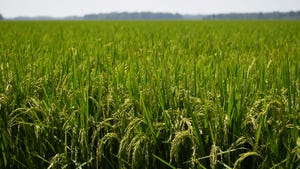
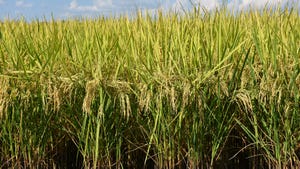
The U.S. 2007-08 rice crop is estimated at 197.5 million hundredweight, down slightly from the previous estimate, but 2 percent above 2006-07. Average yield is estimated at a record 7,185 pounds per acre, down 62 pounds per acre from November but 317 pounds per acre above 2006-07.

Imports for 2007-08 are projected at a record 21.5 million hundredweight, unchanged from last month. Domestic and residual use is projected at 124.7 million hundredweight, unchanged from last month. Projected rice exports are unchanged at 109 million hundredweight.

Ending stocks for 2007-08 are projected at 24.6 million hundredweight, down slightly from last month. The season-average farm price range is unchanged at $10.90 to $11.40 per hundredweight compared to $9.74 per hundredweight in 2006-07. The midpoint of the price range at $11.15 per hundredweight would be the highest season-average farm price since 1980-81 ($12.80 per hundredweight).

Rice global production and ending stocks for 2007-08 were raised slightly from a month ago, while trade and consumption were lowered. Global exports were lowered 600,000 tons due to reductions for China and Pakistan. Imports were lowered for Cuba, China, and some African markets.

Global ending stocks are projected at 72.5 million tons, up 400,000 tons from last month, down 3 million from 2006-07, and the lowest stocks since 1983-84. The stocks-to-use ratio at 17.1 percent is the lowest since 1976-77.

U.S. soybean production is estimated at 2.585 billion bushels, down 9 million bushels from last month based on a slightly lower yield. Soybean yield is estimated at 41.2 bushels per acre.

e-mail: erobinson@farmpress.com

Get Copyright ClearanceWant to use this article? Click here for options!
© 2009 Penton Media, Inc.


Latest Jobs

Read More Daily News

Climate change not aberration

Jul 1, 2009 1:06 PM

The world’s climate is getting warmer, and that could have a profound impact on U.S. agriculture, says Jerry Hatfield, supervisory plant physiologist with USDA’s National Soil Tilth Research Laboratory at Iowa State University....

Ag tech field day at Agricenter

Jul 1, 2009 1:04 PM

Agricenter International will again host the biggest field day in the Mid-South for commercial agricultural technology at the 2009 Mid-South Ag-Technology Field Day July 16 in Memphis....

100 years: LSU AgCenter Rice Research Station

Jul 1, 2009 1:02 PM

The LSU AgCenter Rice Research Station at Crowley, La., is celebrating a century of operation this year, making it the oldest facility of its kind in the Western Hemisphere....

Glyphosate-resistance shocking

Jul 1, 2009 1:00 PM

I recently wrote in an article that I would sure like to get called out to a “normal-looking” rice field because I have looked at so many messes this year....

Downside of wildlife programs

Jul 1, 2009 10:18 AM

We quickly learn in this business that one man’s caviar and Champagne may well be just smelly fish eggs and icky grape juice to another....

Delta Farm Press News

Southeast Farm Press News

Southwest Farm Press News
Western Farm Press News

resources

events icon events

product info icon tradeshows

tradeshow icon digests

research icon photos

Continuing Education


(New Course)
Weed Resistance Management in Cotton

This course covers a wide range of options to effectively control weeds in cotton and reduce the risk of weed resistance management. It is accredited for hours/units for licensed/accredited applicators in 7 U.S. Cotton Belt states (Florida, Georgia, New Mexico, Oklahoma, Texas, South Carolina an d Tennessee. CCA credit is pending).

This course is accredited in Texas, Oklahoma, New Mexico, Virginia, West Virginia and Wyoming as well as for CCA credits:

(New Course)
Spray Drift Management

Keeping crop protection chemicals on the crop for which they are intended has been a cornerstone of farming not only to protect neighboring crops, but to not waste money allowing products to drift off the intended target. This accredited online continuing education course covers the critical elements of spray drift management.

Back to Top

Continuing Education


(New Course)
Weed Resistance Management in Cotton

This course covers a wide range of options to effectively control weeds in cotton and reduce the risk of weed resistance management. It is accredited for hours/units for licensed/accredited applicators in 7 U.S. Cotton Belt states (Florida, Georgia, New Mexico, Oklahoma, Texas, South Carolina an d Tennessee. CCA credit is pending).

This course is accredited in Texas, Oklahoma, New Mexico, Virginia, West Virginia and Wyoming as well as for CCA credits:

(New Course)
Spray Drift Management

Keeping crop protection chemicals on the crop for which they are intended has been a cornerstone of farming not only to protect neighboring crops, but to not waste money allowing products to drift off the intended target. This accredited online continuing education course covers the critical elements of spray drift management.

Browse Print Issues

Additional Resources

subscribe to Farm Press Daily Southeast Farm Press Southwest Farm Press Western Farm Press