Pecan field day provides latest information

Jun 20, 2008 9:26 AM, By Mary Ann Van Osdell
LSU AgCenter

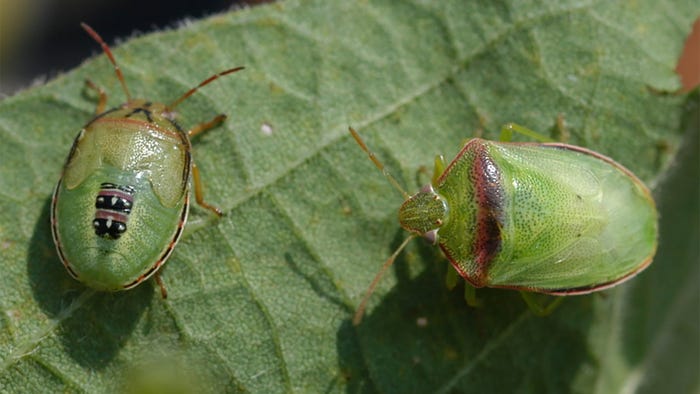
Control of insects is essential for profitable pecan production, said Mike Hall, LSU AgCenter entomologist at a recent field day at LSU AgCenter’s Pecan Research/Extension Station in Shreveport, La.

Knowing how to look for the major pests during the growing season is important in determining if an insecticide application is needed and when it should be applied, Hall said.

He distributed a list of new insecticides labeled for pecans, saying growers need to rotate insecticides by different groupings to minimize chances for resistance to develop in a particular pest.

The LSU AgCenter expert also encouraged growers to participate in a pecan nut casebearer map, which would be a grower-driven Web site identifying when and where pecan casebearer moths would be expected to be active. “We do have funding coming for this project,” Hall said.

John Pyzner, LSU AgCenter pecan and fruit specialist, also addressed pest management to help pecan growers recognize damage. “You are the first line of detection on a new pest coming in,” he said.

Pyzner said 10 aphids per pecan leaf are not a problem, but when that number jumps to 60, it “hits the pocketbook.”

He said reading the label, wearing personal protection equipment and disposing of pesticides properly are important.

“The Extension Service has a number of publications to help you,” Pyzner said. “We have agents in all of the parishes. On the Web site, we have a number of articles.”

Randy Sanderlin, an LSU AgCenter plant pathologist, talked about bacterial leaf scorch disease, which can cause severe defoliation and pecan loss. He said it can be transmitted through grafting.

LSU AgCenter researchers at the Pecan Station are trying to determine how the leaf scorch pathogen moves into orchards, the pattern and rate of spread within orchards, the identity of insect vectors that feed on pecans, the frequency of occurrence of the disease in pecan nurseries and the relationship of the pecan pathogen to subspecies of the bacterium from other hosts.

LSU AgCenter horticulturist Charlie Graham discussed thinning the rootstock orchard and the influence of rootstock on pecan production. Rootstock development in tree crops generally has occurred due to biotic or abiotic limitations preventing profitable production or a substantial need to reduce tree size, often related to production costs, said Graham.

Neither reason has been important enough in limiting pecan culture to warrant aggressive rootstock development, Graham said.

“Currently, there are no commercial pecan rootstocks developed for controlling tree size, imparting adaptation to soil or climatic conditions or for imparting pest resistance or tolerance,” he said.

Problems that have stimulated rootstock research include salinity problems in the western United States, a new root-knot nematode and higher production costs, Graham said. Commonly used rootstocks in pecan propagation are open-pollinated seedlings of Curtis, Elliott and Moore in the eastern United States and Apache, Riverside and VC-168 in the West.

Grower Ben Littlepage said Asian countries are conscious of the health benefits of pecans, and he believes the demand for Louisiana pecans in the future will be “extremely bright.” He said he looks forward to export opportunities and being aggressive in promotion efforts.

“We are not counting 100 percent on China, but that is a giant that needs to be fed,” Littlepage said.

The proposed Interstate 69 interchange that would cut through the heart of the Pecan Station still looms on the horizon, said David Boethel, vice chancellor of the LSU AgCenter.

Boethel said the new state secretary of transportation has been hearing from the growers who want the route diverted, and he thanked them for those contacts.

The research station has been in continuous operation since 1930, when it was started by the U.S. Department of Agriculture, and it has been a part of the LSU AgCenter since 1973, Boethel said. The station is the only land-grant university research station devoted solely to research and extension programs to support the pecan industry.

Of further interest to pecan growers, Boethel said the new U.S. farm bill will establish a specialty crop research program with funds awarded as competitive grants with a required funding match. Funding levels over the next five years would total $230 million, he said.

“We are glad we stayed the course with this Pecan Station,” he said. “We are excited about the farm bill and writing some competitive grants and funding our scientists.”

Brian Breaux with the Louisiana Farm Bureau pecan advisory committee told the group to “study the legislation and be proactive in going after the money.”

Dan Brown with the Louisiana Pecan Growers Association encouraged growers to support the Pecan Station. “Those legislators recognize you’re interested in it. They can put that entrance/exit somewhere else,” he said.

Get Copyright ClearanceWant to use this article? Click here for options!
© 2009 Penton Media, Inc.


Latest Jobs

Read More Daily News

High Cotton winner urges industry to pull together

Jan 8, 2009 12:04 PM

Times are tough in the cotton industry, but cotton producers have overcome challenges in the past and can do so again if they will stick together, the winner of the 2009 High Cotton Award for the Southwest says....

Ethanol problems cut corn use

Jan 8, 2009 10:27 AM

Statistics tell a troubling story for the U.S. ethanol industry. In its Dec. 11 World Agricultural Supply and Demand Estimates, USDA projected lower U.S. corn use mostly due to reductions in ethanol use and corn exports. ...

Fewer new chemicals chasing resistant weeds?

Jan 8, 2009 10:24 AM

Producers shouldn’t spend too much time waiting for the next miracle herbicide to come along. ...

Arkansas senator concerned about imported aquaculture

Jan 8, 2009 10:17 AM

Despite greater scrutiny of imported aquaculture commodities by U.S. authorities, there continue to be concerns that tainted products make it through inspection....

Cotton & Rice Conference Jan. 26-27

Jan 8, 2009 10:14 AM

The 12th annual National Conservation Systems Cotton & Rice Conference is slated for Jan. 26-27 in Marksville, La....

Delta Farm Press News
Southeast Farm Press News

Southwest Farm Press News
Western Farm Press News

resources

events icon events

product info icon tradeshows

tradeshow icon digests

research icon photos

Continuing Education

Accredited in Florida, Georgia, New Mexico, Oklahoma, Texas, South Carolina and Tennessee:


(New Course)
Weed Resistance Management in Cotton

This course covers a wide range of options to effectively control weeds in cotton and reduce the risk of weed resistance management. It is accredited for hours/units for licensed/accredited applicators in 7 U.S. Cotton Belt states (Florida, Georgia, New Mexico, Oklahoma, Texas, South Carolina an d Tennessee. CCA credit is pending).

For National Certified Crop Advisers

A free American Society of Agronomy-accredited one-CEU course on spray drift management.

Back to Top

Continuing Education

Accredited in Florida, Georgia, New Mexico, Oklahoma, Texas, South Carolina and Tennessee:


(New Course)
Weed Resistance Management in Cotton

This course covers a wide range of options to effectively control weeds in cotton and reduce the risk of weed resistance management. It is accredited for hours/units for licensed/accredited applicators in 7 U.S. Cotton Belt states (Florida, Georgia, New Mexico, Oklahoma, Texas, South Carolina an d Tennessee. CCA credit is pending).

For National Certified Crop Advisers

A free American Society of Agronomy-accredited one-CEU course on spray drift management.

Browse Print Issues

Additional Resources

subscribe to Farm Press Daily Southeast Farm Press Southwest Farm Press Western Farm Press