Warning: Don’t plant California rice seed

Mar 5, 2009 12:13 PM, By David Bennett
Farm Press Editorial Staff

“There’s a quarantine against seed that might harbor bakanae… California has had that disease…. We don’t want it in the Mid-South.”

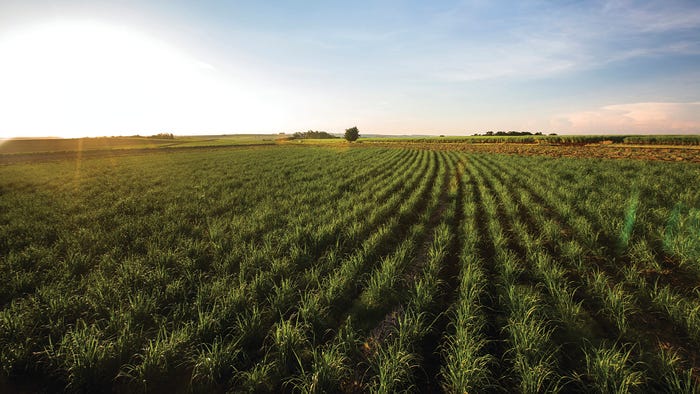
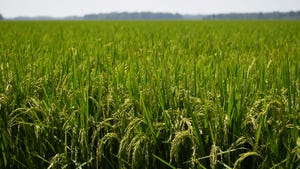
Worldwide medium-grain rice supplies are extremely tight and, understandably, Mid-South growers would like to take advantage. However, there is a lack of medium-grain seed in the region and some are looking to California as a solution. Arkansas state officials and researchers are warning that seed shipments from California are a bad idea for several reasons.

“Last year, Australia and some Asian countries that grow medium-grain rice had poor crops,” says Keith Glover, president and CEO of Producers Rice Mill, Stuttgart, Ark. “The situation in California (which grows the bulk of U.S. medium-grain acreage) is shaky, as well, with concerns about the water supply and how much will be available to grow crops.”

Due to that, medium-grain rice has maintained good prices while there has been “a sell-off of long-grain prices since last summer. Obviously, going into the planting season, there’s a lot more interest from Arkansas rice growers in medium-grain varieties. We’ll see an increase in medium-grain acreage, no doubt.”

The bottleneck is the supply of Mid-South medium-grain varieties. “There’s a lack of availability. The last time I spoke to a seed dealer, they said they’d sold out.”

In light of the markets, rice growers considering medium-grain varieties are being smart, says Rick Cartwright, Arkansas Extension plant pathologist. “The problem is medium-grain rice isn’t the norm in the Mid-South and we don’t have enough seed. Well, growers and seed dealers are an enterprising lot. They know that California grows a lot of medium-grain rice. So, some have been calling out there trying to arrange to have some seed shipped here.”

Doing so would be a bad idea, says Cartwright. And there’s good science behind his worries.

“There’s a quarantine against seed that might harbor bakanae, a fungal disease. For the last few years, California has had that disease, which is exclusively a seed-borne fungus and a big pain if you get it. We don’t want it in the Mid-South.”

Plus, the California varieties aren’t adapted for the Mid-South. If grown in the region, “blast will wipe them out anyway. Farmers here that might try to grow them are at an incredible risk. And if anyone is caught growing (such varieties), they’ll take a hit — the quarantine means the crop could be destroyed plus major fines.”

On paper the idea of bringing in medium-grain seed from California looks like a good one, concedes Terry Walker, director of the Arkansas Plant Board’s Plant Industry Division. “It would seem to fill a need and be a way for farmers to get some premium prices. The risks aren’t worth it, though. There’s no going back — once bakanae is here, it isn’t going anywhere. We must be very cautious on the front end to keep it out.”

Here’s another issue: any rice seed used for planting in 2009 must be subjected to a credited lab, using a validated procedure to be tested for the presence of the Liberty Link trait.

“That could be another fly in the ointment,” says Walker. “There are very stiff penalties for importing seed and planting it without having those tests. In the flurry of scrambling to find seed and plant it, some may overlook the required testing.

“And destruction of the fields is a regulatory option. It’s drastic and we prefer not to do it. However, in the case of bakanae, if infected seed is planted, plowing it up won’t do any good — the ground will have already been inoculated.”

Of course, if Arkansas farmers are considering planting California medium-grain rice, it follows that farmers in other Mid-South states are too. When Walker first got word of the situation, “I immediately contacted my counterparts in the surrounding states and provided information. I hope everyone takes it seriously and is hard-line on it.”

The Mid-South doesn’t need to voluntarily introduce bakanae, says Cartwright. “No matter what you do to try to disinfect the seed, you can’t get all the fungus. So, if commercial quantities of seed are brought in, it will bring bakanae to the South. That’s a definite. California has proven that. They got it in 1999, brought in from another country illegally, and the farmers have battled it ever since.”

Also, California varieties aren’t adapted for Mid-South conditions, aren’t resistant to Mid-South diseases and can easily be wiped out.

“Long-time growers may remember that, years ago, before bakanae showed up in California, we used to plant a few California varieties,” says Cartwright, who spent time in California earning a graduate degree. “Those were always an opportunity for me to go out and take pictures of blast epidemics wiping out the fields. Now, I have enough pictures of blast and would warn farmers not to experiment with this seed. Growing California medium-grain varieties here is high risk/low benefit.”

Back in the early- or mid-1990s — before bakanae concerns — “some growers decided to grow a variety called M204 in Arkansas. At the time, it was a new California medium-grain. I told some of the growers, ‘Plant it early, pump the water up really deep, get the Benlate ready and spray it the maximum number of times the label allows.’”

Not long after, Cartwright got a call from northeast Arkansas growers saying, “‘There’s something wrong with this rice.’ I went out to check it. Not only were the levees dead from blast but, in 6 inches of floodwater, rice in the paddies was burned down into the water. It looked like a fire had swept through.

“I noted the start of a lesion on a leaf — a pinpoint of infection. Seven days later, I went back to check and that same lesion was 4 inches long. These varieties are too susceptible to Mid-South blast strains.”

Breeders in California have been working hard to get resistance to blast into their varieties. “They’ve done a good job. But the resistance they have is to strains they have out there. Here, blast would eat that rice for breakfast, lunch, dinner and dessert.”

e-mail: dbennett@farmpress.com

Get Copyright ClearanceWant to use this article? Click here for options!
© 2009 Penton Media, Inc.


Latest Jobs

Read More Daily News

WTO awards Brazil retaliation authority

Nov 20, 2009 11:01 AM

The World Trade Organization has authorized Brazil to seek retaliation against the United States for it support of two U.S. commodity programs....

Precision ag – online course

Nov 20, 2009 10:53 AM

University of Missouri Extension is offering an eight-week online course on managing farm machinery using precision agriculture, Jan. 12 through March 4....

Soybeans — U.S. key export supplier

Nov 20, 2009 10:48 AM

Weather problems are now thought to be factored into market prices. ...

$485 million loss – Mississippi

Nov 19, 2009 3:57 PM

Mississippi State University agricultural economists calculate Mississippi farmers are suffering an estimated $485 million value loss in 2009. ...

Biofuels goal beyond ethanol

Nov 19, 2009 10:05 AM

If the U.S. is to reach the government-mandated target of producing 36 billion gallons of biofuels annually by 2022, “We will need to change the way we do business,” says a USDA official....

Delta Farm Press News

Southeast Farm Press News
Southwest Farm Press News

Western Farm Press News
resources

events icon events

product info icon tradeshows

tradeshow icon digests

research icon photos

Continuing Education


(New Course)
Weed Resistance Management in Cotton

This course covers a wide range of options to effectively control weeds in cotton and reduce the risk of weed resistance management. It is accredited for hours/units for licensed/accredited applicators in 7 U.S. Cotton Belt states (Florida, Georgia, New Mexico, Oklahoma, Texas, South Carolina an d Tennessee. CCA credit is pending).

This course is accredited in Texas, Oklahoma, New Mexico, Virginia, West Virginia and Wyoming as well as for CCA credits:

(New Course)
Spray Drift Management

Keeping crop protection chemicals on the crop for which they are intended has been a cornerstone of farming not only to protect neighboring crops, but to not waste money allowing products to drift off the intended target. This accredited online continuing education course covers the critical elements of spray drift management.

Back to Top

Browse Print Issues

Additional Resources

subscribe to Farm Press Daily Southeast Farm Press Southwest Farm Press Western Farm Press