Farming with grass in 21st century

Jun 11, 2009 9:37 AM

Grass and other perennial plants may be just what the doctor ordered for farmers facing the uncertainties of climate change.

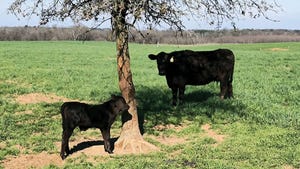
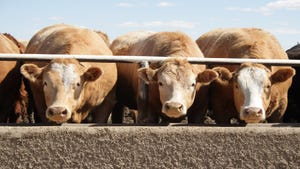
And beef and dairy products from free-ranging, grass-fed cattle — along with legumes and grains grown in addition to grass — may be just what the doctor ordered for consumers.

That’s the “post-oil agriculture” vision portrayed by Agricultural Research Service (ARS) scientists and other participants at the Farming with Grass Conference held in Oklahoma in 2008. In 2009, the Soil and Water Conservation Society published the proceedings from that conference in an online book titled “Farming with Grass.”

ARS scientists Jean L. Steiner and Alan J. Franzluebbers co-wrote the foreword to the book and the closing chapter, “Expanding Horizons of Farming with Grass.” Steiner is at the ARS Grazinglands Research Laboratory in El Reno, Okla. Franzluebbers is at the ARS J. Phil Campbell Sr. Natural Resource Conservation Center in Watkinsville, Ga.

The closing chapter was written with Constance L. Neely, vice president of Heifer International in Little Rock, Ark.

Steiner, Franzluebbers and Neely explain that perennial plants, in diverse agricultural systems, have great potential to enhance resilience against uncertain climate and market conditions.

Steiner’s ARS colleagues Bill Phillips and Brian Northup — who co-wrote their own chapter on forage-based beef production — are in the second year of a five-year study to develop a system to produce grass-fed beef for the southern Great Plains. Phillips and Northup are at the ARS lab in El Reno.

ARS scientists in Booneville, Ark.; Mandan, N.D.; and Watkinsville, Ga., are also looking for innovative ways to include grazing cattle in economically diverse farming systems.

In summarizing stories from the conference, participants envisioned mixed livestock, perennial plants, and other crops, instead of large stands of a single-row crop monoculture. The goal is to sustain farms and rural communities both economically and environmentally, while offering local, healthy foods and other new products.

“Farming with Grass” can be downloaded for $24 at: http://www.swcs.org/en/publications/farming_with_grass/.

ARS is the principal intramural scientific research agency in the U.S. Department of Agriculture.

Get Copyright ClearanceWant to use this article? Click here for options!
© 2009 Penton Media, Inc.


Latest Jobs

Read More Daily News

WTO awards Brazil retaliation authority

Nov 20, 2009 11:01 AM

The World Trade Organization has authorized Brazil to seek retaliation against the United States for it support of two U.S. commodity programs....

Precision ag – online course

Nov 20, 2009 10:53 AM

University of Missouri Extension is offering an eight-week online course on managing farm machinery using precision agriculture, Jan. 12 through March 4....

Soybeans — U.S. key export supplier

Nov 20, 2009 10:48 AM

Weather problems are now thought to be factored into market prices. ...

$485 million loss – Mississippi

Nov 19, 2009 3:57 PM

Mississippi State University agricultural economists calculate Mississippi farmers are suffering an estimated $485 million value loss in 2009. ...

Biofuels goal beyond ethanol

Nov 19, 2009 10:05 AM

If the U.S. is to reach the government-mandated target of producing 36 billion gallons of biofuels annually by 2022, “We will need to change the way we do business,” says a USDA official....

Delta Farm Press News
Southeast Farm Press News
Southwest Farm Press News
Western Farm Press News
resources

events icon events

product info icon tradeshows

tradeshow icon digests

research icon photos

Continuing Education


(New Course)
Weed Resistance Management in Cotton

This course covers a wide range of options to effectively control weeds in cotton and reduce the risk of weed resistance management. It is accredited for hours/units for licensed/accredited applicators in 7 U.S. Cotton Belt states (Florida, Georgia, New Mexico, Oklahoma, Texas, South Carolina an d Tennessee. CCA credit is pending).

This course is accredited in Texas, Oklahoma, New Mexico, Virginia, West Virginia and Wyoming as well as for CCA credits:

(New Course)
Spray Drift Management

Keeping crop protection chemicals on the crop for which they are intended has been a cornerstone of farming not only to protect neighboring crops, but to not waste money allowing products to drift off the intended target. This accredited online continuing education course covers the critical elements of spray drift management.

Back to Top

Browse Print Issues

Additional Resources

subscribe to Farm Press Daily Southeast Farm Press Southwest Farm Press Western Farm Press