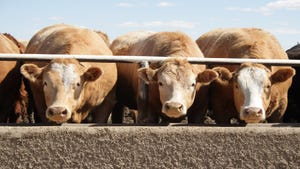
Cattle ID system cost too high?

Apr 20, 2009 10:36 AM, By David Bennett
Farm Press Editorial Staff

Controversy continues to swirl around the National Animal Identification System (NAIS), a USDA/APHIS-controlled registry for livestock and land where they are kept.

The program, initiated in 2003, was developed as a way to quickly track and eradicate outbreaks of animal disease. By having rapid disease “traceability” in place, NAIS proponents — which includes veterinary associations — claim millions of animals and billions of dollars can be saved when disease arises.

While NAIS has been voluntary, sign-ups haven’t been overwhelming. Politicians and government officials are now considering making the program mandatory. This has unleashed a torrent of criticism with privacy issues and the cost to small producers taking center stage.

During a mid-March hearing on NAIS, APHIS officials told the House Subcommittee on Livestock, Dairy, and Poultry that the poultry and sheep industries have the best participation in the program. Cattle signups, however, lag.

That admission surely wasn’t a surprise for Max Thornsberry, who also testified at the hearing. Thornsberry — president of the Ranchers-Cattleman Action Legal Fund (R-CALF) — claimed NAIS is unnecessary as existing USDA programs already protect cattle. Congress shouldn’t “allow USDA to supplant these successful programs with an unproven system that is likely to consume more resources in its administration than the agency now spends in prevention, control, and eradication of cattle diseases.”

A day after the subcommittee hearing, Sen. Clair McCaskill of Missouri — following up on promises made to rural constituents during her last campaign — penned a letter to USDA Secretary Tom Vilsack. “Since 2002, USDA has been attempting to develop the NAIS program. (USDA) has spent over $130 million since 2004. Yet, according to GAO reports, the agency has been unable to produce a workable plan. … As the number two calf-cow state in the nation, Missouri cannot afford for USDA to go forward with an unproven program.

Cost of implementation

“According to economic analysis conducted at Kansas State University, the cost of implementation for a family farm with 100 head of cattle would be approximately $16 per head, more than twice as much as that of a large producer with 400 head of cattle.”

(To see McCaskill’s full letter, go to McCaskill letter.)

McCaskill points out the average U.S. cattle operation has only 44 head per herd. Missouri’s average herd size is even smaller.

McCaskill isn’t the only Mid-South senator with concerns. In a recent interview with Delta Farm Press, Sen. Blanche Lincoln of Arkansas said keeping NAIS a “voluntary program is fine, allowing people to opt in if they want. But it will be disproportionately burdensome on smaller operations. For the life of me, I can’t believe (USDA) wants to do that when everything out of their mouths is about encouraging small operations.”

Making NAIS mandatory “will put liability, once again, back on the producer for issues that are ongoing — largely driven by the media and resulting public outcry — related to food safety,” said Tim Gibbons, communications director for the Missouri Rural Crisis Center. “All the recent meat recalls and food safety scares were a result of what happened at the processing plants. Those problems didn’t result from anything producers did.”

Food safety is certainly worth pursuing, said Gibbons. However, to improve food safety and curb the public outcry, “more testing and inspections must be done at the processing plants. Food safety is very, very important. Instead of solving that, we’re creating NAIS?

“NAIS would unfairly burden independent livestock producers. Under the plan, independent producers would be required to have one tag per animal. Meanwhile, concentrated animal feeding operations would only be required to have one tag per lot. Sometimes a lot contains thousands of animals.”

Burden on producers

Why is that? NAIS proponents claim since animals in lots are kept in concentration until they are taken to processing plants, “there’s no need for more than one tag since there’s less chance for disease outbreaks. I don’t know if that’s true, or not. But I do know that putting such a burden on (small) producers will be bad for them, for our rural communities, for the livestock industry as a whole.”

Another issue with NAIS: it would violate Missouri state law. Not long ago, a statute was passed that prohibits the Missouri Department of Agriculture from mandating premise registration without a vote of the legislature.

Also consider the time and money producers will have to spend to implement the system, said Gibbons. “Farmers will have to get tag readers. They’ll have to use a computer. Even when they move animals from one pasture to another, they’ll have to make note of it in the federal government’s system. That is an unfair burden on producers, especially when animal disease isn’t the issue — food safety is.”

There is also a question of fairness regarding NAIS and international trade. McCaskill’s letter touched on the claim that “NAIS will open markets currently closed to U.S. meat exports resulting in larger profits for producers. Yet, Brazil, the largest exporter of beef in the world, does not currently have an animal identification system.”

Gibbons complains the situation in Mexico is similar. “We’re getting hundreds of thousands of cows from Mexico. Those cows aren’t hooked into NAIS. We’re bringing those in and mixing them with our meat animals that are going to be subject to NAIS? How does that make sense? Why would we make our producers implement this costly system when cows and meat are coming in from all over the world where there is no such system?”

Vilsack recently acknowledged the unrest NAIS has caused in the farming community. In testimony before Congress and in press conferences, Vilsack said the program won’t move forward without approval from the congressional agriculture committees and the Obama administration.

e-mail: dbennett@farmpress.com

Get Copyright ClearanceWant to use this article? Click here for options!
© 2009 Penton Media, Inc.


Latest Jobs

Read More Daily News

WTO awards Brazil retaliation authority

Nov 20, 2009 11:01 AM

The World Trade Organization has authorized Brazil to seek retaliation against the United States for it support of two U.S. commodity programs....

Precision ag – online course

Nov 20, 2009 10:53 AM

University of Missouri Extension is offering an eight-week online course on managing farm machinery using precision agriculture, Jan. 12 through March 4....

Soybeans — U.S. key export supplier

Nov 20, 2009 10:48 AM

Weather problems are now thought to be factored into market prices. ...

$485 million loss – Mississippi

Nov 19, 2009 3:57 PM

Mississippi State University agricultural economists calculate Mississippi farmers are suffering an estimated $485 million value loss in 2009. ...

Biofuels goal beyond ethanol

Nov 19, 2009 10:05 AM

If the U.S. is to reach the government-mandated target of producing 36 billion gallons of biofuels annually by 2022, “We will need to change the way we do business,” says a USDA official....

Delta Farm Press News

Southeast Farm Press News

Southwest Farm Press News
Western Farm Press News

resources

events icon events

product info icon tradeshows

tradeshow icon digests

research icon photos

Continuing Education


(New Course)
Weed Resistance Management in Cotton

This course covers a wide range of options to effectively control weeds in cotton and reduce the risk of weed resistance management. It is accredited for hours/units for licensed/accredited applicators in 7 U.S. Cotton Belt states (Florida, Georgia, New Mexico, Oklahoma, Texas, South Carolina an d Tennessee. CCA credit is pending).

This course is accredited in Texas, Oklahoma, New Mexico, Virginia, West Virginia and Wyoming as well as for CCA credits:

(New Course)
Spray Drift Management

Keeping crop protection chemicals on the crop for which they are intended has been a cornerstone of farming not only to protect neighboring crops, but to not waste money allowing products to drift off the intended target. This accredited online continuing education course covers the critical elements of spray drift management.

Back to Top

Browse Print Issues

Additional Resources

subscribe to Farm Press Daily Southeast Farm Press Southwest Farm Press Western Farm Press