Biomass fuels/products: industries of the future?

Sep 8, 2004 10:53 AM, By Hembree Brandon

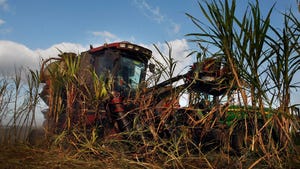
JACKSON, Miss. — Mississippi and other southeast states have “a treasure chest” of biomass crops that can be converted to fuels and other valuable products — in the process creating jobs and boosting rural economies.

“We produce vast amounts of a diverse range of biomass, and we need to capitalize on it,” says Mark Zappi, who spoke at the Beyond the City Limits conference on agriculture hosted by Mississippi Gov. Haley Barbour.

“I truly believe Mississippi’s industries of the future will be based on agricultural products — and importantly, the areas of the state where most of the biomass can be grown are rural areas that need the employment and economic shot in the arm that this kind of production can provide.”

Zappi, distinguished professor of chemical engineering at Mississippi State University, serves as director of the Department of Energy-funded Mississippi Research Consortium for Utilization of Biomass and as director of the MSU Environmental Technology Research Laboratory, which to date has generated over $30 million in research funds.

In moving toward a biomass production infrastructure, he says, “It’s important to understand who we’re competing with — it’s not ag products, it’s petroleum. As we try to expand our markets, based on ag products, we have to realize that we have to work our way into a very established industrial platform, and it’s not going to be easy.”

But Zappi says, “The good news is we have products that offer a lot of pros that petroleum can’t, including being a renewable asset and being environmentally friendly.”

To realize the full potential from biomass, he notes, will require thinking broader than alternative fuels.

“Crude oil is very complex and can be refined into dozens of high-dollar chemicals, not just gasoline and diesel. Biomass is chemically just as complex, with hundreds of chemicals that can be produced. When people talk about biomass refineries of the future, they generally talk about only two to four products. That’s not good enough — that would put us where oil was about 1910. We’ve got to squeeze more products out of biomass, and do it at an economical price.”

Depending on whether one is pessimistic or optimistic, Zappi says, the world has from 50 years to 100 years of petroleum left. “If it’s only 50, that doesn’t leave a lot of time to shift into alternatives. We need to start moving now. Given our experience with oil, I don’t think we ever again want to be in the position of relying on a single platform.”

Coal and nuclear will have a place in the energy world of the future, he says, but “many of our energy platforms will be ag-based. Agriculture is going to have a great future in this new industrial platform.”

As prices rise for petroleum and its products, “biomass fuels begin to look more and more attractive, and there’s more incentive to get these products moving into the marketplace.”

Even though many organic chemicals can be produced from biomass, Zappi says “most are commercially immature,” and many will require complex facilities for extraction. To make them technically and economically viable, “We need to do like the oil refineries. It’s the high-dollar specialty chemicals that they make their money from. We don’t need to look just at fuels from biomass, but at co-products — let’s also extract the high-dollar polymers, chemicals, and nutraceuticals that will make fuel production more cost-efficient.”

Policymakers at the federal level all too often overlook the regional aspects of biomass, Zappi says.

“Iowa is a big producer of biofuels, but we can exceed what they do on a per ton basis. In Mississippi, we have a vast diversity of biomass, while the Midwest is basically centered on corn and soybeans. As the market matures technologically, Mississippi and the Southeast can be true leaders in this field.

“Our state excels in primary agricultural products, but we need to also become a producer of secondary products, so we can use more of these raw materials in the state, hire Mississippians to make more high dollar chemicals, and sell them on the global market. We have an excellent transportation structure and we’re also very close to the petrochemical heart of this country on the Gulf Coast.”

The most important take-home message, Zappi told the 500 business, industry, education, and research leaders attending the conference, is that “we need more venture capital in the state to push this technology forward, and we need to get federal policymakers to understand the regional aspect of biomass production.

“They’ve spent enough time helping create a biofuels industry in Iowa and the Midwest; now they need to look at the Southeast, at California, and upstate New York. We’ve got to start thinking regionally, so every part of the United States can be making products from the biomass available in its area.

“We also need to be patient and realistic in developing timelines. We’re not going to do this in two years. I think we’re looking at 10 years to 20 years.”

For those considering investments in biomass-related industries, Zappi cautioned, “It’s vitally important that you know what you’re getting into. Understand the economics, understand the market. Understand the technology thoroughly, or get some help understanding it. There are a lot of snake oil salesmen in this arena right now, preying on investors. Be sure you’re going into it with both eyes open.”

e-mail: hbrandon@primediabusiness.com

Get Copyright ClearanceWant to use this article? Click here for options!
© 2010 Penton Media, Inc.


Latest Jobs

Read More Daily News

Tillage tests — ‘trash farm for profit’

Feb 9, 2010 9:47 AM

As he speaks, Merle Anders has a small prop on the table behind him: a baseball cap inscribed with “Trash Farming for Profit.” ...

Reduced-till and cotton seedling diseases

Feb 9, 2010 9:43 AM

Managing no-till or reduced-till cotton production properly, including following appropriate planting recommendations and taking care of early weed problems, may reduce potential for disease outbreaks....

Chicken litter — ‘smell of success’

Feb 9, 2010 9:33 AM

Having used poultry litter on his family’s Jonesboro, Ark.-area farm for years, Wayne Wiggins III is a proponent of the practice. ...

NCC: 10.1 million cotton acres

Feb 8, 2010 10:30 AM

After three straight years of declines, U.S. cotton acreage could be headed back up, according to the National Cotton Council’s 27th annual Early Season Planting Intentions Survey....

Weed resistance, Washington headline Farm & Gin Show

Feb 8, 2010 10:24 AM

This year’s Mid-South Farm and Gin Show offers “perhaps the best set of exhibits ever,” says Tim Price, manager of the annual event to be held Feb. 26-27 at the downtown Memphis Cook Convention Center....

Delta Farm Press News
Southeast Farm Press News

Southwest Farm Press News

Western Farm Press News
resources

events icon events

product info icon tradeshows

tradeshow icon digests

research icon photos

Continuing Education


(New Course)
Weed Resistance Management in Cotton

This course covers a wide range of options to effectively control weeds in cotton and reduce the risk of weed resistance management. It is accredited for hours/units for licensed/accredited applicators in 7 U.S. Cotton Belt states (Florida, Georgia, New Mexico, Oklahoma, Texas, South Carolina an d Tennessee. CCA credit is pending).

This course is accredited in Texas, Oklahoma, New Mexico, Virginia, West Virginia and Wyoming as well as for CCA credits:

(New Course)
Spray Drift Management

Keeping crop protection chemicals on the crop for which they are intended has been a cornerstone of farming not only to protect neighboring crops, but to not waste money allowing products to drift off the intended target. This accredited online continuing education course covers the critical elements of spray drift management.

Back to Top

Browse Print Issues

Additional Resources

subscribe to Farm Press Daily Southeast Farm Press Southwest Farm Press Western Farm Press