Savvy producers can survive hay shortage

Sep 26, 2007 6:18 PM, By Patti Drapala
MSU Ag Communications

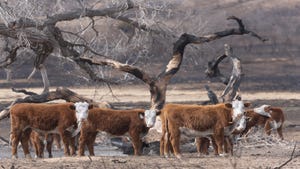
Management plans that include alternative feeding strategies for livestock and horses will be the key to survival for producers facing severe hay shortages this year.

A dry spring followed by an early summer drought caused producers to miss several hay cuttings, said Jane Parish, beef specialist with the Mississippi State University Extension Service. Rain in some pastures after July 1 renewed producer interest in making a hay crop, but dry conditions swiftly returned later in the month in many areas of the state. Hay harvests and yields varied throughout Mississippi because of varying moisture conditions, she noted.

“Producers in eastern Alabama experienced even more severe lack of rain, and some Mississippi producers sold them hay,” Parish said. “It’s a situation where some people have plenty of hay and some don’t.”

Despite the good fortunes of some producers, the amount of hay available to carry through the winter is limited, said Extension forage specialist Rocky Lemus. Producers in the state who need hay have had to travel as far as Arkansas, Missouri and Texas to secure supplies.

“Having to purchase hay from out-of-state suppliers impacts production for our growers because purchase and transportation costs can be expensive,” he said.

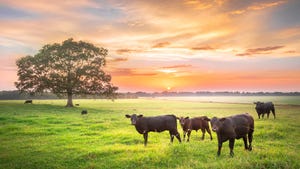
Producers have several alternatives available to minimize problems the hay shortage causes. Because feed prices are less expensive in summer, producers can buy feed in bulk and stock up for the winter, Lemus said. They also can employ the practice of stockpiling by allowing cattle and horses to graze forages, such as tall fescue or bermudagrass, through the fall until small grains and annual ryegrass crops become available in December.

Producers could find a silver lining in relying on stockpiling.

“A dry situation causes many forage plants to grow slowly and store the nutrients they have to survive,” Lemus said. “While the yields may go down, the quality of the forage goes up.”

Another avenue for producers is to use residues from soybean and corn crops for feeding. To avoid nutritional deficiencies, incidents of nitrate poisoning or other problems, producers should submit samples of crop residues for analysis before feeding these to their animals.

Producers should group livestock and horses into age groups and assess the animals’ marketability. Cull the animals that are non-pregnant, the poor performers or those that exhibit bad temperaments. This will conserve hay for top performers in the operation, Parish said.

“Younger cows and calves have higher nutritional requirements, so they need the best quality hay and grazing,” she said. “Mature animals can get by on forage and feed of lesser quality.”

Several publications on livestock and horse management are available on the Extension Service Web site at http://MSUcares.com. Producers also can contact county and area Extension agents to get late-breaking information.

Lemus and Parish have written a new bulletin, “Winter Forages — Fertility and Pasture Planning,” for Extension agents. Another new bulletin authored by Lemus, “Extending the Grazing Season: Stockpiled Tall Fescue,” is available to Extension agents who work with producers on livestock management strategies.

A new publication by Lemus, “Basic Guide for Pasture Management,” will soon be available to producers and is designed to help them increase profitability.

Get Copyright ClearanceWant to use this article? Click here for options!
© 2008 Penton Media, Inc.


Latest Jobs

Read More Daily News

Winter herbicide could reduce plant bugs

Dec 3, 2008 10:22 AM

Farmers like to have their farms look nice....

Diesel lags gas price drops

Dec 3, 2008 10:06 AM

At the long-closed Sack ’n’ Save grocery in our town, the tall, steel pole billboard at their once busy gas station still advertises unleaded gas for $2.14.9 per gallon....

7 revolutions for global sustainability

Dec 3, 2008 10:02 AM

By the year 2050, the world population, estimated to top 9 billion, will require twice as much food as today, and water demand will double — possibly stretching the “carrying capacity” of the planet. ...

Soybean meeting Dec. 8 in Greenwood, Miss.

Dec 3, 2008 9:58 AM

A Soybean Production and Planning Meeting will be held Dec. 8-9 at the Leflore County Civic Center in Greenwood, Miss. ...

Asgrow: New high-performing soybean Elites

Dec 3, 2008 9:56 AM

Asgrow has introduced its 2009 class of 24 new high-performing Elites — its newest soybean products designed to deliver uniform plant health and higher yield potential....

Delta Farm Press News

Southeast Farm Press News
Southwest Farm Press News

Western Farm Press News
resources

events icon events

product info icon tradeshows

tradeshow icon digests

research icon photos

Continuing Education

Accredited in Florida, Georgia, New Mexico, Oklahoma, Texas, South Carolina and Tennessee:


(New Course)
Weed Resistance Management in Cotton

This course covers a wide range of options to effectively control weeds in cotton and reduce the risk of weed resistance management. It is accredited for hours/units for licensed/accredited applicators in 7 U.S. Cotton Belt states (Florida, Georgia, New Mexico, Oklahoma, Texas, South Carolina an d Tennessee. CCA credit is pending).

For National Certified Crop Advisers

A free American Society of Agronomy-accredited one-CEU course on spray drift management.

Back to Top

Continuing Education

Accredited in Florida, Georgia, New Mexico, Oklahoma, Texas, South Carolina and Tennessee:


(New Course)
Weed Resistance Management in Cotton

This course covers a wide range of options to effectively control weeds in cotton and reduce the risk of weed resistance management. It is accredited for hours/units for licensed/accredited applicators in 7 U.S. Cotton Belt states (Florida, Georgia, New Mexico, Oklahoma, Texas, South Carolina an d Tennessee. CCA credit is pending).

For National Certified Crop Advisers

A free American Society of Agronomy-accredited one-CEU course on spray drift management.

Browse Print Issues

Additional Resources

subscribe to Farm Press Daily Southeast Farm Press Southwest Farm Press Western Farm Press