50 years of herbicides: higher yields, lower costs

Dec 20, 2006 10:04 AM, By Hembree Brandon
Farm Press Editorial Staff

Half a million juvenile delinquents pulling weeds — that’s what it would take, says Leonard Gianessi, to replace what herbicides do to control weeds in U.S. crops each year.

GIANESSI

“In the 1950s,” he told members of the Southern Crop Production Association at their annual meeting at Amelia Island, Fla., “juvenile delinquents in Minnesota and North Dakota were paid to pull weeds out of crops. Over the summer, each weeded the equivalent of 4 acres.”

Gianessi, who is director of the Crop Protection Institute, a research unit of CropLife Foundation which focuses on the uses and benefits of agricultural chemicals in the U.S. and worldwide, has recently spearheaded a study on the value of herbicides to American agriculture.

“We felt it was important to put together a study on the role herbicides play in crop production,” he says. The findings have been presented to the Environmental Protection Agency and to Capitol Hill groups, universities, the national science teachers organization, and other key influencer groups.

“Most people know little about agriculture,” Gianessi says, “and when I give this presentation on the importance of ag chemicals, I’m met with disbelief.”

Without herbicides, he says, “We’d have less food and fiber, we’d pay more for our food and clothing, more land would be required to produce our crops, we’d need millions of farm laborers, more cultivation would wipe out the gains we’ve made in controlling erosion, our exports would shrink, and we’d have to import more from countries with 10-cents an hour labor.

In his “War of the Weeds” program, he notes that there are more than 400 million weed species in the U.S., with the potential to slash crop yields if not controlled.

“One lambsquarters plant can produce 72,000 seeds, each of which can stay viable in the soil for 40 years. If a grower lets just 10 of those plants mature, that’s more than 700,000 seeds for future infestations. One 8-foot pigweed plant can set 117,000 seeds that can be viable for decades.

“A single acre of cropland can harbor 50 million to 300 million weed seeds in the soil. Only 5 percent to 10 percent may germinate in a given year — but that can mean 2.5 million to 30 million weeds per acre, all competing for water, nutrients, sunlight, and space.”

For centuries, Gianessi says, farmers had to rely on human labor to try and keep weeds out of crops. “For millions of people, including a lot of children, this meant sheer drudgery.”

In the latter half of the 1900s, child labor laws, worker protection regulations, and increasing wages for farm laborers further highlighted the need for cheaper ways of controlling weeds.

Gasoline-powered cultivation equipment — in effect, weed killing machines — came to the rescue. But they had drawbacks: they could cause crop damage and couldn’t operate in wet fields, giving weeds a chance to flourish. Hand labor was still required to take out weeds between plants.

“Cultivators also turned up more weed seeds,” Gianessi says, “and caused more soil erosion, which polluted streams.”

In the 1940s and 1950s, he says, hundreds of thousands of chemical compounds were screened as potential weed killers. “Only a few were found to be selective enough to kill weeds without harming the crops.”

As herbicide use took hold in the 1950s, “growers were amazed at how much effective weed control they could get — a vegetable farmer could spray 10 acres of vegetables in an hour, at a cost of 50 cents, and kill an estimated 20 million weeds.”

By the early 1960s, close to 100 percent of the nation’s cotton acreage was treated with herbicides, Gianessi says.

“In Mississippi alone, farmers were able to cut labor by 20 hours per acre on more than a million acres; 20 million hours of human drudgery eliminated, at a considerable cost savings. In California, growers were able to eliminate 120 hours of labor per acre in onion crops; in Louisiana sugarcane, 55 hours per acre. Before herbicides, a typical acre of California almonds was cultivated 15 times.

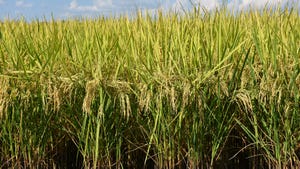
“Before herbicides, rice weed control was almost impossible; when rice herbicides came into use, yields doubled — farmers had been losing half their yield to weeds.”

Today, 90 percent to 95 percent of all U.S. cropland, about 220 million acres, is treated with herbicides each year, Gianessi says, with an estimated 550 trillion weeds killed.

“With one to two applications, growers can expect 95 percent to 100 percent season-long control of key weed species in their crops. That’s an amazing achievement. Additionally, herbicides in limited-till/no-till systems reduce soil erosion by an estimated 360 billion pounds per year, improving the quality of streams and lakes.”

There is “no magic bullet” to replace herbicides in today’s crop production system and maintain yields and quality, he says.

“The Web site of the nation’s largest organic grower operation says an organic vegetable grower may spend up to $1,000 per acre for labor and other weed control costs. Organic rice has 50 percent lower yields than conventional rice; organic corn 25 percent lower; some organic lettuce growers have as much as 50 hours per acre of hand labor in their crops, carrots 75 hours, celery 50 hours. Just think of all the back-breaking labor that goes into producing that bag of organic lettuce at the supermarket.”

In 1985, Gianessi says, the herbicide used by Florida lettuce growers was cancelled.

“From 1985 to 1993, they spent $200 to $750 per acre for hand weeding. A lot of growers went out of business. In 1993, a new herbicide was registered and since then their weed control costs are about $20 to $30 per acre.”

Given the value of herbicides to American food/fiber production, Gianessi says, “we should continue to work to have policies in place to insure that growers will have the tools they need to keep U.S. agriculture viable.”

e-mail: hbrandon@farmpress.com

Get Copyright ClearanceWant to use this article? Click here for options!
© 2009 Penton Media, Inc.


Latest Jobs

Read More Daily News

Arkansas loss near quarter billion dollars

Nov 6, 2009 2:56 PM

A wetter-than-normal growing season has cut into Arkansas’ farm receipts by more than $224.8 million as of Nov. 1, according to a preliminary report issued by the University of Arkansas Division of Agriculture....

Cotton: a lot on the ground

Nov 6, 2009 11:13 AM

Cotton losses due to record rainfall during September and October in Mississippi totaled $71 million by early November, or nearly half the value of the expected crop, according to the Mississippi Department of Agriculture and Commerce....

Rep. Cassidy: rethink conservation efforts

Nov 6, 2009 11:02 AM

The only Louisianan on the House Agriculture Committee, Rep. Bill Cassidy tries to keep his state’s agricultural interests at the forefront....

Residuals in LibertyLink program

Nov 6, 2009 10:57 AM

Before continuing with my pigweed control articles, I have tried to think of something encouraging to say about trying to get a crop out with the weather we are having. ...

Letter: Mule-headed bunch of farmers

Nov 6, 2009 10:54 AM

I was greatly disappointed in Morgan Freeman’s recent comments referring to the base stock of this state as a mule-headed bunch of farmers (see Behind the curtain: ‘mule-headed farmers’?). ...

Delta Farm Press News
Southeast Farm Press News
Southwest Farm Press News

Western Farm Press News
resources

events icon events

product info icon tradeshows

tradeshow icon digests

research icon photos

Continuing Education


(New Course)
Weed Resistance Management in Cotton

This course covers a wide range of options to effectively control weeds in cotton and reduce the risk of weed resistance management. It is accredited for hours/units for licensed/accredited applicators in 7 U.S. Cotton Belt states (Florida, Georgia, New Mexico, Oklahoma, Texas, South Carolina an d Tennessee. CCA credit is pending).

This course is accredited in Texas, Oklahoma, New Mexico, Virginia, West Virginia and Wyoming as well as for CCA credits:

(New Course)
Spray Drift Management

Keeping crop protection chemicals on the crop for which they are intended has been a cornerstone of farming not only to protect neighboring crops, but to not waste money allowing products to drift off the intended target. This accredited online continuing education course covers the critical elements of spray drift management.

Back to Top

Browse Print Issues

Additional Resources

subscribe to Farm Press Daily Southeast Farm Press Southwest Farm Press Western Farm Press