Multi-Commodity Exchange declared win-win

Dec 7, 2006 9:24 AM

The National Cotton Council has initiated a unique educational program — and it was deemed a major success by the participants and the hosts.

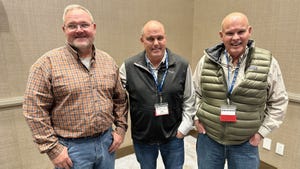
The Multi-Commodity Education Program (MCEP) was launched in October when producers from the Midwest and Far West traveled to North Carolina to observe cotton production and processing and other agricultural operations.

The schedule was developed by NCC staff in cooperation with local organizations and leaders and the trip was coordinated by NCC’s Member Services. The program is supported by The Cotton Foundation with grants from Deere & Company and Monsanto.

The exchange between commodity producers in the Sunbelt and the Midwest and Far West regions is designed to provide current and emerging producer leaders with a better understanding of production issues and concerns faced by their peers in another geographic region and an opportunity to observe agronomic practices, technology utilization, cropping patterns, marketing plans and operational structure.

“This program provides producer leaders from regions with significantly different cropping patterns, production practices and climates an opportunity to visit farms and facilities in other regions and to meet their peers in settings that facilitate the exchange of information,” said NCC Chairman Allen Helms, a Clarkedale, Ark., cotton producer.

“We believe this will contribute to a better understanding and strengthen communications between farmers regardless of their crop mixes or the locations of their operations. Ideally, the program will facilitate development of strong and lasting relationships between current and future producer leaders of American agriculture.”

The first session of what is planned to be a long-running program took place in the Raleigh, N.C., area and began with a welcome and briefing by North Carolina Cotton Producer’s Association President David Dunlow, NCC staff and program sponsors.

The group toured the Cotton Incorporated headquarters in Cary where they were briefed by CEO Berrye Worsham and his staff. They also toured Cotton Incorporated’s labs to learn about the process of converting fiber to fabric.

The group received an overview of North Carolina agriculture from local growers, including visits to operations of Max Denning (tobacco, peanuts and cotton), Gerald Warren (swine), Tull Farms (sweet potatoes) and the Sampson County gin operated by Wayne Smith. The four-day program included a tour of Hanesbrands (formerly National Textiles) and peanut production and processing facilities.

The group also met and discussed cotton storage, flow and marketing with several graduates of the NCC’s Cotton Leadership Class, including Coalter Paxton at the Paxton Bonded Warehouse, Cargill Cotton’s Robert Buckles, and Mike Quinn of the Carolinas Cotton Growers Association.

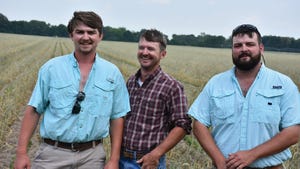
One afternoon, the visiting wheat, feedgrain and oilseed producers were hosted by local growers and given tours of their farming operations.

The group also visited Monsanto’s research facility in Mount Olive, N.C., and the John Deere dealership in Winterville, N.C.

Staff members from the North Dakota Grain Growers Association also attended the North Carolina tour in preparation for a session in 2007 that will provide an opportunity for cotton, rice and peanut producers from the Sunbelt to visit their counterparts in the Midwest and Far West. The Sunbelt growers will observe grain and oilseeds production and see renewable fuel facilities and livestock operations.

Following the North Carolina tour, Steven Pigg, a Bushnell, Ill., corn and soybean farmer, said he was impressed with the diversity of Southern agriculture.

“Many of these cotton farmers are raising multiple crops, whether it’s sweet potatoes or tobacco,” he said. “It makes me think that maybe I should add some more to my crop mix and spread the risk.”

A member of the National Corn Growers Association’s Public Policy Action Team, Pigg said, “Coincidentally NCGA’s farm policy proposal was made public the day before the session started, so I was able to informally discuss it to learn how it might affect farmers in another part of the country. I know all of U.S. agriculture needs to work together, we’re such a small percentage of the population.”

Michael Bruer, a wheat, barley and soybean grower from Alberta, Minn., said he was impressed with North Carolina farmers’ efforts to extract a premium out of their individual crops, whether it was sweet potatoes or cotton.

“Even though we produce commodities in bulk, it made me realize that maybe we could try to further segment our product as well,” Bruer said.

He said he gained an appreciation for some of the challenges facing the Sunbelt farmers, too. One of those was the challenge of moving machinery among the smaller fields.

“Where I farm, we enjoy wide open spaces and long, straight fields,” Bruer said. “We don’t have to worry as much about trees and houses when we cultivate, plant or harvest.”

Bill Greving, who raises alfalfa, sorghum and wheat in Prairie View, Kans., agreed with the field size challenge, saying field sizes in his area averaged about 80 acres versus the 20 acres he saw.

After the briefings from the NCC and Cotton Incorporated, Greving said he came away awed at how the U.S. cotton industry segments banded together years ago when faced with a loss of market share and how producers have championed the development of technology to increase efficiency from the grower to the end-user.

“I was enlightened to the fact of how important it is to find out what the end user really wants,” he said.

The other participants and their crop mixes included: Robert Rynning (wheat, soybeans, barley, canola), Kennedy, Minn.; Daniel G. Geis (wheat), Loyal, Okla.; Clinton D. Jessen (wheat, alfalfa), Pine Bluffs, Wyo.; Garry Niemeyer (corn, soybeans), Glenarm, Ill.; and Kevin A. Waslaski (canola, wheat, field peas, barley) Langdon, N.D.

All of the participants were identified through the NCC’s work with the National Association of Wheat Growers, National Sorghum Producers, National Barley Growers Association, National Sunflower Association, U.S. Canola Association, National Corn Growers Association and American Soybean Association.

One of the North Carolina hosts, Max Denning, a diversified farmer in Benson, N.C., said the MCEP participants asked a lot of questions that fueled good discussions on topics ranging from the challenge of no-till farming in the Midwest to the average age of farmers and the importance of creating incentives for people to continue farming and to attract young people to become farmers.

Denning, who is a Cotton Leadership Program graduate, too, said that he also discussed the challenge that he and other farmers in his area have of finding seasonal workers for their labor intensive operations.

“I learned that many of the Midwestern operations aren’t nearly as dependent on access to seasonal labor as we are because of their cropping patterns,” he said.

Denning said he also was interested to learn that most of the MCEP participants were concerned about the adverse impact of payment limitations saying, “they told us they need higher limitations, too.”

Get Copyright ClearanceWant to use this article? Click here for options!
© 2010 Penton Media, Inc.


Latest Jobs

Read More Daily News

NCC: 10.1 million cotton acres

Feb 8, 2010 10:30 AM

After three straight years of declines, U.S. cotton acreage could be headed back up, according to the National Cotton Council’s 27th annual Early Season Planting Intentions Survey....

Weed resistance, Washington headline Farm & Gin Show

Feb 8, 2010 10:24 AM

This year’s Mid-South Farm and Gin Show offers “perhaps the best set of exhibits ever,” says Tim Price, manager of the annual event to be held Feb. 26-27 at the downtown Memphis Cook Convention Center....

Darneille elected CCI president

Feb 8, 2010 10:22 AM

Wallace L. (Wally) Darneille, a Lubbock, Texas, cooperative official, will serve as 2010 president of Cotton Council International, the National Cotton Council’s export promotions arm....

Rice ‘growth industry’ — Weisemeyer

Feb 8, 2010 10:10 AM

Farmers attending the 2010 joint annual meeting of the Louisiana Rice Council and the Louisiana Rice Growers Association heard an optimistic report from a Washington, D.C., agriculture journalist recently....

U.S. cotton acres: 10.1 million

Feb 5, 2010 5:06 PM

U.S. cotton producers are expected to plant more than 10 million acres for the first time in three years as they begin making preparations for the 2010 planting season....

Delta Farm Press News
Southeast Farm Press News

Southwest Farm Press News
Western Farm Press News
resources

events icon events

product info icon tradeshows

tradeshow icon digests

research icon photos

Continuing Education


(New Course)
Weed Resistance Management in Cotton

This course covers a wide range of options to effectively control weeds in cotton and reduce the risk of weed resistance management. It is accredited for hours/units for licensed/accredited applicators in 7 U.S. Cotton Belt states (Florida, Georgia, New Mexico, Oklahoma, Texas, South Carolina an d Tennessee. CCA credit is pending).

This course is accredited in Texas, Oklahoma, New Mexico, Virginia, West Virginia and Wyoming as well as for CCA credits:

(New Course)
Spray Drift Management

Keeping crop protection chemicals on the crop for which they are intended has been a cornerstone of farming not only to protect neighboring crops, but to not waste money allowing products to drift off the intended target. This accredited online continuing education course covers the critical elements of spray drift management.

Back to Top

Browse Print Issues

Additional Resources

subscribe to Farm Press Daily Southeast Farm Press Southwest Farm Press Western Farm Press