Alternative oil crops may diversify farms

Nov 22, 2006 9:23 AM, By Bonnie Coblentz
MSU Ag Communications

With demand for biodiesel on the rise, researchers are looking for ways Mississippi agricultural production can contribute more to this growing market.

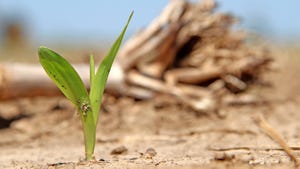
Brian Baldwin, a Mississippi Agricultural and Forestry Experiment Station researcher, is identifying alternative crops that can grow in Mississippi and produce large quantities of oil. The highest oil-producing crops are tropical, but there are other plants that can be grown in Mississippi and yield more oil per acre than those currently being grown.

“We’re looking for crops that can fit into rotation with some of our regular row crops and that produce high quantities of oil per acre,” Baldwin said. “We’re trying to find crops our producers can grow to diversify their operations.”

Soybeans, cottonseed and corn are all oil seeds, but they have a low per-acre oil yield. Poultry fat is another agricultural source of oil that is produced in Mississippi, but the potential of this oil source has not been developed.

“The three that we typically think of as oilseeds are among the lowest in yield, so it’s pretty clear that we need to be looking elsewhere,” Baldwin said.

In looking for alternative, oil-producing crops, Baldwin is examining crops from northern regions that can grow in Mississippi’s winter. These crops also would need to fit into producers’ existing crop rotation.

So far he has identified eight winter and three summer alternative crops. Castor has emerged as potentially the best summer crop and canola as the best winter crop.

He described a potential row crop rotation with an oilseed crop.

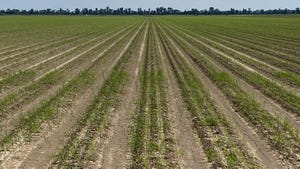
“A producer could finish his corn crop and then plant canola,” Baldwin said. “Canola won’t be done until the following June, which is too late to plant cotton and probably too late to plant soybeans. That producer could plant sunflower as a catch-up crop, and this second oilseed crop would finish off with the frost.”

In this scenario, the land would lie dormant over winter and be ready for corn or another traditional row crop in the spring.

Castor is a summer crop with very high oil content. It is toxic to mammals, although the plant is already found across the state, often as an ornamental. Its postharvest processing would have to be done with equipment dedicated to this crop to prevent contamination of feed crops.

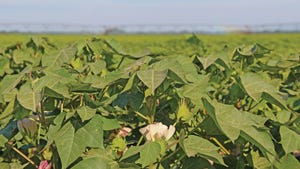
Offsetting these disadvantages is the fact that castor would be beneficial grown in rotation with cotton or soybeans because it controls several species of pathogenic nematodes. It also yields three times the oil of soybeans on a per-acre basis.

“That’s hard to ignore,” Baldwin said. “It’s a highly desirable oil in diesel engines and is easily processed into biodiesel.”

The goal of the MSU research is to give producers options as they diversify their farm production and to identify the best oilseed crops for the production of biodiesel in Mississippi.

Crop diversification is a farm management tool to limit risk. Alternative crops may give producers new crop options while also helping to reduce American dependence on foreign oil.

Rafael Hernandez, a chemical engineer in MSU’s Bagley College of Engineering, is evaluating the oils produced by alternative crops to see if they will perform well as biodiesel.

“Several crops have been identified that would generate oil in large quantities that could be used for the production of biodiesel in the Southeast,” Hernandez said. “Our objective in chemical engineering is to take these crops, extract the oils and find the optimum chemical conditions for the production of high-quality biodiesel.”

Hernandez said MSU is producing biodiesel in small quantities now for research and evaluation purposes.

“We can envision in the future producing biodiesel from the animal fats within MSU’s cafeteria or from oil extracted from MSU crops to run the shuttle system on campus,” Hernandez said.

In August, MSU held a heavily attended biodiesel workshop to educate producers and the public on this renewable fuel’s potential. Based on high interest and attendance, another similar workshop is planned for next year.

Get Copyright ClearanceWant to use this article? Click here for options!
© 2009 Penton Media, Inc.


Latest Jobs

Read More Daily News

Arkansas loss near quarter billion dollars

Nov 6, 2009 2:56 PM

A wetter-than-normal growing season has cut into Arkansas’ farm receipts by more than $224.8 million as of Nov. 1, according to a preliminary report issued by the University of Arkansas Division of Agriculture....

Cotton: a lot on the ground

Nov 6, 2009 11:13 AM

Cotton losses due to record rainfall during September and October in Mississippi totaled $71 million by early November, or nearly half the value of the expected crop, according to the Mississippi Department of Agriculture and Commerce....

Rep. Cassidy: rethink conservation efforts

Nov 6, 2009 11:02 AM

The only Louisianan on the House Agriculture Committee, Rep. Bill Cassidy tries to keep his state’s agricultural interests at the forefront....

Residuals in LibertyLink program

Nov 6, 2009 10:57 AM

Before continuing with my pigweed control articles, I have tried to think of something encouraging to say about trying to get a crop out with the weather we are having. ...

Letter: Mule-headed bunch of farmers

Nov 6, 2009 10:54 AM

I was greatly disappointed in Morgan Freeman’s recent comments referring to the base stock of this state as a mule-headed bunch of farmers (see Behind the curtain: ‘mule-headed farmers’?). ...

Delta Farm Press News

Southeast Farm Press News

Southwest Farm Press News
Western Farm Press News

resources

events icon events

product info icon tradeshows

tradeshow icon digests

research icon photos

Continuing Education


(New Course)
Weed Resistance Management in Cotton

This course covers a wide range of options to effectively control weeds in cotton and reduce the risk of weed resistance management. It is accredited for hours/units for licensed/accredited applicators in 7 U.S. Cotton Belt states (Florida, Georgia, New Mexico, Oklahoma, Texas, South Carolina an d Tennessee. CCA credit is pending).

This course is accredited in Texas, Oklahoma, New Mexico, Virginia, West Virginia and Wyoming as well as for CCA credits:

(New Course)
Spray Drift Management

Keeping crop protection chemicals on the crop for which they are intended has been a cornerstone of farming not only to protect neighboring crops, but to not waste money allowing products to drift off the intended target. This accredited online continuing education course covers the critical elements of spray drift management.

Back to Top

Continuing Education


(New Course)
Weed Resistance Management in Cotton

This course covers a wide range of options to effectively control weeds in cotton and reduce the risk of weed resistance management. It is accredited for hours/units for licensed/accredited applicators in 7 U.S. Cotton Belt states (Florida, Georgia, New Mexico, Oklahoma, Texas, South Carolina an d Tennessee. CCA credit is pending).

This course is accredited in Texas, Oklahoma, New Mexico, Virginia, West Virginia and Wyoming as well as for CCA credits:

(New Course)
Spray Drift Management

Keeping crop protection chemicals on the crop for which they are intended has been a cornerstone of farming not only to protect neighboring crops, but to not waste money allowing products to drift off the intended target. This accredited online continuing education course covers the critical elements of spray drift management.

Browse Print Issues

Additional Resources

subscribe to Farm Press Daily Southeast Farm Press Southwest Farm Press Western Farm Press