Time is right to adopt precision agriculture

Nov 20, 2006 10:23 AM, By Elton Robinson
Farm Press Editorial Staff

The stars, or perhaps one should say, the satellites, have never been more perfectly aligned for farmers to adopt precision agriculture, according to Roger Carter, Clayton, La., crop consultant. There’s money to be saved and made, as well as cost-share assistance from a government program.

But if you’re just starting, Carter suggests that you keep it simple and don’t get bogged down by definitions.

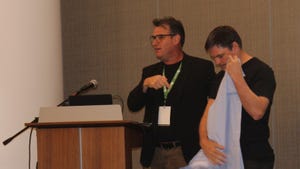
Carter, speaking at Cotton Incorporated’s Crop Management Seminar in Memphis, says that the Mid-South offers a good opportunity for precision agriculture to grow. “Along the Mississippi River, our alluvial soils are very fertile, but they are very diverse.”

Carter noted that before today’s Global Positioning System of satellites was launched into space, he and his clients employed a low-tech version of precision agriculture. “We’ve been doing precision soil sampling for a long time, going to a specific spot in the field that has a problem and pulling a soil sample. In the 1970s, we did spot sampling and spot applications.

“In the 1980s and early 1990s, we were observing what the Midwest was doing. In the 2000, we began GPS mapping of field boundaries, and in 2001, we installed our first cotton yield monitor.”

Also that year, Carter’s Agricultural Management Services, Inc., rented a Veris mapping cart from fellow Louisiana consultant Harold Lambert and started mapping soil electrical conductivity (EC), which can be highly correlated to soil type. In 2002, Carter’s company began writing prescriptions for variable-rate applications using FarmWorks software based on soil variability.

AMS demonstrated variable-rate nitrogen on several of its clients’ farms, and in 2003 began using InTime aerial imagery. AMS increased EC mapping to about 5,000 acres in 2003-04. In 2005, it did more on-farm demonstrations, signed up several of its farmers with InTime, began selecting variable-rate equipment and writing prescriptions. AMS also processed about 4,000 acres of Veris data and put together continuing education classes with clients.

Carter added InTime imagery to the program because “there is some variability that we do not see with the Veris (EC) data.” The infrared aerial imagery, which is basically a measurement of plant biomass, “is also much less expensive on an annual basis, is user friendly, but requires clear weather. You have to keep the crop clean. It will read pigweeds and morningglories, too.”

Carter added that with some of the newer Veris rigs, “we can measure fertility. It’s not very user-friendly, it’s more expensive, and the timeliness is controlled by the amount of moisture in the soil.”

In 2006, AMS encouraged area farmers to sign up for precision agriculture funds available through the EQIP program.

The latter “has really helped to drive precision agriculture in our area. The first year, growers can get soil samples from EC data or grid sampling. The second and third year of the program, they can put out variable-rate fertilizer and run a yield monitor. It pays $14 per acre per year, or $42 an acre for the three-year program, with the yield monitor data. It pays $7 per acre, per year, or $21 for the three-year program if you do not have a yield monitor. The program is limited to 600 acres per entity, per county. That’s the interpretation that Louisiana has. It may vary in other states.”

Carter says that precision farming techniques “might reduce inputs per acre and enhance yields and quality. It will allow producers to put certain rates on certain areas and it should return on investment many times over.”

By using Veris data, Carter reduced nitrogen use on one farm by $6.25 an acre and reduced plant growth regulator costs by $7.50 an acre. Using InTime imagery, the farmer reduced defoliant costs by $7.24 an acre.

Carter charges $5 an acre per year for collecting EC data via the Veris rig. “We split the costs over two years. Sometimes, it takes a while for them to get their EQIP money from the government. We charge 50 cents to $1.50 per acre for prescriptions, depending on the producer, the number of acres and how long it takes to do it. For equipment instruction on what we know how to run, we charge a nominal fee.”

If you’re interested in site-specific farming, Carter suggests “not getting bogged down by definitions. Keep it simple and work with it every day so you can keep up with it. You need to outsource. You can’t do everything yourself. Work with friends, partners and groups.”

And be patient. “We’re going from the old to the new. It took a long time to go from hand-picked cotton to machine-picked cotton. Precision agriculture is not going to happen overnight, but we will eventually get there.”

Don’t get in too far, too fast either. “Expensive equipment will not make up for lack of talent or practice. Ignorance is very expensive. We need to have our farmers pick, gin and sell a profitable crop. The technology is there, the opportunity is there and it doesn’t take but a little time to learn it.

“Everyone is watching what we’re doing,” Carter said. “There are a lot of warm and fuzzy folks that want to help you. But there is only a limited amount of money out there through the EQIP program. So we suggest that for people who want to do it, now is a good time to get started.”

e-mail: erobinson@farmpress.com

Get Copyright ClearanceWant to use this article? Click here for options!
© 2009 Penton Media, Inc.


Latest Jobs

Read More Daily News

Arkansas loss near quarter billion dollars

Nov 6, 2009 2:56 PM

A wetter-than-normal growing season has cut into Arkansas’ farm receipts by more than $224.8 million as of Nov. 1, according to a preliminary report issued by the University of Arkansas Division of Agriculture....

Cotton: a lot on the ground

Nov 6, 2009 11:13 AM

Cotton losses due to record rainfall during September and October in Mississippi totaled $71 million by early November, or nearly half the value of the expected crop, according to the Mississippi Department of Agriculture and Commerce....

Rep. Cassidy: rethink conservation efforts

Nov 6, 2009 11:02 AM

The only Louisianan on the House Agriculture Committee, Rep. Bill Cassidy tries to keep his state’s agricultural interests at the forefront....

Residuals in LibertyLink program

Nov 6, 2009 10:57 AM

Before continuing with my pigweed control articles, I have tried to think of something encouraging to say about trying to get a crop out with the weather we are having. ...

Letter: Mule-headed bunch of farmers

Nov 6, 2009 10:54 AM

I was greatly disappointed in Morgan Freeman’s recent comments referring to the base stock of this state as a mule-headed bunch of farmers (see Behind the curtain: ‘mule-headed farmers’?). ...

Delta Farm Press News

Southeast Farm Press News

Southwest Farm Press News
Western Farm Press News

resources

events icon events

product info icon tradeshows

tradeshow icon digests

research icon photos

Continuing Education


(New Course)
Weed Resistance Management in Cotton

This course covers a wide range of options to effectively control weeds in cotton and reduce the risk of weed resistance management. It is accredited for hours/units for licensed/accredited applicators in 7 U.S. Cotton Belt states (Florida, Georgia, New Mexico, Oklahoma, Texas, South Carolina an d Tennessee. CCA credit is pending).

This course is accredited in Texas, Oklahoma, New Mexico, Virginia, West Virginia and Wyoming as well as for CCA credits:

(New Course)
Spray Drift Management

Keeping crop protection chemicals on the crop for which they are intended has been a cornerstone of farming not only to protect neighboring crops, but to not waste money allowing products to drift off the intended target. This accredited online continuing education course covers the critical elements of spray drift management.

Back to Top

Continuing Education


(New Course)
Weed Resistance Management in Cotton

This course covers a wide range of options to effectively control weeds in cotton and reduce the risk of weed resistance management. It is accredited for hours/units for licensed/accredited applicators in 7 U.S. Cotton Belt states (Florida, Georgia, New Mexico, Oklahoma, Texas, South Carolina an d Tennessee. CCA credit is pending).

This course is accredited in Texas, Oklahoma, New Mexico, Virginia, West Virginia and Wyoming as well as for CCA credits:

(New Course)
Spray Drift Management

Keeping crop protection chemicals on the crop for which they are intended has been a cornerstone of farming not only to protect neighboring crops, but to not waste money allowing products to drift off the intended target. This accredited online continuing education course covers the critical elements of spray drift management.

Browse Print Issues

Additional Resources

subscribe to Farm Press Daily Southeast Farm Press Southwest Farm Press Western Farm Press