No Cheniere in Arkansas in 2007

Nov 8, 2006 10:30 AM, By David Bennett
Farm Press Editorial Staff

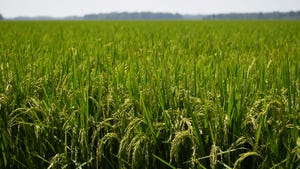
While the decision has yet to be set in stone, it appears Cheniere — a popular, long-grain rice variety — won’t be planted in Arkansas in 2007. This comes after several months of market turmoil following a USDA announcement that a tiny amount of a GM trait — Bayer’s LibertyLink — was found in the U.S. rice supply.

BELL

On Nov. 3, Richard Bell, who heads the Arkansas Department of Agriculture, spoke to Delta Farm Press about the Cheniere decision, state Plant Board plans and how Cuba might figure in the situation. Among his comments:

On taking Cheniere off the table…

“We’ve discovered that some of the foundation seed we thought was free of LL601, actually has the trait. It was used to produce the seed available for planting the 2007 crop.

“There was a Rice Federation-sponsored meeting in Dallas (the week of Oct. 30) that Darryl Little, director of the Arkansas Plant Board, and Mary Smith, head of the Plant Board seed division, attended. After that, we concluded that — in Arkansas, at least — we won’t have any Cheniere rice planted at all in 2007.

“There’s no Cheniere seed available that we’re assured to be free of LL601, so we’re asking producers not to plant it. Darryl will work up some proposals for the Plant Board to consider during its November meetings.

“We intend to test the seed available for planting prior to the 2007 planting season. Darryl is setting that up now.

“A certain percentage of operations use bin-run seed. That’s where a farmer will keep his rice and plant it the following year. We’re going to expect bin-run to be tested.”

But, as far as you know, the problem is still confined to Cheniere?

“Yes. We hear reports about other varieties, but as far as we know, that’s just talk.”

The people who contacted Riceland last January are being referred to as a ‘rice export customer.’ Would that be a U.S. rice exporter like ADM? Or are they an actual foreign buyer?

“It’s a European buyer. I was at a Riceland meeting on Nov. 2, and they explained the events from January through August.

“The first finding was in late January. They said a test discovered a biotech trait. At the time, everyone believed it was a piece of corn or a soybean that was mixed in with the rice.

“The problem was Riceland didn’t have the information to determine what this biotech trait was. They knew it had something to do with Liberty herbicide, but that’s as far they could go. After testing for some time, they asked Bayer what it was.

“Bayer asked for a sample so they could do the analysis, because it was a patented product and the company needed to protect the genetic code.

“Bayer came back a few weeks later and said it was LL601. But they didn’t know where it came from. Because of APHIS regulations, they had to report it that afternoon. That began the chain of events.”

I understand Cuba could play a positive role in this?

“I believe Cuba will take rice that may have LL601 in it once LL601 is deregulated by APHIS.

“I believe the only real market problem we have is the EU. If you look at rough rice sales, that go primarily to the Western Hemisphere, they’re running well ahead of a year ago. Milled rice export sales, which includes Europe, are down. In fact, Europe is sending some rice back.”

Since this was a European company that blew the whistle on LL rice contamination, why haven’t they trumpeted that fact? Is that not odd? From the reaction of the EU, the discovery would seem to be a feather in that company’s cap.

“Yes, I agree it’s odd… But everyone agrees — including their member state food authorities and EU authorities in Brussels — that there’s no health risk with this rice. The only problem is, the way EU regulations are written, it’s unlawful.”

e-mail: dbennett@farmpress.com

Get Copyright ClearanceWant to use this article? Click here for options!
© 2009 Penton Media, Inc.


Latest Jobs

Read More Daily News

Arkansas loss near quarter billion dollars

Nov 6, 2009 2:56 PM

A wetter-than-normal growing season has cut into Arkansas’ farm receipts by more than $224.8 million as of Nov. 1, according to a preliminary report issued by the University of Arkansas Division of Agriculture....

Cotton: a lot on the ground

Nov 6, 2009 11:13 AM

Cotton losses due to record rainfall during September and October in Mississippi totaled $71 million by early November, or nearly half the value of the expected crop, according to the Mississippi Department of Agriculture and Commerce....

Rep. Cassidy: rethink conservation efforts

Nov 6, 2009 11:02 AM

The only Louisianan on the House Agriculture Committee, Rep. Bill Cassidy tries to keep his state’s agricultural interests at the forefront....

Residuals in LibertyLink program

Nov 6, 2009 10:57 AM

Before continuing with my pigweed control articles, I have tried to think of something encouraging to say about trying to get a crop out with the weather we are having. ...

Letter: Mule-headed bunch of farmers

Nov 6, 2009 10:54 AM

I was greatly disappointed in Morgan Freeman’s recent comments referring to the base stock of this state as a mule-headed bunch of farmers (see Behind the curtain: ‘mule-headed farmers’?). ...

Delta Farm Press News
Southeast Farm Press News
Southwest Farm Press News

Western Farm Press News
resources

events icon events

product info icon tradeshows

tradeshow icon digests

research icon photos

Continuing Education


(New Course)
Weed Resistance Management in Cotton

This course covers a wide range of options to effectively control weeds in cotton and reduce the risk of weed resistance management. It is accredited for hours/units for licensed/accredited applicators in 7 U.S. Cotton Belt states (Florida, Georgia, New Mexico, Oklahoma, Texas, South Carolina an d Tennessee. CCA credit is pending).

This course is accredited in Texas, Oklahoma, New Mexico, Virginia, West Virginia and Wyoming as well as for CCA credits:

(New Course)
Spray Drift Management

Keeping crop protection chemicals on the crop for which they are intended has been a cornerstone of farming not only to protect neighboring crops, but to not waste money allowing products to drift off the intended target. This accredited online continuing education course covers the critical elements of spray drift management.

Back to Top

Continuing Education


(New Course)
Weed Resistance Management in Cotton

This course covers a wide range of options to effectively control weeds in cotton and reduce the risk of weed resistance management. It is accredited for hours/units for licensed/accredited applicators in 7 U.S. Cotton Belt states (Florida, Georgia, New Mexico, Oklahoma, Texas, South Carolina an d Tennessee. CCA credit is pending).

This course is accredited in Texas, Oklahoma, New Mexico, Virginia, West Virginia and Wyoming as well as for CCA credits:

(New Course)
Spray Drift Management

Keeping crop protection chemicals on the crop for which they are intended has been a cornerstone of farming not only to protect neighboring crops, but to not waste money allowing products to drift off the intended target. This accredited online continuing education course covers the critical elements of spray drift management.

Browse Print Issues

Additional Resources

subscribe to Farm Press Daily Southeast Farm Press Southwest Farm Press Western Farm Press