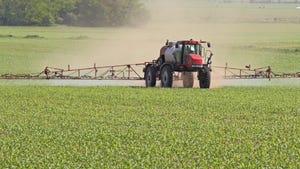
Impacts from late/delayed planting of soybeans

Nov 1, 2006 10:04 AM, By Larry G. Heatherly
Freelance Writer

Many of my previous articles have touted planting soybeans early in the Mid-South to achieve greater yields and returns. However, there are other reasons for planting early that, if not achieved, may result in increased costs and/or lost income.

HEATHERLY

When planning for early planting, producers select top varieties from an early maturity group. If planting is delayed to late May and beyond, these early-maturing varieties may be unsuitable.

Therefore, it is probable that the already-purchased seeds of early-maturing varieties will have to be replaced with those of later-maturing varieties, resulting in additional cost.

In stale seedbed late plantings, there probably will be additional preplant herbicide weed control costs beyond those for the normal late February/early March application of burndown herbicides. Where tillage is used to prepare a seedbed for plantings that are delayed into late May and beyond, additional operations likely will be required to kill weeds that emerged since earlier tillage or application of burndown herbicides.

According to the Mississippi State Budget Generator, disking and field cultivation costs are about $8 and $6 per acre, respectively.

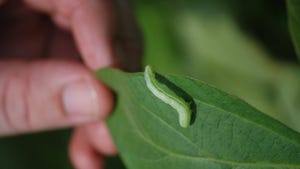
Planting late results in later maturity and the concurrent risk of detrimental late-season insect infestations (See Aug. 18, 2006, Delta Farm Press). This results in either increased cost associated with more spraying or yield loss if control measures are not applied.

A rule of thumb is that early plantings will require treatment for stink bugs, but only rarely will require treatment for foliage- and pod-feeding insects. Late plantings will require treatment for stink bug control and likely a treatment for control of foliage- and pod-feeding worms.

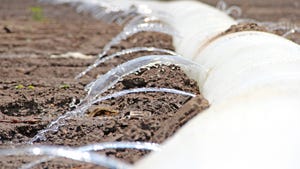
Planting late results in later maturity and the concurrent risk of detrimental late-season effects from drought. Late plantings generally require more irrigation, and this translates to $8 to $10 per acre higher costs. Escalating fuel prices will increase this extra cost for more irrigation of late-planted soybeans.

Harvest of early-planted soybeans in the Mid-South generally occurs from mid-August through mid-September, when soil usually is dry.

Later-maturing varieties used in late plantings will be harvested in October and November when there is a greater probability of rain and wet soil. Harvesting at this time usually results in some level of rutting. If tillage is required to remove these ruts the following spring, the opportunity for an early planting date may be missed.

Weather and pest problems that often afflict late-planted soybeans may lead to soil conditions or yield potential that results in the crop not being harvested. According to the National Agricultural Statistics Service, an annual average of 2.8 percent — 178,000 acres — of the Arkansas, Louisiana, Mississippi, and Tennessee soybean crop was not harvested from 2001 through 2005. It is likely that most of this unharvested acreage was late-planted. This can translate to an annual loss of over $25 million income to the region.

The threat of Asian soybean rust to the Mid-South soybean crop was a major concern in 2005 and 2006. However, rust was not detected in soybean sentinel plots in the extreme southern part of the region until late July of both years.

Its progression was minimal through mid-August. By this time, soybeans in early plantings were past the stage (R6 or full seed) for measurable damage from rust, or had been harvested.

Thus, it appears that early plantings will avoid late-season rust infestations when the inoculation source is from re-introduction of the rust pathogen into the major soybean-producing areas of the United States.

Conversely, late plantings likely will require treatment to prevent or control anticipated late-season rust infestations.

e-mail: larryheatherly@bellsouth.net

Get Copyright ClearanceWant to use this article? Click here for options!
© 2009 Penton Media, Inc.


Latest Jobs

Read More Daily News

Arkansas loss near quarter billion dollars

Nov 6, 2009 2:56 PM

A wetter-than-normal growing season has cut into Arkansas’ farm receipts by more than $224.8 million as of Nov. 1, according to a preliminary report issued by the University of Arkansas Division of Agriculture....

Cotton: a lot on the ground

Nov 6, 2009 11:13 AM

Cotton losses due to record rainfall during September and October in Mississippi totaled $71 million by early November, or nearly half the value of the expected crop, according to the Mississippi Department of Agriculture and Commerce....

Rep. Cassidy: rethink conservation efforts

Nov 6, 2009 11:02 AM

The only Louisianan on the House Agriculture Committee, Rep. Bill Cassidy tries to keep his state’s agricultural interests at the forefront....

Residuals in LibertyLink program

Nov 6, 2009 10:57 AM

Before continuing with my pigweed control articles, I have tried to think of something encouraging to say about trying to get a crop out with the weather we are having. ...

Letter: Mule-headed bunch of farmers

Nov 6, 2009 10:54 AM

I was greatly disappointed in Morgan Freeman’s recent comments referring to the base stock of this state as a mule-headed bunch of farmers (see Behind the curtain: ‘mule-headed farmers’?). ...

Delta Farm Press News

Southeast Farm Press News
Southwest Farm Press News

Western Farm Press News
resources

events icon events

product info icon tradeshows

tradeshow icon digests

research icon photos

Continuing Education


(New Course)
Weed Resistance Management in Cotton

This course covers a wide range of options to effectively control weeds in cotton and reduce the risk of weed resistance management. It is accredited for hours/units for licensed/accredited applicators in 7 U.S. Cotton Belt states (Florida, Georgia, New Mexico, Oklahoma, Texas, South Carolina an d Tennessee. CCA credit is pending).

This course is accredited in Texas, Oklahoma, New Mexico, Virginia, West Virginia and Wyoming as well as for CCA credits:

(New Course)
Spray Drift Management

Keeping crop protection chemicals on the crop for which they are intended has been a cornerstone of farming not only to protect neighboring crops, but to not waste money allowing products to drift off the intended target. This accredited online continuing education course covers the critical elements of spray drift management.

Back to Top

Continuing Education


(New Course)
Weed Resistance Management in Cotton

This course covers a wide range of options to effectively control weeds in cotton and reduce the risk of weed resistance management. It is accredited for hours/units for licensed/accredited applicators in 7 U.S. Cotton Belt states (Florida, Georgia, New Mexico, Oklahoma, Texas, South Carolina an d Tennessee. CCA credit is pending).

This course is accredited in Texas, Oklahoma, New Mexico, Virginia, West Virginia and Wyoming as well as for CCA credits:

(New Course)
Spray Drift Management

Keeping crop protection chemicals on the crop for which they are intended has been a cornerstone of farming not only to protect neighboring crops, but to not waste money allowing products to drift off the intended target. This accredited online continuing education course covers the critical elements of spray drift management.

Browse Print Issues

Additional Resources

subscribe to Farm Press Daily Southeast Farm Press Southwest Farm Press Western Farm Press