Corn growers, universities receive drainage management grant

Sep 18, 2006 8:26 AM

USDA’s Natural Resources Conservation Service has awarded a $2.2 million grant to the National Corn Growers Association and other groups to study impacts of drainage water management.

Besides NCGA, grant recipients include the Agricultural Drainage Management Coalition, the University of Minnesota, Iowa State University, the University of Illinois, Purdue University, Ohio State University and the Minnesota Department of Agriculture.

“We’re happy the money is available to research drainage management,” said Bill Chase, chairman of the NCGA Production and Stewardship Action Team. “This is an important issue for agriculture. Now we can compare drainage projects throughout several states and determine future best management practices for farmers in the Corn Belt.”

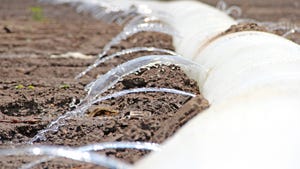
The grant will allow farmers and researchers to study management practices that control subsurface drains to better conserve water and reduce nutrient loss. The project will examine yield effects and pollution reduction and develop management recommendations for Midwestern farmers.

The demonstration projects will utilize the latest technologies, including satellite-controlled water level monitor structures that farmers will be able to control using Web-based applications, according to Merlyn Carlson, USDA deputy undersecretary for natural resources and conservation.

“This grant will help our organization develop management recommendations for farmers, as well as quantify the yield impacts of this practice,” said Tade Sullivan, executive director of ADMC. “We are fortunate to have a distinguished group of research partners and to be able to engage producers directly in developing the recommendations.”

Drainage water management holds a great deal of promise for corn growers because research has shown a 30 to 50 percent reduction in nitrate, a contributor to hypoxia.

Get Copyright ClearanceWant to use this article? Click here for options!
© 2010 Penton Media, Inc.


Latest Jobs

Read More Daily News

Tillage tests — ‘trash farm for profit’

Feb 9, 2010 9:47 AM

As he speaks, Merle Anders has a small prop on the table behind him: a baseball cap inscribed with “Trash Farming for Profit.” ...

Reduced-till and cotton seedling diseases

Feb 9, 2010 9:43 AM

Managing no-till or reduced-till cotton production properly, including following appropriate planting recommendations and taking care of early weed problems, may reduce potential for disease outbreaks....

Chicken litter — ‘smell of success’

Feb 9, 2010 9:33 AM

Having used poultry litter on his family’s Jonesboro, Ark.-area farm for years, Wayne Wiggins III is a proponent of the practice. ...

NCC: 10.1 million cotton acres

Feb 8, 2010 10:30 AM

After three straight years of declines, U.S. cotton acreage could be headed back up, according to the National Cotton Council’s 27th annual Early Season Planting Intentions Survey....

Weed resistance, Washington headline Farm & Gin Show

Feb 8, 2010 10:24 AM

This year’s Mid-South Farm and Gin Show offers “perhaps the best set of exhibits ever,” says Tim Price, manager of the annual event to be held Feb. 26-27 at the downtown Memphis Cook Convention Center....

Delta Farm Press News

Southeast Farm Press News
Southwest Farm Press News

Western Farm Press News
resources

events icon events

product info icon tradeshows

tradeshow icon digests

research icon photos

Continuing Education


(New Course)
Weed Resistance Management in Cotton

This course covers a wide range of options to effectively control weeds in cotton and reduce the risk of weed resistance management. It is accredited for hours/units for licensed/accredited applicators in 7 U.S. Cotton Belt states (Florida, Georgia, New Mexico, Oklahoma, Texas, South Carolina an d Tennessee. CCA credit is pending).

This course is accredited in Texas, Oklahoma, New Mexico, Virginia, West Virginia and Wyoming as well as for CCA credits:

(New Course)
Spray Drift Management

Keeping crop protection chemicals on the crop for which they are intended has been a cornerstone of farming not only to protect neighboring crops, but to not waste money allowing products to drift off the intended target. This accredited online continuing education course covers the critical elements of spray drift management.

Back to Top

Browse Print Issues

Additional Resources

subscribe to Farm Press Daily Southeast Farm Press Southwest Farm Press Western Farm Press