Mato Grosso soybean production could fall 30 percent next season

Aug 29, 2006 9:25 AM, By Jose Sergio Osse
Freelance Writer

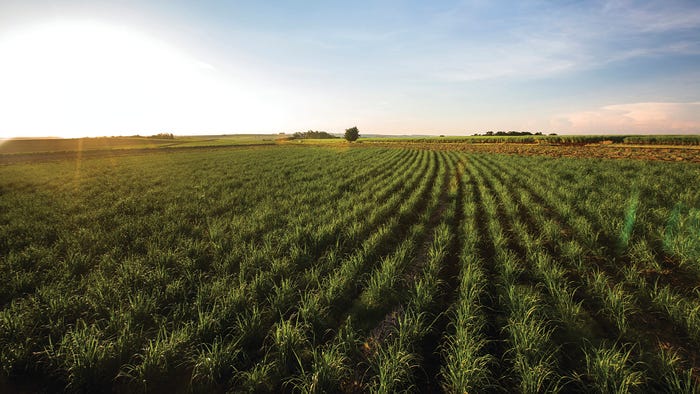
The governor of the state of Mato Grosso in Brazil, Blairo Maggi, says if the federal government fails to develop a solution for high debt rates among growers, soybean production could fall by 30 percent next season. Mato Grosso is Brazil’s biggest soybean producer.

Maggi, who is also the country’s biggest soybean producer, said, “I believe this picture (of cutbacks to production) can only be reversed if producers’ demands are attended to.”

The rural sector is demanding debt renegotiation and extended deadlines for payments. It is also asking for cuts in the national interest rate, the liberalization of imported inputs and that Asian rust be considered an epidemic.

Maggi’s role in politics gives him prominence while negotiating deals with the federal government. Behind the scenes, he has turned himself into an informal spokesman for soybean growers in his state, and within Brazil as well. He has stated that the rural sector “can’t stand the Union macroeconomic policy any longer.”

In his quest for fulfilling farmers’ demands, Maggi has warned about the impact a strong real (the national currency) and the interest rate have on agriculture. His assessments of yield and production losses due to lower prices and worsening finances are not overly pessimistic.

The predicted 30 percent decline in acreage is a conservative one. According to Rui Ottoni do Prado, president of the Soybeans Growers Association of Mato Grosso, many farmers are considering abandoning the soybean growing business. The impact of such a thing for Brazilian agriculture could be devastating.

“We have less than three months to decide what to do. If the government indeed does something concrete to aid our business, we’ll be able to plant. Otherwise, we won’t take the risk of paying out of our own pockets only to work and gain nothing, as we’ve been doing for the past two seasons,” says Prado.

The 2006-07 season starts between August and September for those growers who plant early soybean varieties. For everybody else, planting starts in late September or early October.

Recent government moves to aid farmers have not been satisfactory. What Maggi and his supporters — virtually every single person that sows a soybean — want are more profound changes rather than salvage packages.

The agricultural sector was given about $1 billion the past two months in government money so farmers could at least recoup their production costs. Many didn’t make it, even with the aid.

“When the Union announces new aid, it is only on matters of extending deadlines, and even then, at crippling interest rates,” says farmer José Nardes. “As a matter of fact, the root of our problem is the income deterioration that has been eating away at profitability for years and years, leading to debt insolvency.”

According to Ricardo Tomcyzk, executive director from Aprosoja, a soybean growers’ association, on average, the cost of producing an acre of soybeans in Mato Grosso is $211.90 per acre, versus returns of only $115.67 per acre.

“The math simply does not work, the costs are too high and the income is in free fall each season,” says Homero Pereira, president of the biggest farmer association in Mato Grosso. “There is simply no reasonable reason for us to plant in this economic reality.”

Get Copyright ClearanceWant to use this article? Click here for options!
© 2010 Penton Media, Inc.


Latest Jobs

Read More Daily News

Tillage tests — ‘trash farm for profit’

Feb 9, 2010 9:47 AM

As he speaks, Merle Anders has a small prop on the table behind him: a baseball cap inscribed with “Trash Farming for Profit.” ...

Reduced-till and cotton seedling diseases

Feb 9, 2010 9:43 AM

Managing no-till or reduced-till cotton production properly, including following appropriate planting recommendations and taking care of early weed problems, may reduce potential for disease outbreaks....

Chicken litter — ‘smell of success’

Feb 9, 2010 9:33 AM

Having used poultry litter on his family’s Jonesboro, Ark.-area farm for years, Wayne Wiggins III is a proponent of the practice. ...

NCC: 10.1 million cotton acres

Feb 8, 2010 10:30 AM

After three straight years of declines, U.S. cotton acreage could be headed back up, according to the National Cotton Council’s 27th annual Early Season Planting Intentions Survey....

Weed resistance, Washington headline Farm & Gin Show

Feb 8, 2010 10:24 AM

This year’s Mid-South Farm and Gin Show offers “perhaps the best set of exhibits ever,” says Tim Price, manager of the annual event to be held Feb. 26-27 at the downtown Memphis Cook Convention Center....

Delta Farm Press News

Southeast Farm Press News

Southwest Farm Press News
Western Farm Press News

resources

events icon events

product info icon tradeshows

tradeshow icon digests

research icon photos

Continuing Education


(New Course)
Weed Resistance Management in Cotton

This course covers a wide range of options to effectively control weeds in cotton and reduce the risk of weed resistance management. It is accredited for hours/units for licensed/accredited applicators in 7 U.S. Cotton Belt states (Florida, Georgia, New Mexico, Oklahoma, Texas, South Carolina an d Tennessee. CCA credit is pending).

This course is accredited in Texas, Oklahoma, New Mexico, Virginia, West Virginia and Wyoming as well as for CCA credits:

(New Course)
Spray Drift Management

Keeping crop protection chemicals on the crop for which they are intended has been a cornerstone of farming not only to protect neighboring crops, but to not waste money allowing products to drift off the intended target. This accredited online continuing education course covers the critical elements of spray drift management.

Back to Top

Browse Print Issues

Additional Resources

subscribe to Farm Press Daily Southeast Farm Press Southwest Farm Press Western Farm Press