Escalating costs cloud agriculture’s future

Jul 31, 2006 9:26 AM, By Hembree Brandon
Farm Press Editorial Staff

Mississippi’s poultry industry — the state’s largest agricultural industry in value of production — is being hit with major increases in costs as a result of higher energy prices and the fallout from last year’s Hurricanes Katrina and Rita.

Row crop producers are scrambling, too, to try and find ways to counteract similar problems.

In a seminar on “The Evolving Global Energy Market: Challenges and Opportunities for Agriculture” at the annual conference of the Mississippi Agricultural Economics Association, two farmers discussed situations they face in trying to survive in their profession.

“The cost of everything is going up,” said Lyle Hubbard, Magee, Miss., who operates six broiler houses for Tyson.

Prices for butane and propane for winter heating to protect baby chicks have escalated along with gasoline and diesel, he noted. “I used $10,000 worth of butane for one flock this past winter.

“Electricity is more expensive for running cooling fans, pumps, and wells. Insurance following Katrina has gone up 33 percent or more. I know one producer whose insurance went from $6,200 per year to $38,000. Many are facing even higher prices, or even the possibility of being cancelled. Some companies are no longer writing insurance for our industry.

“The cost of building new poultry houses keeps going up — lumber, steel, everything’s higher. Two years ago, a new house cost $155,000 start to finish; now it’s $200,000 or more.”

While poultry companies are helping growers with additional fuel allowances, Hubbard says, “Right now it’s very tough to cash flow.

“Poultry’s a vertically integrated business, and everyone along the chain is facing the same challenges. Poultry prices are down now, and things are tough for the industry.”

Environmental issues are a constant challenge, he says, with increasing requirements for permits, recordkeeping, soil sampling, waste management, etc.

“We look at every way possible to hold the line on costs, including alternate energy. We hope methane digester systems will become more practical in terms of cost and efficiency.

“We’re also paying close attention to cleaning and maintenance of fans — cleaning them often, keeping belts tight, eliminating airflow obstructions — in order to maximize efficiency and cut down on electricity use.”

Poultry production has been a mainstay of Mississippi agriculture, Hubbard says, particularly in combination with cattle and forestry.

“But right now, the future is cloudy for our industry in terms of costs and returns.”

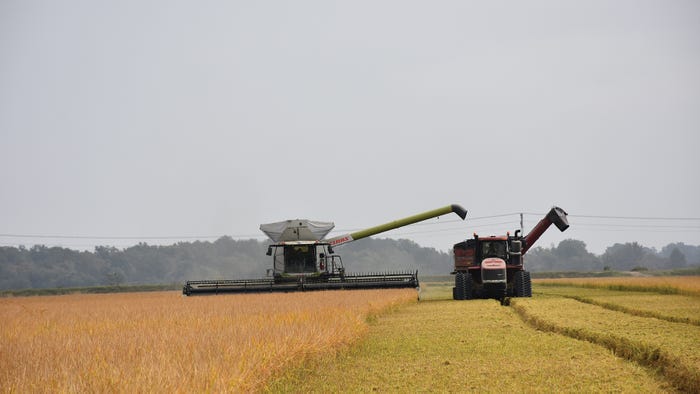
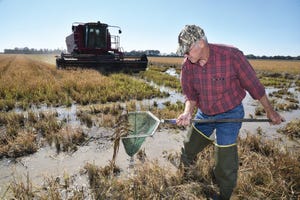
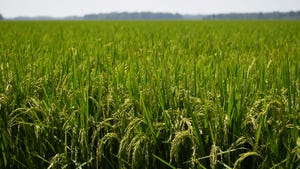
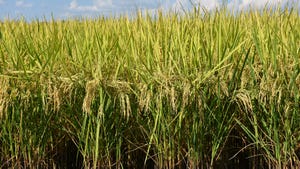
Bill Ryan Tabb, a rice/soybean producer at Cleveland, Miss., said the cost-price squeeze “has made us all better managers from start to finish — we’re looking at every detail of every operation on our farm with an eye to cutting costs, increasing efficiency, and getting maximum yields.

“It’s not just energy, but everything: which fields hold water better for rice, cutting rice earlier so we can take advantage of late summer/early fall heat and use less gas for drying.

“If we’re going to survive, we’ve got to look outside the box in our farming methods, and maybe even the crops we grow. We’ve got to adjust and cope, or look for another profession — and I’m not ready to change jobs.”

Tabb said farmers are concerned about the future of federal farm programs.

“I’m just hoping we can keep what we have in the current farm bill, but I doubt that will happen. It’s not a perfect bill, but I like the freedom-to-farm concept. The current administration has been pressing for cuts in farm programs, and I’m sure we’ll get some, but I hope they’ll be minimal, or we could see a major impact on the Delta’s economy.

“When agriculture hurts, the entire Delta hurts.”

U.S. agriculture “has a lot of solid leaders,” Tabb says, “but not a lot of them are young people. I see that as part of our job — to get more people involved in politics on behalf of agriculture.

“We’re losing support every day, and if we’re going to stay in farming, we’re going to have to fight for everything we get.”

Recalling the lines for gasoline and water that followed Hurricanes Katrina and Rita last year, Tabb said, “Just think what would kind of situation we’d be in if we dismantle the most efficient agriculture system in the world and have to rely on imports.”

e-mail: hbrandon@farmpress.com

Get Copyright ClearanceWant to use this article? Click here for options!
© 2010 Penton Media, Inc.


Latest Jobs

Read More Daily News

Tillage tests — ‘trash farm for profit’

Feb 9, 2010 9:47 AM

As he speaks, Merle Anders has a small prop on the table behind him: a baseball cap inscribed with “Trash Farming for Profit.” ...

Reduced-till and cotton seedling diseases

Feb 9, 2010 9:43 AM

Managing no-till or reduced-till cotton production properly, including following appropriate planting recommendations and taking care of early weed problems, may reduce potential for disease outbreaks....

Chicken litter — ‘smell of success’

Feb 9, 2010 9:33 AM

Having used poultry litter on his family’s Jonesboro, Ark.-area farm for years, Wayne Wiggins III is a proponent of the practice. ...

NCC: 10.1 million cotton acres

Feb 8, 2010 10:30 AM

After three straight years of declines, U.S. cotton acreage could be headed back up, according to the National Cotton Council’s 27th annual Early Season Planting Intentions Survey....

Weed resistance, Washington headline Farm & Gin Show

Feb 8, 2010 10:24 AM

This year’s Mid-South Farm and Gin Show offers “perhaps the best set of exhibits ever,” says Tim Price, manager of the annual event to be held Feb. 26-27 at the downtown Memphis Cook Convention Center....

Delta Farm Press News
Southeast Farm Press News

Southwest Farm Press News

Western Farm Press News
resources

events icon events

product info icon tradeshows

tradeshow icon digests

research icon photos

Continuing Education


(New Course)
Weed Resistance Management in Cotton

This course covers a wide range of options to effectively control weeds in cotton and reduce the risk of weed resistance management. It is accredited for hours/units for licensed/accredited applicators in 7 U.S. Cotton Belt states (Florida, Georgia, New Mexico, Oklahoma, Texas, South Carolina an d Tennessee. CCA credit is pending).

This course is accredited in Texas, Oklahoma, New Mexico, Virginia, West Virginia and Wyoming as well as for CCA credits:

(New Course)
Spray Drift Management

Keeping crop protection chemicals on the crop for which they are intended has been a cornerstone of farming not only to protect neighboring crops, but to not waste money allowing products to drift off the intended target. This accredited online continuing education course covers the critical elements of spray drift management.

Back to Top

Browse Print Issues

Additional Resources

subscribe to Farm Press Daily Southeast Farm Press Southwest Farm Press Western Farm Press