Farmers reap billions in benefits from herbicide use

Jun 29, 2006 9:27 AM, By Hembree Brandon
Farm Press Editorial Staff

Use of herbicides saved U.S. farmers 337 million gallons of fuel in 2005, produced $16 billion in crop yield increases, and cut weed control costs by $10 billion, according to a study funded by member companies of CropLife America.

Additionally, growers saved a minimum of 1.1 billion hours of hand labor for weeding, which would have required the employment of 7 million more agricultural workers.

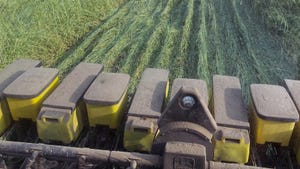
Without herbicides, the study says, farmers would have had to abandon no-till production practices, which are effective and popular techniques for reducing soil erosion; this would have meant an additional 356 billion pounds of sediments in streams and rivers, resulting in an estimated $1.4 billion in damage.

More than 90 percent of the nation’s cropland has been treated with herbicides for the past 30 years, according to Leonard Gianessi, director, and Nathan Reigner, research associate for CropLife America’s Crop Protection Research Institute.

The CropLife Foundation was created in 2001 to promote and advance sustainable agriculture and the environmentally sound use of crop protection products and bioengineered agriculture.

The report is an update of one originally issued in 2001. The same methodology was used for both, making it possible to detect fluctuations in the herbicide market and changes in the benefits of herbicides, Gianessi says.

“Due to significant price decreases for herbicides, farmers spent $300 million less between 2001 and 2005. Unfortunately, that was outweighed by increases in the cost of applying herbicides due to $500 million higher labor and fuel costs and $312 million in premium prices paid for biotech herbicide-tolerant seed.”

Thus, the total cost of herbicides and their application rose by $512 million during the period.

But, Gianessi notes, higher prices for fuel and labor also pushed up the cost of herbicide alternatives.

“The aggregate cost of cultivation and hand weeding as replacements for herbicides increased from $14.3 billion in 2001 to $16.8 billion in 2005, resulting in a net increase in weed control costs without herbicides from $7.7 billion in 2001 to $10 billion in 2005.

“The value of crops also increased significantly in the period — which means the 20 percent loss in production without herbicides is worth more in 2005 ($16 billion) than in 2001 ($13 billion). Overall, the value of herbicides increased from $21 billion in 2001 to $26 billion in 2005.”

Three major trends occurred in crop production and weed control during the period, Gianessi says, especially those relating to no-till, biotech, and organic crop production.

“The number of no-till acres on which herbicides substitute for tillage increased from 52 million acres to 62 million. The number of biotech herbicide-tolerant acres increased from 66 million acres to 94 million acres. And crops grown to organic standards, where herbicides are not used, increased by 100,000 acres, to 1.4 million.

“Organic farmers substitute labor and tillage for herbicides, which is very costly. Controlling weeds without herbicides has been cited numerous times as the largest obstacle that organic growers encounter.”

There is “not likely to be a vast expansion” in acreage of domestic organic crops due to the high cost of labor compared to many developing countries, Gianessi notes.

Without herbicide use in farm production, the report notes, the largest crop yield loss would be in corn, with output declining by about 2.7 billion bushels. This would have a corollary effect on ethanol production, since corn is the main feedstock for ethanol. It is estimated the corn loss would cut ethanol production by 7.3 billion gallons — the equivalent of the entire projected capacity of U.S. ethanol plants by 2010.

By far the largest expenditure for herbicides in both 2001 and 2005 was for corn, $2.265 billion in 2001 and $2.634 billion in 2005, followed by soybeans, with $2.11 billion in 2001 and $2.418 billion in 2005. Wheat ranked third, $649 million in 2001 and $544 million in 2005, with cotton in fourth place, with $559 million 2001 and $506 million in 2005. Rice was in fifth place, with $217 million 2001 and $248 million inn 2005.

The largest herbicide expenditures were in Midwest states. Iowa ranked first, with $808 million in total herbicide costs in 2001 and $828 million in 2005. Others in the top five in total herbicide costs were Illinois, Minnesota, Nebraska, and North Dakota.

With no herbicide use, there would have been a $7.3 billion negative impact on corn production inn 2005, $3.2 billion on cotton, $6.8 billion soybeans, $1.6 billion on wheat, and $757 million on rice.

Without herbicides, corn producers would’ve had to pay $2.3 billion more for hand labor and other weed control costs; cotton growers would’ve paid $1.2 billion more; soybean growers $2.2 billion more; and wheat growers $409 million more.

e-mail: hbrandon@farmpress.com

Get Copyright ClearanceWant to use this article? Click here for options!
© 2010 Penton Media, Inc.


Latest Jobs

Read More Daily News

NCC: 10.1 million cotton acres

Feb 8, 2010 10:30 AM

After three straight years of declines, U.S. cotton acreage could be headed back up, according to the National Cotton Council’s 27th annual Early Season Planting Intentions Survey....

Weed resistance, Washington headline Farm & Gin Show

Feb 8, 2010 10:24 AM

This year’s Mid-South Farm and Gin Show offers “perhaps the best set of exhibits ever,” says Tim Price, manager of the annual event to be held Feb. 26-27 at the downtown Memphis Cook Convention Center....

Darneille elected CCI president

Feb 8, 2010 10:22 AM

Wallace L. (Wally) Darneille, a Lubbock, Texas, cooperative official, will serve as 2010 president of Cotton Council International, the National Cotton Council’s export promotions arm....

Rice ‘growth industry’ — Weisemeyer

Feb 8, 2010 10:10 AM

Farmers attending the 2010 joint annual meeting of the Louisiana Rice Council and the Louisiana Rice Growers Association heard an optimistic report from a Washington, D.C., agriculture journalist recently....

U.S. cotton acres: 10.1 million

Feb 5, 2010 5:06 PM

U.S. cotton producers are expected to plant more than 10 million acres for the first time in three years as they begin making preparations for the 2010 planting season....

Delta Farm Press News
Southeast Farm Press News
Southwest Farm Press News

Western Farm Press News
resources

events icon events

product info icon tradeshows

tradeshow icon digests

research icon photos

Continuing Education


(New Course)
Weed Resistance Management in Cotton

This course covers a wide range of options to effectively control weeds in cotton and reduce the risk of weed resistance management. It is accredited for hours/units for licensed/accredited applicators in 7 U.S. Cotton Belt states (Florida, Georgia, New Mexico, Oklahoma, Texas, South Carolina an d Tennessee. CCA credit is pending).

This course is accredited in Texas, Oklahoma, New Mexico, Virginia, West Virginia and Wyoming as well as for CCA credits:

(New Course)
Spray Drift Management

Keeping crop protection chemicals on the crop for which they are intended has been a cornerstone of farming not only to protect neighboring crops, but to not waste money allowing products to drift off the intended target. This accredited online continuing education course covers the critical elements of spray drift management.

Back to Top

Browse Print Issues

Additional Resources

subscribe to Farm Press Daily Southeast Farm Press Southwest Farm Press Western Farm Press