House passes amendment blocking OFAC Cuba rule

Jun 22, 2006 9:29 AM, By Forrest Laws Farm Press Editorial Staff

The House voted to try again to block enforcement of a Treasury Department rule that farm groups say has reduced agricultural trade with Cuba by 22 percent since it was implemented in February 2005.

House members approved by voice vote a Transportation-Treasury spending bill amendment that would prohibit the Treasury Department from using funds to enforce the rule issued by the latter’s Office of Foreign Assets Control. The rule requires Cuba to pay for U.S. agricultural products before they leave U.S. ports.

The amendment introduced by Rep. Jerry Moran, R-Kan., was passed by the House and Senate last year but was withdrawn in the Treasury-Transportation appropriations conference committee after President Bush threatened to veto the bill because of the provision.

Moran, chairman of the House General Commodities Subcommittee, said he and other farm-state congressmen will continue to fight to block enforcement of the rule, which he said has led to a 22 percent reduction in U.S. farm product shipments to Cuba.

“What happened in February 2005 makes no economic or commercial sense,” he said. “At least in the agricultural world, there is an understanding that unilateral sanctions such as those imposed on Cuba don’t work.”

Moran said the Treasury Department OFAC rule means the Cuban government has to pay for the time that ships hauling ag products to Cuba wait in U.S. ports for payment to be accepted.

“This is really about a noncommercial reason, just trying to make the trade more onerous, more expensive, so that our farmers have less of an opportunity to export their goods to Cuba,” he said.

Congress ended a 40-year-old ban on the shipment of food and agricultural products to Cuba when it passed the Trade Sanctions Reform and Export Enhancement of 2000.

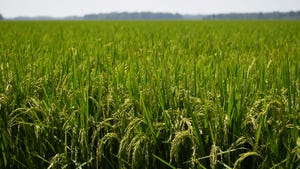
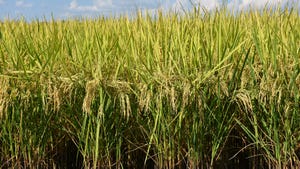
A USA Rice Federation spokesman says the Office of Foreign Assets Control rule requiring the Cuban government to pay for such shipments before the ships leaves the harbor has complicated Cuban efforts to purchase U.S. rice.

“They are still purchasing rice, but it is more difficult than it used to be,” said Stuart Proctor, president and CEO of the Arlington, Va.-based Federation. “Cuba wants to buy U.S. rice, but our government is still trying to impose new restrictions to keep us out of this market.”

Cuba was the No. 1 market for U.S. rice before Fidel Castro came to power in 1959, buying about 500,000 metric tons annually with most of the shipments originating in the United States.

“Today it’s a 750,000-ton market, and it’s primarily a Vietnamese market,” said Proctor. “We have had some success working with the Cubans to get them to buy U.S. rice, but we’re selling 180,000 to 200,000 metrics, as of last year. This should still be a 500,000-ton market for us.”

House members introduced another amendment to end the economic embargo that has been in place against Cuba since the early 1960s. But the House defeated it and an amendment to allow U.S. students to study in Cuba.

Get Copyright ClearanceWant to use this article? Click here for options!
© 2010 Penton Media, Inc.


Latest Jobs

Read More Daily News

Tillage tests — ‘trash farm for profit’

Feb 9, 2010 9:47 AM

As he speaks, Merle Anders has a small prop on the table behind him: a baseball cap inscribed with “Trash Farming for Profit.” ...

Reduced-till and cotton seedling diseases

Feb 9, 2010 9:43 AM

Managing no-till or reduced-till cotton production properly, including following appropriate planting recommendations and taking care of early weed problems, may reduce potential for disease outbreaks....

Chicken litter — ‘smell of success’

Feb 9, 2010 9:33 AM

Having used poultry litter on his family’s Jonesboro, Ark.-area farm for years, Wayne Wiggins III is a proponent of the practice. ...

NCC: 10.1 million cotton acres

Feb 8, 2010 10:30 AM

After three straight years of declines, U.S. cotton acreage could be headed back up, according to the National Cotton Council’s 27th annual Early Season Planting Intentions Survey....

Weed resistance, Washington headline Farm & Gin Show

Feb 8, 2010 10:24 AM

This year’s Mid-South Farm and Gin Show offers “perhaps the best set of exhibits ever,” says Tim Price, manager of the annual event to be held Feb. 26-27 at the downtown Memphis Cook Convention Center....

Delta Farm Press News

Southeast Farm Press News

Southwest Farm Press News

Western Farm Press News
resources

events icon events

product info icon tradeshows

tradeshow icon digests

research icon photos

Continuing Education


(New Course)
Weed Resistance Management in Cotton

This course covers a wide range of options to effectively control weeds in cotton and reduce the risk of weed resistance management. It is accredited for hours/units for licensed/accredited applicators in 7 U.S. Cotton Belt states (Florida, Georgia, New Mexico, Oklahoma, Texas, South Carolina an d Tennessee. CCA credit is pending).

This course is accredited in Texas, Oklahoma, New Mexico, Virginia, West Virginia and Wyoming as well as for CCA credits:

(New Course)
Spray Drift Management

Keeping crop protection chemicals on the crop for which they are intended has been a cornerstone of farming not only to protect neighboring crops, but to not waste money allowing products to drift off the intended target. This accredited online continuing education course covers the critical elements of spray drift management.

Back to Top

Browse Print Issues

Additional Resources

subscribe to Farm Press Daily Southeast Farm Press Southwest Farm Press Western Farm Press