Farm groups, Goodlatte tell Lamy ‘no more give in U.S. position’

Jun 15, 2006 10:21 AM, By Forrest Laws Farm Press Editorial Staff

If WTO Director General Pascal Lamy had any illusions about the U.S. position on the Doha Development Round, they were pretty well squashed during his trip to Washington this week.

In meetings with the leaders of 11 farm organizations and the chairman of the House Agriculture Committee, Lamy was told that the United States has given all the ground it will on the five-year-old negotiations to reform world trade rules.

In recent weeks, Peter Mandelson, the European Union trade commissioner, and Lamy have said they thought the United States had to make further reductions in its farm subsidies if the Doha Round negotiations had any chance of being completed this year. U.S. representatives said that won’t happen.

“Earlier this year, members of the WTO called on the United States to make an ambitious and forthcoming proposal, and the U.S. answered that call,” said House Ag Committee Chairman Robert Goodlatte. “No other country has introduced a proposal that even comes close to the U.S. proposal. Now, we are being called on to give even more and receive less.

“I conveyed to the Director General in no uncertain terms that this is not an option. There is absolutely no support in the Congress for further concessions on our part. We have yet to see strong action on the part of other WTO members, such as the EU, and we will not accept an agreement that benefits our international trading partners by putting our producers at a disadvantage.”

Leaders of farm organizations who met with Lamy in Washington on June 12 said the meeting was cordial but statements by farm groups left no doubt where the U.S. farm community stands.

“Basically, I think he was trying to get his finger on the pulse to determine where U.S. agriculture was,” said Allen Helms, chairman of the National Cotton Council. “All the groups conveyed the same message: Any offer to cut U.S. farm subsidies was contingent on other countries providing the market access we’ve been seeking.”

Helms, a producer from Clarkedale, Ark., said it was obvious Lamy had seen the June 1 letter U.S. farm organizations sent to President Bush, urging the administration not to make any more concessions in the WTO Doha Round.

“There was no lobbying on his part,” said Helms. “He was very noncommittal. He wasn’t there to negotiate his position, and, of course, neither were we.”

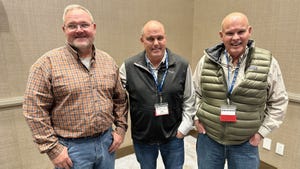
Other commodity organization leaders attending the meeting included Paul Combs, chairman of the USA Rice Producers Group, and a producer from Kennett, Mo., and National Corn Growers Association Chairman Leon Corzine.

Both Combs and Corzine said they emphasized the need for substantial improvement in market access to match the U.S. proposal on domestic supports to secure backing for a WTO agreement.

While other nations enjoy open access to U.S. markets, Goodlatte noted in a statement issued after his meeting on June 13, American agriculture does not enjoy the same access in export markets around the world.

“Our producers face steep worldwide agricultural tariffs, currently averaging 62 percent,” the Virginia Republican said. “Meanwhile, U.S. agricultural tariffs average 12 percent, ranking the United States among the lowest agricultural tariff structures in the world.

“Our producers have been unfairly denied access to markets around the world for too long, and it is time for U.S. producers to enjoy the benefits of fair trade and have full access to worldwide markets.”

Goodlatte said the United States will continue to seek access to markets for its producers and to reduce trade barriers to U.S. products. “We will not unilaterally disarm,” he noted. “Fair trade involves all parties participating equally, and, at this point, we will need to see a more aggressive effort from our trading partners.”

Email: flaws@farmpress.com

Get Copyright ClearanceWant to use this article? Click here for options!
© 2010 Penton Media, Inc.


Latest Jobs

Read More Daily News

Tillage tests — ‘trash farm for profit’

Feb 9, 2010 9:47 AM

As he speaks, Merle Anders has a small prop on the table behind him: a baseball cap inscribed with “Trash Farming for Profit.” ...

Reduced-till and cotton seedling diseases

Feb 9, 2010 9:43 AM

Managing no-till or reduced-till cotton production properly, including following appropriate planting recommendations and taking care of early weed problems, may reduce potential for disease outbreaks....

Chicken litter — ‘smell of success’

Feb 9, 2010 9:33 AM

Having used poultry litter on his family’s Jonesboro, Ark.-area farm for years, Wayne Wiggins III is a proponent of the practice. ...

NCC: 10.1 million cotton acres

Feb 8, 2010 10:30 AM

After three straight years of declines, U.S. cotton acreage could be headed back up, according to the National Cotton Council’s 27th annual Early Season Planting Intentions Survey....

Weed resistance, Washington headline Farm & Gin Show

Feb 8, 2010 10:24 AM

This year’s Mid-South Farm and Gin Show offers “perhaps the best set of exhibits ever,” says Tim Price, manager of the annual event to be held Feb. 26-27 at the downtown Memphis Cook Convention Center....

Delta Farm Press News
Southeast Farm Press News
Southwest Farm Press News

Western Farm Press News
resources

events icon events

product info icon tradeshows

tradeshow icon digests

research icon photos

Continuing Education


(New Course)
Weed Resistance Management in Cotton

This course covers a wide range of options to effectively control weeds in cotton and reduce the risk of weed resistance management. It is accredited for hours/units for licensed/accredited applicators in 7 U.S. Cotton Belt states (Florida, Georgia, New Mexico, Oklahoma, Texas, South Carolina an d Tennessee. CCA credit is pending).

This course is accredited in Texas, Oklahoma, New Mexico, Virginia, West Virginia and Wyoming as well as for CCA credits:

(New Course)
Spray Drift Management

Keeping crop protection chemicals on the crop for which they are intended has been a cornerstone of farming not only to protect neighboring crops, but to not waste money allowing products to drift off the intended target. This accredited online continuing education course covers the critical elements of spray drift management.

Back to Top

Browse Print Issues

Additional Resources

subscribe to Farm Press Daily Southeast Farm Press Southwest Farm Press Western Farm Press