Could loss of incentives put brakes on biodiesel expansion?

May 30, 2006 9:47 AM, By Elton Robinson Farm Press Editorial Staff

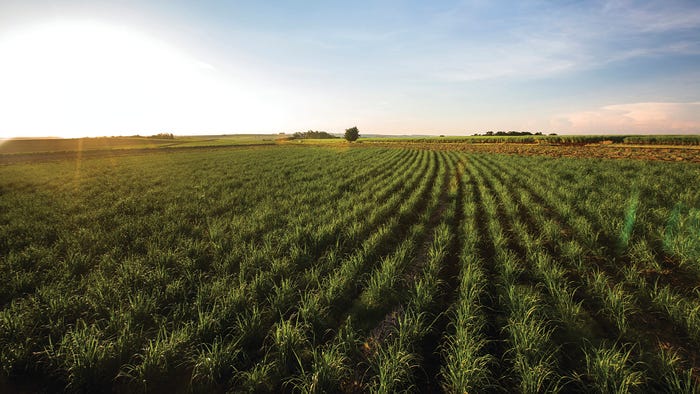
How big can biodiesel get? According to one expert, production capacity could grow to around 600 million gallons annually with soybeans as a major feedstock. But much will depend on whether federal incentives to expand biofuel production are extended, according to the American Soybean Association.

No doubt, biodiesel is enjoying exponential growth. Production has grown from 2 million gallons annually in 2000 to more than 150 million gallons projected for 2006. Today, there are 65 operational biodiesel plants, while 50 more are under construction.

How quickly expansion continues depends in part on three key government programs. The fact that none are included in President Bush’s 2007 budget proposal is a concern for U.S. soybean and biofuel industry leaders.

The U.S. Department of Agriculture established the Commodity Credit Corporation Bioenergy Program in 2001. Under the program, the CCC makes payments to eligible bioenergy producers to encourage increased purchases of agricultural commodities for expanding production of bioenergy (ethanol and biodiesel) and to encourage the construction of new production capacity. The 2002 farm bill continued the program through fiscal 2006, providing $150 million annually.

The biodiesel tax incentive was enacted by Congress in 2004. The program, as well as the recently enacted small producers’ tax credit, will expire in 2008.

“The importance of these programs can’t be overemphasized,” said Bob Metz, a fifth generation soybean producer from South Dakota and president of the ASA. “Biodiesel needs these programs to recognize its potential as a renewable fuel.”

Metz said during a media teleconference May 10 that ASA is asking Congress to extend or authorize and fund all three programs in any energy package legislation.

Currently, there are about 100 million gallons of dedicated annual biodiesel capacity in the United States, 50 million gallons of swing capacity from the chemical and petro-chemical business and about 115 million gallons under construction.

“With about 265 million gallons in place or under construction, within the next 12 to 18 months, we should have the capacity to convert about 2 billion pounds of soybean oil and other fats to biodiesel,” said John Campbell, senior vice president, industrial products and government affairs, Ag Processing Inc., the first company to construct a dedicated biodiesel plant in the United States.

“The market will take whatever we produce,” Campbell said. “Biodiesel is an extremely small fraction of the diesel fuel business and can be absorbed relatively seamlessly. The question is what the price will be. That has everything to do with crude oil and diesel fuel prices.”

Biodiesel doubled annual production from 2004 to 2005, and another doubling is projected in 2005-06. “We’re comfortable with the idea that the industry will produce about 150 million gallons this year, based on results from the first quarter,” Campbell said.

However, biodiesel has limited growth potential in the long run, especially with soybeans as a primary feedstock, according to Campbell.

“In North America, for ethanol, we use corn as the primary feedstock and we get ethanol as the primary output. There is no reason why we can’t go to 12 billion to 15 billion gallons of production in a relatively short period of time.

“That is not the case with biodiesel. In North America, our feedstock comes from soybeans. We grow soybeans for the protein, so our oil feedstocks depend on how many chickens and hogs we’re feeding with soybean meal.

“So our practical limit under current economics is only about 600 million gallons annually. That’s big for our industry, big for the soybean industry, but in the overall scope of the fuel equation, it’s not what ethanol is or can be.”

If soybeans continue to be the major feedstock for biodiesel, there are three concerns to keep an eye on, according to Campbell:

• How will the food companies respond to the trans fat issue? “Right now, soybean oil carryout has been increased because palm oil and some canola is replacing soy oil because of trans fat concerns in the marketplace.”

• What will the Doha Round do to food aid programs, and therefore the export of soybean oil?

• How will the farm bill impact feed stock availability? Will the CRP for example be opened up for planting?

Campbell expects that the diesel fuel industry will be in “extreme turmoil” this summer with the implementation of low sulfur rules for diesel fuel. “Perhaps everything will go smoothly, but we have our doubts. We suspect that with energy costs already being high and the infrastructure being stretched to the limit, that implementation of ultra-low sulfur rules for diesel by EPA will probably have to be suspended if there is any disruption in the supply chain.

“We expect there to be a lot of disruption and that will lead to higher prices. Having said that, it remains to be seen whether or not biodiesel will play a role in the issue.”

The key point, according to Metz is that a biodiesel/petrodiesel blend even as low as B2 “would replace the lubricity we are losing when we go to the ultra low sulfur.”

Congressman Collin Peterson, D-Minn., also a participant in the teleconference, said his office is trying to obtain more information on prototype biodiesel plants currently operating in Poland which can operate in very small areas and provide biodiesel to area farmers.

But Metz believes farmers are better served teaming up with industry rather than creating their own supplies of biodiesel. “It’s easier to make sure that we have the quality of biodiesel coming out of the back side of the plant. Secondly, we all pay taxes when we put diesel fuel in our tank to drive down the road. I think it’s appropriate whether it’s made at a factory or in a back yard, that taxes paid to the government are in place.”

e-mail: erobinson@farmpress.com

Get Copyright ClearanceWant to use this article? Click here for options!
© 2010 Penton Media, Inc.


Latest Jobs

Read More Daily News

Tillage tests — ‘trash farm for profit’

Feb 9, 2010 9:47 AM

As he speaks, Merle Anders has a small prop on the table behind him: a baseball cap inscribed with “Trash Farming for Profit.” ...

Reduced-till and cotton seedling diseases

Feb 9, 2010 9:43 AM

Managing no-till or reduced-till cotton production properly, including following appropriate planting recommendations and taking care of early weed problems, may reduce potential for disease outbreaks....

Chicken litter — ‘smell of success’

Feb 9, 2010 9:33 AM

Having used poultry litter on his family’s Jonesboro, Ark.-area farm for years, Wayne Wiggins III is a proponent of the practice. ...

NCC: 10.1 million cotton acres

Feb 8, 2010 10:30 AM

After three straight years of declines, U.S. cotton acreage could be headed back up, according to the National Cotton Council’s 27th annual Early Season Planting Intentions Survey....

Weed resistance, Washington headline Farm & Gin Show

Feb 8, 2010 10:24 AM

This year’s Mid-South Farm and Gin Show offers “perhaps the best set of exhibits ever,” says Tim Price, manager of the annual event to be held Feb. 26-27 at the downtown Memphis Cook Convention Center....

Delta Farm Press News

Southeast Farm Press News

Southwest Farm Press News
Western Farm Press News

resources

events icon events

product info icon tradeshows

tradeshow icon digests

research icon photos

Continuing Education


(New Course)
Weed Resistance Management in Cotton

This course covers a wide range of options to effectively control weeds in cotton and reduce the risk of weed resistance management. It is accredited for hours/units for licensed/accredited applicators in 7 U.S. Cotton Belt states (Florida, Georgia, New Mexico, Oklahoma, Texas, South Carolina an d Tennessee. CCA credit is pending).

This course is accredited in Texas, Oklahoma, New Mexico, Virginia, West Virginia and Wyoming as well as for CCA credits:

(New Course)
Spray Drift Management

Keeping crop protection chemicals on the crop for which they are intended has been a cornerstone of farming not only to protect neighboring crops, but to not waste money allowing products to drift off the intended target. This accredited online continuing education course covers the critical elements of spray drift management.

Back to Top

Browse Print Issues

Additional Resources

subscribe to Farm Press Daily Southeast Farm Press Southwest Farm Press Western Farm Press