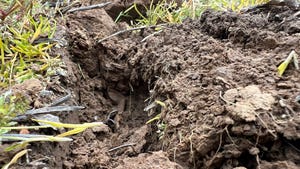
Brazilian agribusiness crisis slash down farmland prices

Apr 6, 2006 4:49 PM, By Jose Sergio Osse

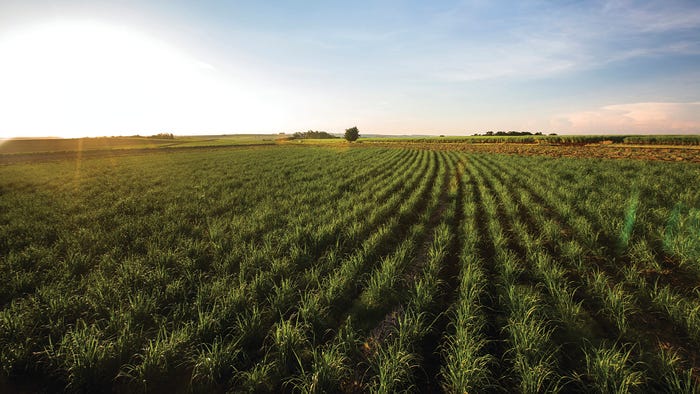
Once a very well-priced asset, farmland in Brazil is selling fast and cheap. The most hard-hit areas in Brazil are those mostly dedicated to soybeans and newest to agriculture, having been farmed 20 or 30 years.

Falling soybean prices are behind this rural real estate crisis in Brazil, a private analysis firm says. The soybean production industry has been hit so hard in the past season that fewer and fewer people are inclined to invest in it.

Setbacks in cotton production have also helped to promote this fall in land values. Even those who have invested in agriculture for a long time are now revaluating, and some are leaving their land in search of new and different opportunities.

According to the study conducted by FNP, one of the major Brazilian agribusiness analysis companies, farmland prices are so low, and have fallen so fast, that they’ll be able to climb back to 2004’s level only in 10 or more years. Even this forecast is considered optimistic for some farmers and analysts.

Since the early agricultural exploration of the Brazilian states of Mato Grosso and Mato Grosso do Sul between the late 1960s and 1980s, prices have never had such enormous variation, especially at these low levels.

The price of farmland in Mato Grosso state, the major soybean producer in Brazil, has fallen from an average of $570 an acre in October 2004 to $276 an acre in January 2006, a decline of 48 percent. This precipitous drop in price is not likely to turn around in the near future.

The lack of people interested in buying this land even at bargain-level prices is just one of many indications that this grim picture is not an exaggerated one.

“Soybean prices surely have had an important role in this devaluation. After all, more than half the 40 million hectares (98 million acres) in this area are covered with soybeans,” says Pablo Paulino Lopes, the agronomist who conducted the analysis.

Loss of cotton production is also important, due to the large amount of money cotton farmers have to pour into their crops for them to be profitable.

Areas of the country with poor, sandy, soil substrates, such as Diamantino, Itiquira, Primavera do Leste and Campo Verde, are being abandoned. “Actually, what we’ve been seeing in this area is that farmers are turning over their rented producing areas to their tenants, and that there are very few interested new buyers,” says Lopes.

In Diamantino and Nova Ubiratã, in mid-center Mato Grosse, the land price has fallen from an average of $1,000 per acre to $690 per acre. In Sorriso, another major soybean producing region in southern Mato Grosso, land values have fallen from $1,380 per acre to a $1,000 per acre.

Worst of all, in Lopes opinion, is that farmland prices were experiencing a time of growth. In Sorriso, for instance, land values had been climbing for at least two years — in 2002, the average price for an acre in the region was $1,300.

Another concern raised by many is that with low prices and few local investors, foreign investors could start to gain ground in Brazil. Brazil’s biggest concerns are American and Australian investors, especially Americans. Although Brazilian currency is maintaining a relatively high price against dollar, prices are attractive to well-funded and bold American investors.

“We may see, should this situation continue, a growing number of American neighbors, planting their soybean fields next to ours.”

In other words, “our international competitor would become the person we share fences with, and they’ll benefit both by their status as American producers, and by the relatively low cost Brazil has to offer,” says a farmer in Sorriso.

Jose Sergio Osse is a Brazilian agricultural journalist and owns a public relations firm in Sao Paulo. He has worked as a press advisor for Syngenta, Brazil, and as an agricultural reporter for the country’s major newspaper.

Get Copyright ClearanceWant to use this article? Click here for options!
© 2010 Penton Media, Inc.


Latest Jobs

Read More Daily News

NCC: 10.1 million cotton acres

Feb 8, 2010 10:30 AM

After three straight years of declines, U.S. cotton acreage could be headed back up, according to the National Cotton Council’s 27th annual Early Season Planting Intentions Survey....

Weed resistance, Washington headline Farm & Gin Show

Feb 8, 2010 10:24 AM

This year’s Mid-South Farm and Gin Show offers “perhaps the best set of exhibits ever,” says Tim Price, manager of the annual event to be held Feb. 26-27 at the downtown Memphis Cook Convention Center....

Darneille elected CCI president

Feb 8, 2010 10:22 AM

Wallace L. (Wally) Darneille, a Lubbock, Texas, cooperative official, will serve as 2010 president of Cotton Council International, the National Cotton Council’s export promotions arm....

Rice ‘growth industry’ — Weisemeyer

Feb 8, 2010 10:10 AM

Farmers attending the 2010 joint annual meeting of the Louisiana Rice Council and the Louisiana Rice Growers Association heard an optimistic report from a Washington, D.C., agriculture journalist recently....

U.S. cotton acres: 10.1 million

Feb 5, 2010 5:06 PM

U.S. cotton producers are expected to plant more than 10 million acres for the first time in three years as they begin making preparations for the 2010 planting season....

Delta Farm Press News

Southeast Farm Press News

Southwest Farm Press News
Western Farm Press News

resources

events icon events

product info icon tradeshows

tradeshow icon digests

research icon photos

Continuing Education


(New Course)
Weed Resistance Management in Cotton

This course covers a wide range of options to effectively control weeds in cotton and reduce the risk of weed resistance management. It is accredited for hours/units for licensed/accredited applicators in 7 U.S. Cotton Belt states (Florida, Georgia, New Mexico, Oklahoma, Texas, South Carolina an d Tennessee. CCA credit is pending).

This course is accredited in Texas, Oklahoma, New Mexico, Virginia, West Virginia and Wyoming as well as for CCA credits:

(New Course)
Spray Drift Management

Keeping crop protection chemicals on the crop for which they are intended has been a cornerstone of farming not only to protect neighboring crops, but to not waste money allowing products to drift off the intended target. This accredited online continuing education course covers the critical elements of spray drift management.

Back to Top

Browse Print Issues

Additional Resources

subscribe to Farm Press Daily Southeast Farm Press Southwest Farm Press Western Farm Press