Conservation systems increase efficiency, profit

Mar 3, 2006 9:26 AM, By Hembree Brandon

ROBINSONVILLE, Miss. -- Multiple inlet irrigation can help reduce the quantity of water runoff from fields and reduce pumping by as much as 20 percent, according to studies conducted in the Arkansas Delta.

These findings were among the more than 80 presentations at the ninth annual National Conservation Systems Cotton and Rice Conference at Robinsonville, Miss., to update farmers on the latest findings on conservation tillage and other management techniques and systems.

Because of Total Maximum Daily Load (TMDL) issues related to non-point source pollution, information has been needed on how farmers can take a proactive, preventive stance in managing irrigation water applications and runoff, said Phil Tacker, University of Arkansas Extension agricultural engineer.

Groups critical of agriculture have charged that as much as 65 percent of non-point source pollution is from farming, he said.

“We’ve needed to be able to document what farmers are doing to conserve water, reduce water loss, and control what’s coming off the field,” he said.

The L’Anguille River watershed in the Arkansas Delta, comprising about 620,000 acres and about 76 percent row crop agriculture, has been designated as impaired for support of aquatic life, Tacker noted. On-farm projects that monitor and sample the water that goes on and off fields, using certain production and irrigation management procedures, are being established in the watershed.

“Excess sediment from row crop agriculture was identified as the source of the impairment and a TDML for total suspended solids has been developed — which means that at some point the farming operations in the watershed could be challenged on what they’re doing to meet TDML requirements.”

Production practices such as conservation tillage can be effective in reducing the total suspended solids in runoff water from fields, he said, and irrigation management techniques such as multiple inlet irrigation can help to reduce the amount of water running off fields.

Field studies were instituted to put best management practices into effect on farms and to measure their impact on crop production economics. “If a farmer’s going to stay in business, his production and management practices have to be economical,” Tacker said.

The project required “a lot of data-gathering,” involving extensive equipment and instrumentation to monitor the effectiveness and feasibility of production and irrigation management methods in reducing runoff, erosion, and sedimentation.

Fourteen fields were set up with monitoring equipment in 2005, but he said there was not a lot of runoff due to lack of rainfall during a basically rainless crop season.

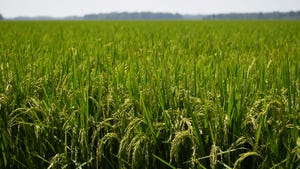
“Our data are still being analyzed, but the preliminary calculations indicate that the multiple inlet irrigation rice fields required an average of 20 percent less pumping — which is especially significant given the high cost of diesel fuel.”

The initial analysis of the runoff water suggested that its quality did not pose any significant threat to the environmental integrity of the watershed.

“We basically were able to establish what we’ve known for a long time — that in many cases, the water going onto a field is worse than what’s coming off it, because the field acts as a big filter of the water.”

Information gathered in the study “will be valuable in dealing with potential challenges to how producers are addressing the TMDL requirements that have been established in the watershed,” Tacker said.

The conservation systems conference, which alternates yearly between Texas and Mississippi, attracts several hundred farmers, researchers, and others interested in new techniques and systems for conserving soil, water, and energy resources.

“This conference spotlights the latest results from farmer-based methods,” said Tommy Valco, Office of Technology Transfer, USDA/ARS, Stoneville, Miss., and moderator for the general sessions.

“Farmers go away from here with practical applications for production agriculture,” said Dwight Roberts, president and chief executive officer of US Rice Producers Association, co-sponsor of the conference along with Cotton Incorporated. “If you’re still farming in this day and age, you’ve got to be doing something right, and this conference helps farmers to stay on top of their game,” Roberts said.

Bill Weaver, Edmonson, Ark., producer and chairman of the board of Cotton Incorporated, said the producer-funded research and promotion organization “understands the significance and importance of conservation systems in today’s production agriculture.

“There’s not a one-size-fits-all approach to conservation methods, but applied research — such as that sponsored by Cotton Incorporated — has shown that systems can be adapted to many farms to help increase production and profits.”

John LaRose, publisher of Mid-America Farm Publications, sponsor of the conference, said “farming’s challenges are greater than ever, and reducing input costs is one of the keys of economic survival for many farmers.

“Producers must continually review the efficiency of their operations, and the researchers and farmers who participate in this conference offer highly practical, moneymaking tips on conservation systems and techniques.”

Delta Farm Press is media co-sponsor for the conference.

e-mail: hbrandon@prismb2b.com.com

Get Copyright ClearanceWant to use this article? Click here for options!
© 2009 Penton Media, Inc.


Latest Jobs

Read More Daily News

WTO awards Brazil retaliation authority

Nov 20, 2009 11:01 AM

The World Trade Organization has authorized Brazil to seek retaliation against the United States for it support of two U.S. commodity programs....

Precision ag – online course

Nov 20, 2009 10:53 AM

University of Missouri Extension is offering an eight-week online course on managing farm machinery using precision agriculture, Jan. 12 through March 4....

Soybeans — U.S. key export supplier

Nov 20, 2009 10:48 AM

Weather problems are now thought to be factored into market prices. ...

$485 million loss – Mississippi

Nov 19, 2009 3:57 PM

Mississippi State University agricultural economists calculate Mississippi farmers are suffering an estimated $485 million value loss in 2009. ...

Biofuels goal beyond ethanol

Nov 19, 2009 10:05 AM

If the U.S. is to reach the government-mandated target of producing 36 billion gallons of biofuels annually by 2022, “We will need to change the way we do business,” says a USDA official....

Delta Farm Press News
Southeast Farm Press News
Southwest Farm Press News

Western Farm Press News
resources

events icon events

product info icon tradeshows

tradeshow icon digests

research icon photos

Continuing Education


(New Course)
Weed Resistance Management in Cotton

This course covers a wide range of options to effectively control weeds in cotton and reduce the risk of weed resistance management. It is accredited for hours/units for licensed/accredited applicators in 7 U.S. Cotton Belt states (Florida, Georgia, New Mexico, Oklahoma, Texas, South Carolina an d Tennessee. CCA credit is pending).

This course is accredited in Texas, Oklahoma, New Mexico, Virginia, West Virginia and Wyoming as well as for CCA credits:

(New Course)
Spray Drift Management

Keeping crop protection chemicals on the crop for which they are intended has been a cornerstone of farming not only to protect neighboring crops, but to not waste money allowing products to drift off the intended target. This accredited online continuing education course covers the critical elements of spray drift management.

Back to Top

Continuing Education


(New Course)
Weed Resistance Management in Cotton

This course covers a wide range of options to effectively control weeds in cotton and reduce the risk of weed resistance management. It is accredited for hours/units for licensed/accredited applicators in 7 U.S. Cotton Belt states (Florida, Georgia, New Mexico, Oklahoma, Texas, South Carolina an d Tennessee. CCA credit is pending).

This course is accredited in Texas, Oklahoma, New Mexico, Virginia, West Virginia and Wyoming as well as for CCA credits:

(New Course)
Spray Drift Management

Keeping crop protection chemicals on the crop for which they are intended has been a cornerstone of farming not only to protect neighboring crops, but to not waste money allowing products to drift off the intended target. This accredited online continuing education course covers the critical elements of spray drift management.

Browse Print Issues

Additional Resources

subscribe to Farm Press Daily Southeast Farm Press Southwest Farm Press Western Farm Press