Farmers will feel fuel hikes in botton line

Nov 11, 2005 8:58 AM, By Forrest Laws

Farmers could pay $15 more per acre for diesel fuel ($28.14 in 2006 vs. $13.98 in 2004) and $40 per acre more for fertilizing the nitrogen-dependent bermudagrass ($97.92 per acre in 2006 vs. $56.24 in 2004.)

Everyone knows gasoline, diesel and natural gas prices are higher now than a year ago due to rising demand and the double-whammy inflicted on the Gulf Coast by hurricanes Katrina and Rita.

But how will higher energy bills translate into farmers’ bottom lines and cropping decisions for 2006? That’s the question agricultural economists are trying to sort out as they prepare their crop budgets for next year.

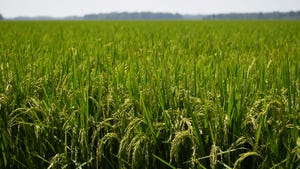
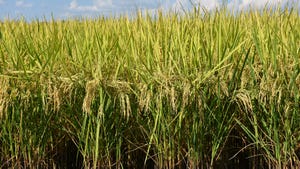
For openers, rice producers along the Texas Gulf Coast could see their costs rise by nearly $100 per acre, according to Larry Falconer, Extension economist with Texas A&M University. Falconer prepared a set of sample budgets for the Southern Region Agricultural Outlook Conference in Atlanta.

Falconer’s estimates for growing main crop rice in the Texas Rice Belt west of Houston shows that the total direct expenses for a 6,600-pound yield goal crop could reach $705.04 an acre in 2006, up $93 from 2004.

“Almost all of that increase is due to higher energy costs,” said Falconer, based in Corpus Christi in Texas’ Coastal Bend region. “We’ve been seeing steady increases in diesel fuel and nitrogen prices since 1996, but it’s been relatively painless until now. This fall, diesel is selling for about three times what it cost in 1996.”

Falconer said he’s received more questions than usual about input prices in recent weeks, many of them from landowners wanting to know about the impact of rising costs on crop share rents.

“We have three refineries in Corpus Christi so we get a little bit of a break on transportation costs for delivering fuel,” he said. “But we’re still experiencing the price hikes the rest of the country is seeing.”

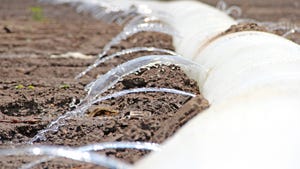
The economist estimates that rice farmers west of Houston will spend $27.87 per acre in 2006 for diesel fuel compared to $12.02 in 2004. Irrigation costs will also increase — from $73.73 in 2004 to $83.26 in 2006 — along with rice drying — from $79.65 to $87.24.

“Our farmers, like those in other parts of rice country, have been trying to make fewer trips across their fields, but it still takes eight or nine trips to plant, grow and harvest a rice crop,” he said. “Increases like these could put the spike on rice production west of Houston.”

Falconer expects fertilizer costs to increase from $77.87 to $96.93 per acre, primarily due to higher prices for nitrogen, which uses natural gas as a feedstock. “Our rice soils typically don’t need much potash,” he notes, “which is fortunate because prices of that nutrient are also going up.”

Farmers can also expect to pay more for crop protection chemicals. Falconer says the cost of rice fungicides are expected to jump from $19.35 in 2004 to $25.10 in 2006; herbicides from $60.67 to $68.85 and insecticides from $14.38 to $18.45. (Chemical companies recently announced they’re considering price increases of 3 percent to 4 percent for 2006.)

The sample budget also shows an increase in interest on operating capital from $21.91 to $31.67 per acre. “I think most of us believe interest rates will be going up in the next few months as the Federal Reserve Board tries to fight inflation,” he noted.

He expects the cost of growing and harvesting second crop or ratoon crop rice in the area west of Houston to also rise — from $102.47 per acre in 2004 to $135.16 per acre in 2006. Many Texas growers bank on the ratoon crop for their profits.

“I think planted rice acreage in Texas could be off considerably because of the rising costs,” he said. “We could also see changes in row crop share lease arrangements in the Texas Coastal Bend.”

The spike in costs may not be as high for rice, but cotton producers in the Coastal Bend could also see their direct expenses increase. Falconer’s budget shows a jump from $467.00 per acre in 2004 to $525.46 per acre in 2006 or $58.46 more an acre for conventional till, 12-row, irrigated cotton with a 1,350-pound yield goal.

Diesel fuel is expected to leap from $16.95 an acre to $57.72 while herbicides are projected to rise from $32.96 to $39.74 an acre and fertilizer from $45.75 to $54.50 per acre. Insecticides could decrease slightly from $31.94 to $31.22 an acre. Interest on operating capital is projected to jump from $12.30 to $16.80 per acre.

Sorghum producers could see their total direct expenses mushroom from $171.02 to $218.43 per acre, primarily due to rising fuel costs.

Falconer projects diesel fuel costs for growing conventional till, 12-row, irrigated sorghum with a 6,500-pound yield goal will jump from $18.93 to $46.47 per acre followed by fertilizer, rising from $45.75 to $54.50 per acre.

Hauling and handling costs could climb from $13.32 to $21.89 per acre and interest on operating capital from $4.82 to $7.41, but Falconer expects the herbicide, insecticide and seed costs of the low-input sorghum crop to basically remain the same.

The total direct expenses of growing coastal bermudagrass hay in the Coastal Bend area could rise from $141.33 to $200.82 per acre due to the hikes in diesel fuel and fertilizer costs.

Farmers could pay $15 more per acre for diesel fuel ($28.14 in 2006 vs. $13.98 in 2004) and $40 per acre more for fertilizing the nitrogen-dependent bermudagrass ($97.92 per acre in 2006 vs. $56.24 in 2004.)

Interest on operating capital could rise from $4.39 to $7.90 per acre, but the costs of herbicides, custom harvesting and operator labor are expected to be virtually unchanged.

“We believe the harvested acreage of hay will also decline sharply in the Coastal Bend along with rice acreage because of the rising costs,” he noted. “But much will depend on a farmers’ individual situation. We’re seeing a significant increase in interest in economic analysis by producers.

e-mail: flaws@primediabusiness.com

Get Copyright ClearanceWant to use this article? Click here for options!
© 2010 Penton Media, Inc.


Latest Jobs

Read More Daily News

Tillage tests — ‘trash farm for profit’

Feb 9, 2010 9:47 AM

As he speaks, Merle Anders has a small prop on the table behind him: a baseball cap inscribed with “Trash Farming for Profit.” ...

Reduced-till and cotton seedling diseases

Feb 9, 2010 9:43 AM

Managing no-till or reduced-till cotton production properly, including following appropriate planting recommendations and taking care of early weed problems, may reduce potential for disease outbreaks....

Chicken litter — ‘smell of success’

Feb 9, 2010 9:33 AM

Having used poultry litter on his family’s Jonesboro, Ark.-area farm for years, Wayne Wiggins III is a proponent of the practice. ...

NCC: 10.1 million cotton acres

Feb 8, 2010 10:30 AM

After three straight years of declines, U.S. cotton acreage could be headed back up, according to the National Cotton Council’s 27th annual Early Season Planting Intentions Survey....

Weed resistance, Washington headline Farm & Gin Show

Feb 8, 2010 10:24 AM

This year’s Mid-South Farm and Gin Show offers “perhaps the best set of exhibits ever,” says Tim Price, manager of the annual event to be held Feb. 26-27 at the downtown Memphis Cook Convention Center....

Delta Farm Press News
Southeast Farm Press News

Southwest Farm Press News

Western Farm Press News

resources

events icon events

product info icon tradeshows

tradeshow icon digests

research icon photos

Continuing Education


(New Course)
Weed Resistance Management in Cotton

This course covers a wide range of options to effectively control weeds in cotton and reduce the risk of weed resistance management. It is accredited for hours/units for licensed/accredited applicators in 7 U.S. Cotton Belt states (Florida, Georgia, New Mexico, Oklahoma, Texas, South Carolina an d Tennessee. CCA credit is pending).

This course is accredited in Texas, Oklahoma, New Mexico, Virginia, West Virginia and Wyoming as well as for CCA credits:

(New Course)
Spray Drift Management

Keeping crop protection chemicals on the crop for which they are intended has been a cornerstone of farming not only to protect neighboring crops, but to not waste money allowing products to drift off the intended target. This accredited online continuing education course covers the critical elements of spray drift management.

Back to Top

Browse Print Issues

Additional Resources

subscribe to Farm Press Daily Southeast Farm Press Southwest Farm Press Western Farm Press