$24,000 award for conservation practices

Sep 23, 2005 9:09 AM, By Andrew Bell

RAYMOND, Miss. —— Years before most farmers could see the benefits from incorporating conservation practices and before the government aggressively sought to encourage it, David Barton led the way.

BARTON

Once again, government officials have singled out his environmental stewardship. This time, however, the honor extends beyond hanging another plaque on his office wall.

In late July, the Raymond, Miss., farmer became the first of 34 Mississippians in two watershed areas invited to participate in a new conservation program initiated by the USDA’s Natural Resource Conservation Service. Barton’s contract is worth $24,000 over a 10-year period, with a pledge to sustain or exceed current conservation practices.

State NRCS officials said additional contract announcements would be forthcoming.

“We are so pleased they would recognize us at our farm,” Barton said. “But we have done many more things that we did not get paid for and we don’t mind doing.”

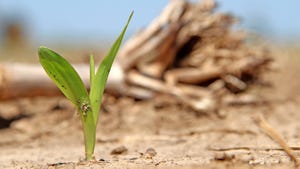
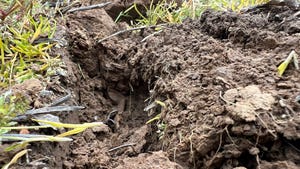
Beginning in 1980, Barton was one of the first farmers in his region to practice no-till farming on his soybean crops, prompted by serious weed control problems. Local environmental officials at that time had been encouraging it for about two years, but Barton said, “No one knew much about it.”

Initially, some peers expressed interest in his experiment while most ridiculed — until his yields increased.

“We thought we knew more than we did that first year, and the first year was a disaster,” he acknowledged, “But the second year we did much, much better.”

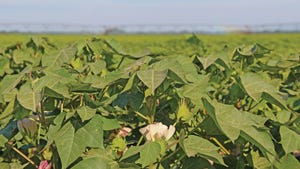
On the 1,400-acre Canaan Plantation, just outside Jackson, Miss., cotton, corn and soybeans has been grown dryland entirely without tillage.

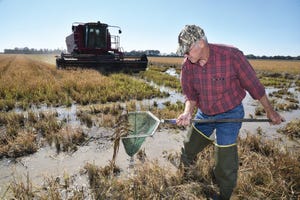
Also, over the years Barton’s farm manager, Dan Harris, has installed a series of overfall pipes, built levees totaling several thousands of feet and established grass waterways. All were done to help minimize soil and water erosion as well as prevent sediment runoff into adjacent Fourteen Mile Creek.

In one extensive bog area on the farm, Harris dug a protracted ditch and elevated a series of pipes to control irrigation.

Not only has the irrigation work helped with flood control, it also allowed employees on the farm to build roadways around some of the 32 fields they otherwise would not be able to reach.

Barton said the government helped pay for many of the pipes in a cost-share program. He said the payback for the investment was immediate in regards to alleviating erosion problems.

Harris said conservation efforts are “good all the way around” — and especially beneficial for the environment — but farmers incorporating them must have patience. Barton noted that his farm’s yields are generally equal to or above other farms not undergoing the same level of conservation practices, but his input costs are well below average.

Roy King, soil conservationist, Hinds County Soil and Water Conservation District, said Barton pioneered no-till soybean farming and has stuck with the practice even as other farmers will do it only on a limited basis, despite its success.

“His commitment to conservation has made his land a model farm. He knows that if you take care of the land, it will take care of you,” King said. “The ideas he has put to work on his farm are exactly what we (conservation officials) encourage. So much so, in fact, that for several years we’ve arranged young-farmer tours on his land to show them what conservation truly is.”

Barton reluctantly applied for the voluntary Conservation Security Program — one that aims to “reward the best and motivate the rest” — because it required meticulous comprehensive farming data recorded into a self-assessment book.

“At first it looked like an onerous process, but anyone still in farming today has to maintain records anyway or he would not be in business,” he said.

“I would encourage every farmer to apply for this. It’s a worthwhile project, and if they would get involved they would benefit.”

CSP selects applicants from a rotating, limited number of watershed areas in each state. Applicants are divided into three categories and are judged on a farmer’s level of conservation efforts. The top tier honoree is eligible to receive a contract up to $45,000.

In addition to recent efforts to help build Eagleridge Community Church on 10 acres of his property, Barton also wants to make additional environment-friendly improvements such as creating more lakes to attract wildlife. That element is also a key part of CSP’s contract criteria.

Barton attributes his approach to farming with an emphasis on conservation to from his father, who first grew cotton on the property in 1937.

“Dad was an anti-erosion farmer who was wise and patient,” he recalled. “He wouldn’t allow me to cut down trees near a creek. Without his advice I would have clear-cut trees all over.”

Barton said the myriad of conservation practices implemented over the years on the land, now in its fifth generation of farming, has had one overall goal: “We want to keep the land for the future and we want to keep it fertile and productive.”

e-mail: abell@primediabusiness.com

Get Copyright ClearanceWant to use this article? Click here for options!
© 2010 Penton Media, Inc.


Latest Jobs

Read More Daily News

Tillage tests — ‘trash farm for profit’

Feb 9, 2010 9:47 AM

As he speaks, Merle Anders has a small prop on the table behind him: a baseball cap inscribed with “Trash Farming for Profit.” ...

Reduced-till and cotton seedling diseases

Feb 9, 2010 9:43 AM

Managing no-till or reduced-till cotton production properly, including following appropriate planting recommendations and taking care of early weed problems, may reduce potential for disease outbreaks....

Chicken litter — ‘smell of success’

Feb 9, 2010 9:33 AM

Having used poultry litter on his family’s Jonesboro, Ark.-area farm for years, Wayne Wiggins III is a proponent of the practice. ...

NCC: 10.1 million cotton acres

Feb 8, 2010 10:30 AM

After three straight years of declines, U.S. cotton acreage could be headed back up, according to the National Cotton Council’s 27th annual Early Season Planting Intentions Survey....

Weed resistance, Washington headline Farm & Gin Show

Feb 8, 2010 10:24 AM

This year’s Mid-South Farm and Gin Show offers “perhaps the best set of exhibits ever,” says Tim Price, manager of the annual event to be held Feb. 26-27 at the downtown Memphis Cook Convention Center....

Delta Farm Press News

Southeast Farm Press News

Southwest Farm Press News
Western Farm Press News

resources

events icon events

product info icon tradeshows

tradeshow icon digests

research icon photos

Continuing Education


(New Course)
Weed Resistance Management in Cotton

This course covers a wide range of options to effectively control weeds in cotton and reduce the risk of weed resistance management. It is accredited for hours/units for licensed/accredited applicators in 7 U.S. Cotton Belt states (Florida, Georgia, New Mexico, Oklahoma, Texas, South Carolina an d Tennessee. CCA credit is pending).

This course is accredited in Texas, Oklahoma, New Mexico, Virginia, West Virginia and Wyoming as well as for CCA credits:

(New Course)
Spray Drift Management

Keeping crop protection chemicals on the crop for which they are intended has been a cornerstone of farming not only to protect neighboring crops, but to not waste money allowing products to drift off the intended target. This accredited online continuing education course covers the critical elements of spray drift management.

Back to Top

Browse Print Issues

Additional Resources

subscribe to Farm Press Daily Southeast Farm Press Southwest Farm Press Western Farm Press