USDA: Katrina crop damage at $900 million

Sep 20, 2005 10:14 AM

WASHINGTON, D.C. — Agriculture Secretary Mike Johanns has released a preliminary assessment of U.S. agricultural production losses due to Hurricane Katrina in the Mid-South and drought in the eastern Corn Belt. The report estimates hurricane-related losses to be nearly $900 million.

“Given the severity of the hurricane, the agricultural losses could have been much greater,” Johanns said. “With that said, there is a long road ahead for many of our producers who face infrastructure and long-term losses not accounted for in this assessment. USDA is committed to supporting producers throughout long and short term recovery.”

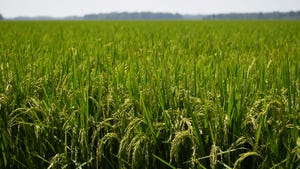
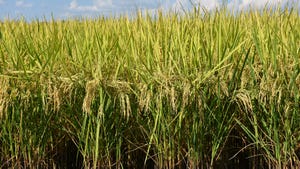
Hurricane-force winds missed major crop production areas in the Mid-South. Substantial portions of rice, soybeans and corn production in hurricane-affected states were harvested prior to landfall of Hurricane Katrina, which also limited production losses. Much of the crop losses are attributable to lost horticultural production in Florida and along the Gulf Coast.

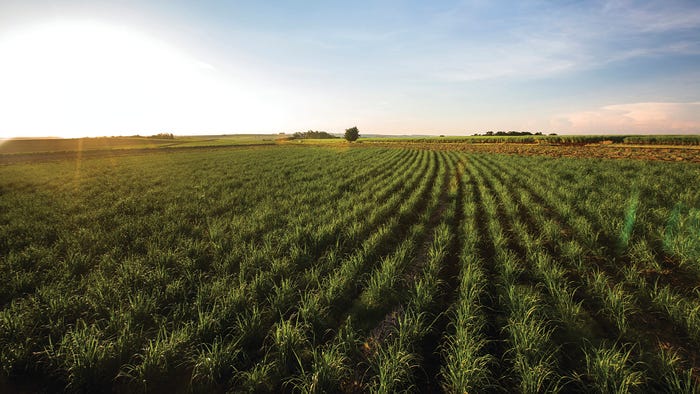
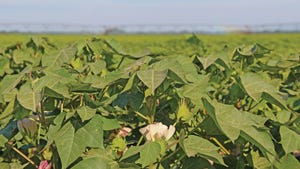
USDA’s September crop production survey indicated cotton production losses in the range of 4 percent for Alabama and Mississippi, key cotton production states. Louisiana is estimated to have lost 9 percent of the state’s sugarcane production, which would account for about 1.5 percent of the U.S. sugar production expected for fiscal 2006. Although corn, rice and soybean losses appear to be modest, the assessment report acknowledges that producers will face higher costs harvesting the blown over crops, which will require more time and high-cost fuel to harvest.

Short-term livestock production losses due to the hurricane are estimated in the range of $30 million. Millions of chickens were killed. Producers also lost eggs, poults and chicken grow-out facilities, which will lead to longer term economic losses for some producers. Dairy producers discarded an estimated $3 million worth of milk due to lost electricity on farms and at dairy processing plants and might face a period of reduced cow productivity. An estimated 10,000 cattle were lost.

This preliminary assessment provides estimates of 2005 production losses and does not include infrastructure or long-term losses. Crop and livestock producers face added losses in the form of damaged or destroyed barns, equipment buildings, fences, machinery, as well as losses associated with degraded farm fields, carcass disposal, electrical power losses and fuel shortages.

The nearly $900 million in lost production due to the hurricane compares to a combined total of $20 billion in farm cash receipts in 2004 for producers in Alabama, Florida, Louisiana, Mississippi and Tennessee.

The USDA assessment also reviews production losses due to the drought in the eastern Corn Belt, estimating $1.3 billion in corn and soybeans losses in Arkansas, Illinois, Indiana, Missouri, Ohio and Wisconsin. In addition to hurricane and drought production losses, the report notes that grain and oilseed producers throughout the Midwest have faced reduced prices due to the shipping interruption in New Orleans ports.

Crop insurance will cover a portion of farm production losses attributable to Hurricane Katrina, the drought and other adverse weather conditions this year. While coverage varies by crop and state, in general, 70 to 95 percent of planted acreage is covered by insurance in the hurricane-affected area and 60 to 75 percent of corn and soybean acreage is covered in the drought-affected area.

USDA’s preliminary assessment is subject to change as more information becomes available. The report is available on the USDA Web site at http://www.usda.gov/katrina.

Get Copyright ClearanceWant to use this article? Click here for options!
© 2010 Penton Media, Inc.


Latest Jobs

Read More Daily News

Tillage tests — ‘trash farm for profit’

Feb 9, 2010 9:47 AM

As he speaks, Merle Anders has a small prop on the table behind him: a baseball cap inscribed with “Trash Farming for Profit.” ...

Reduced-till and cotton seedling diseases

Feb 9, 2010 9:43 AM

Managing no-till or reduced-till cotton production properly, including following appropriate planting recommendations and taking care of early weed problems, may reduce potential for disease outbreaks....

Chicken litter — ‘smell of success’

Feb 9, 2010 9:33 AM

Having used poultry litter on his family’s Jonesboro, Ark.-area farm for years, Wayne Wiggins III is a proponent of the practice. ...

NCC: 10.1 million cotton acres

Feb 8, 2010 10:30 AM

After three straight years of declines, U.S. cotton acreage could be headed back up, according to the National Cotton Council’s 27th annual Early Season Planting Intentions Survey....

Weed resistance, Washington headline Farm & Gin Show

Feb 8, 2010 10:24 AM

This year’s Mid-South Farm and Gin Show offers “perhaps the best set of exhibits ever,” says Tim Price, manager of the annual event to be held Feb. 26-27 at the downtown Memphis Cook Convention Center....

Delta Farm Press News

Southeast Farm Press News
Southwest Farm Press News

Western Farm Press News
resources

events icon events

product info icon tradeshows

tradeshow icon digests

research icon photos

Continuing Education


(New Course)
Weed Resistance Management in Cotton

This course covers a wide range of options to effectively control weeds in cotton and reduce the risk of weed resistance management. It is accredited for hours/units for licensed/accredited applicators in 7 U.S. Cotton Belt states (Florida, Georgia, New Mexico, Oklahoma, Texas, South Carolina an d Tennessee. CCA credit is pending).

This course is accredited in Texas, Oklahoma, New Mexico, Virginia, West Virginia and Wyoming as well as for CCA credits:

(New Course)
Spray Drift Management

Keeping crop protection chemicals on the crop for which they are intended has been a cornerstone of farming not only to protect neighboring crops, but to not waste money allowing products to drift off the intended target. This accredited online continuing education course covers the critical elements of spray drift management.

Back to Top

Browse Print Issues

Additional Resources

subscribe to Farm Press Daily Southeast Farm Press Southwest Farm Press Western Farm Press