Laws: Strong conservation ethic

Jul 7, 2005 4:33 PM, By Forrest Laws

As meetings go, the Southern Conservation Tillage Systems Conference will never rival the Beltwide Cotton Conferences or the soybean and corn growers’ Commodity Classic in size.

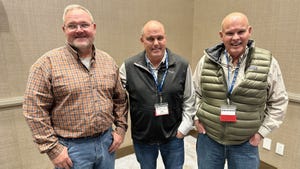
LAWS

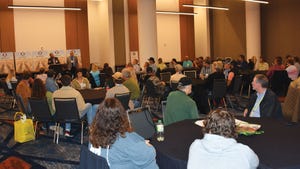
Conservation Tillage Conference participants held their recent annual get-together at Clemson University’s Pee Dee Research and Education Center near Florence, S.C. The Beltwide alternates between New Orleans and San Antonio with an occasional visit to Nashville’s much-maligned Opryland Hotel. The last Commodity Classic was in Austin, Texas.

The Beltwide has attracted as many as 5,000 attendees and the Commodity Classic more than that; the Conservation Tillage Conference brings in a fraction of those. But what the SCTSC lacks in numbers, it more than makes up for in fervor.

Persons attending the Beltwide or the Commodity Classic may be cotton or corn and soybean farmers and researchers by vocation; those attending the Conservation Tillage Conference are more like true believers at a camp meeting.

John Hassell, executive director of the Conservation Technology Information Center in West Lafayette, Ind., touched on that aspect when he gave the keynote address during the SCTSC’s opening session June 28.

Calling for a revival of the conservation ethic by all who work in the area, Hassell said, “We need to remember that conservation is more than just a word — it’s a way of life — and it’s forever.”

The Southern Conservation Tillage Conference began in Griffin, Ga., in 1978. That was before the Milan, Tenn., No-Till Field Day or the invention of Roundup Ready crops.

Throughout its 27-year history, the conference has given scientists, educators, farmers and private industry professionals the opportunity to learn more about the latest technologies and practices associated with conservation tillage systems.

No-till and strip-till planting practices and tools that have become standard across the Mid-South and Southeast were first talked about at the Southern Conservation Tillage Conference in the early 1980s.

No-till work reported at the conference made it possible for farmers with highly erodible lands to continue farming when Congress decreed that those could no longer be planted with conventional tillage practices.

In later years, conference participants were among the first to hear about the then-new Roundup Ready technology in conservation tillage farming and ultra-narrow-row cotton production systems made possible by no-till.

Like other agricultural institutions, the conference is continuing to evolve. This year’s conference featured presentations on precision farming applications in no-till farming, including one on potential energy savings with variable depth tillage. The conference also included several papers on the economics of no-till.

The 2005 conference also ventured out of the South with a paper on conservation tillage corn, cotton and tomato systems in California, delivered by University of California researcher Jeff Mitchell, who noted that the Southern Conference had helped inspire a similar conference in his state.

It’s refreshing to watch an event whose participants believe in an idea so strongly they can keep a conference going for 27 years without the support of a nationwide or beltwide organization.

e-mail: flaws@primediabusiness.com

Get Copyright ClearanceWant to use this article? Click here for options!
© 2010 Penton Media, Inc.


Latest Jobs

Read More Daily News

Tillage tests — ‘trash farm for profit’

Feb 9, 2010 9:47 AM

As he speaks, Merle Anders has a small prop on the table behind him: a baseball cap inscribed with “Trash Farming for Profit.” ...

Reduced-till and cotton seedling diseases

Feb 9, 2010 9:43 AM

Managing no-till or reduced-till cotton production properly, including following appropriate planting recommendations and taking care of early weed problems, may reduce potential for disease outbreaks....

Chicken litter — ‘smell of success’

Feb 9, 2010 9:33 AM

Having used poultry litter on his family’s Jonesboro, Ark.-area farm for years, Wayne Wiggins III is a proponent of the practice. ...

NCC: 10.1 million cotton acres

Feb 8, 2010 10:30 AM

After three straight years of declines, U.S. cotton acreage could be headed back up, according to the National Cotton Council’s 27th annual Early Season Planting Intentions Survey....

Weed resistance, Washington headline Farm & Gin Show

Feb 8, 2010 10:24 AM

This year’s Mid-South Farm and Gin Show offers “perhaps the best set of exhibits ever,” says Tim Price, manager of the annual event to be held Feb. 26-27 at the downtown Memphis Cook Convention Center....

Delta Farm Press News
Southeast Farm Press News
Southwest Farm Press News

Western Farm Press News
resources

events icon events

product info icon tradeshows

tradeshow icon digests

research icon photos

Continuing Education


(New Course)
Weed Resistance Management in Cotton

This course covers a wide range of options to effectively control weeds in cotton and reduce the risk of weed resistance management. It is accredited for hours/units for licensed/accredited applicators in 7 U.S. Cotton Belt states (Florida, Georgia, New Mexico, Oklahoma, Texas, South Carolina an d Tennessee. CCA credit is pending).

This course is accredited in Texas, Oklahoma, New Mexico, Virginia, West Virginia and Wyoming as well as for CCA credits:

(New Course)
Spray Drift Management

Keeping crop protection chemicals on the crop for which they are intended has been a cornerstone of farming not only to protect neighboring crops, but to not waste money allowing products to drift off the intended target. This accredited online continuing education course covers the critical elements of spray drift management.

Back to Top

Browse Print Issues

Additional Resources

subscribe to Farm Press Daily Southeast Farm Press Southwest Farm Press Western Farm Press