Resistant weed threat overblown?

Mar 9, 2005 10:07 AM, By David Bennett


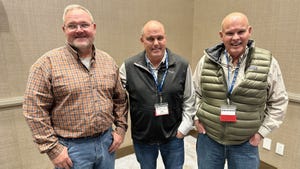
KENNETT, Mo. -- Many recent producer meetings have focused on herbicide resistance in weeds. It was no different when Andy Kendig, Missouri Extension weed control specialist, spoke at the Missouri Cotton Production and Outlook Conference.

KENDIG

But Kendig’s comments carried a remarkably different tone than those of his Delta weed scientist counterparts.

“We’re using a lot of glyphosate, and you could call that a resistance-prone use pattern,” Kendig said to the large audience before digging in his heels.

“At a recent weed scientist meeting, an Arkansas farmer come in to talk about resistant horseweed. He said, ‘This is a wakeup call!’

“I’ve been talking about resistance for a long time. I got kind of worked up and asked, ‘Well, why wasn’t ALS-resistant cocklebur a wakeup? Why wasn’t propanil-resistant barnyardgrass a wakeup call? Why wasn’t Hoelon-resistant ryegrass a wakeup call?’

“As an Extension specialist, I also asked, ‘What should I have done different? What can I tell my growers back home to drive home the point of herbicide-resistant weeds?’

“He said, ‘Do a slide show that reveals how bad resistant weeds look.’

At this point, Kendig flashed a picture of a major resistant cocklebur infestation onto the screen. “What gets me is this picture was taken in 1993. I’ve used it in meetings ever since.”

The big thing coming down the pipeline is Roundup Ready Flex. With it, producers can spray glyphosate over-the-top well past the five-leaf stage.

“We’re asking some questions about it. ‘Will this finally be idiot-proof weed control for cotton?’ ‘Will we be using any other herbicides?’ ‘What will yields be?’

“Monsanto always says — and I have no problem repeating it for their sake — that one of their biggest fears is growers who wait for a few more weeds to come up. Timing is important whether we’re talking about rice, soybeans or cotton. If you’re waiting three weeks before treating for weeds, you’re losing yield.”

With traditional Roundup Ready cotton, producers are told to spray at the cotyledon to one-leaf stage. Flex will probably need to be treated the same: a first application sometime before cotton is at two-leaf. To some extent, that will replace old pre-emergence treatments.

Resistance prevention is a concern, said Kendig. “Obviously, Flex will allow even more glyphosate to be used.”

What’s scary about glyphosate-resistant horseweed — or marestail — is the pattern and rapidity of its spread, said Kendig. It was first discovered in 2000 in several Delaware fields. A couple of years later, it was widespread in that state. It was found in west Tennessee in 2001, and a year later it had also moved widely.

“I first noticed this resistant weed in southeast Missouri while driving from Portageville (Mo.) to our Lee farm. A year later, I found escapes everywhere. Last year, my phone lit up regarding this weed.”

Last year, horseweed was mostly a no-till cotton problem for the Bootheel.

“I have no idea why it showed up in cotton more. There isn’t any reason it shouldn’t be a problem in no-till soybeans or corn. I did get a few calls from soybean farmers who had escapes.”

It’s “really easy” to say the cause of horseweed’s resistance was the use of much glyphosate and of too little alternative chemistries.

“But the more people you talk to, the more they say they had trouble controlling horseweed even 10 years ago. Maybe this isn’t so much a magical change as it is that troublesome types of this weed began spreading. The seed spread by wind. It’s been very interesting to see how quickly it can spread.”

The whole weed science community was “caught with its pants down with this. About three years ago, weed scientists were saying, ‘You need to watch pigweed. It’s going to turn resistant to glyphosate.’ We were surprised that horseweed beat it.”

Horseweed is a winter annual — textbooks said it comes up in the fall and dies in the summer. “The theory was that some 2,4-D or Clarity in March would taken care of it. That turned out to be wrong. This weed can come up 10 months out of the year. Killing it off in March won’t solve our problem.

“We also thought some things might help at planting time — a final burndown. I’ve liked Gramoxone plus Cotoran. The folks in Tennessee like Ignite. But all of the sudden last year growers told us those treatments didn’t work. We did some more study in our test plots, and, darn it, those treatments really didn’t work as well as we thought.”

An important take-home message, said Kendig, is it’s very important to make an early burndown of 2,4-D or a Clarity-type herbicide. Many also recommend a residual herbicide in the tank to stop further germination.

“I think that’s a really good idea even though I haven’t a single shred of data to back it up.”

If you can add and rotate modes of action to prevent resistance, “that’s great. I still like pre-emergence herbicides. Half the weed control reports from companies over the last 15 years are about using pre-emergence herbicides. The data all say the same thing — the herbicide damage we see 95 percent of time is cosmetic. Often, such applications lead to weed control improvement but not always.

“Some are asking, ‘What’s worse: a little pre-emergence damage or the destruction of the best herbicide system (Roundup Ready) ever?’ Now, I’m supposed to be a scientist and say what’s accurate instead of what’s inflammatory. Maybe destruction is too strong a word.”

It’s been pointed out that “99 percent of our corn and grain sorghum” is treated with atrazine. There are 40 weeds resistant to atrazine, so it’s common sense, when using atrazine, “to add a Band-Aid product with it. So I want to pull back from the word destruction.”

To prevent resistance, farmers are often asked to spend more on non-glyphosate products now in hopes of saving money (and glyphosate) later. That may not work, said Kendig, “and you’ll end up spending more money anyway. What’s better: spending more now or later? I can’t stand here with any confidence and tell you it’ll be cheaper to spend money now instead of later.

“(Monsanto) is trying to make money and sell Roundup Ready. They’re also trying to defend against every other chemical company trying to get into the field with them.”

One of Monsanto’s arguments has a lot of truth to it, said Kendig: throwing many expensive herbicides at a field that doesn’t contain “that one resistant weed” will cost producers money but won’t necessarily prevent resistance.

“If you want an iron-clad resistance program, why not put Clarity and Valor in all your burndowns whether you need them or not. Let’s also use Sequence, Staple and Cotoran. And let’s put in a grass herbicide with glyphosate.

“If you have an add-on herbicide that helps your weed control and is economical, by all means use it. We’ve seen some good things with Sequence-type products for pigweed control. The problem with many add-ons is they tend to be expensive. I still love Cotoran as a pre-emerge, but it’s one of the most expensive.”

“Many of my counterparts talk about pigweed. It does have a lot of genetic diversity and high seed numbers. In fact, pigweed gets credit for a certain amount of the adoption of Roundup Ready. The system came at just the right time to help with pigweed.

“But I don’t know why my counterparts don’t ever talk about goosegrass. In Missouri, we now have goosegrass — another dime-a-dozen cotton weed worth watching — resistance to Prowl and Treflan. Some is also resistant to MSMA. In Malaysia, they have goosegrass that’s resistant to glyphosate… So when will pigweed become resistant? I don’t know.”

e-mail: dbennett@primediabusiness.com

Get Copyright ClearanceWant to use this article? Click here for options!
© 2008 Penton Media, Inc.


Latest Jobs

Read More Daily News

Weed resistance issues increasing

Jul 23, 2008 10:21 AM

This year, there are some 1.4 million acres of rice in Arkansas. Given the new chemistries available, researchers say it’s surprising that growers continue to find more fields of propanil-resistant and Facet-resistant barnyardgrass....

National Cotton Council moves headquarters

Jul 23, 2008 10:18 AM

The National Cotton Council has closed the doors on one era and opened the doors to another. ...

Deltapine soybeans to transition to Asgrow

Jul 23, 2008 10:15 AM

Another well-known Mid-South brand will soon disappear into the new world of corporate mergers. ...

Strain challenge: eat local Louisiana

Jul 23, 2008 10:10 AM

Louisiana’s agriculture and forestry commissioner is challenging the residents of his state to eat local for one week....

Late Missouri corn most at risk to beetles

Jul 22, 2008 9:45 AM

After years of being primarily a horticultural pest, Japanese beetles are emerging as a threat to field crops across Missouri, said Wayne Bailey, University of Missouri Extension entomologist....

Delta Farm Press News
Southeast Farm Press News

Southwest Farm Press News

Western Farm Press News
resources

events icon events

product info icon tradeshows

tradeshow icon digests

research icon photos

Continuing Education

For Texas and Oklahoma Licensed Applicators

A free online continuing education course on spray drift management accredited by the Texas and Oklahoma departments of agriculture.

For National Certified Crop Advisers

A free American Society of Agronomy-accredited one-CEU course on spray drift management.

ACCREDITED IN CALIFORNIA ONLY:


Almond Pest Management

Get the latest info on almond insect pest management and earn 2 hrs. CE DPR and CCA credit in California.

California Groundwater Protection Regulations

Earn 2 hrs. in California laws and regs CE and learn how to protect California groundwater supplies.

Powdery Mildew Control in California Grapevines

Learn about the No. 1 grape disease in California; earn 2 California CE hours.

ACCREDITED IN CALIFORNIA AND ARIZONA:


Insecticide Resistance Management in Agronomic and Row Crops

A 3-hr. CE approved for California and Arizona licensees and CCAs in both states.

Agronomic Weed Resistance Management in Row Crops, Trees Nuts and Vines

Weeds Resistance Management is approved for 3 hours of CE credit for all California and Arizona licensees and Certified Crop Advisers.

Lepidopterous Pest Management/ Pesticide Safety

This course is approved for 2 hours in Arizona and California (1 hr. of laws/regs; 1 hour Other) and for CCAs.

Managing Spray Drift to Minimize Problems

2-hrs laws and regs for California licensees; 2 hours in Arizona and for CCAs.

Back to Top

Browse Print Issues

Additional Resources

subscribe to Farm Press Daily Southeast Farm Press Southwest Farm Press Western Farm Press