Budget proposals ‘unfairly target Sunbelt,’ NCC chairman says

Mar 8, 2005 10:17 AM, By Forrest Laws


MEMPHIS, Tenn. — President Bush’s 2006 budget proposals unfairly target Sunbelt crops and could reduce the gross income of farmers in the region by 10 to 30 percent, the chairman of the National Cotton Council said in a speech at the Mid-South Farm and Gin Show in Memphis, Tenn.

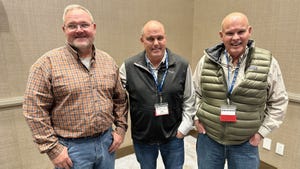
EASTLAND

Woods Eastland, a producer and cooperative executive from Doddsville, Miss., said that if the proposals had been in effect for the 2004 crop, about one-half of the cotton produced in the United States would have been ineligible for the marketing loan.

“Farmers always have been and continue to be willing to do their share,” said Eastland. “In this regard, they will gladly take part proportionally in spending reductions. However, this burden should be proportional between farmers and other citizens, and specifically within the farming community among all program crops.”

Although USDA has not released any numbers on marketing loan redemptions or loan deficiency payments for the 2004 cotton crop, the dollars could be substantial since spot cotton prices have been 8 to 10 cents below the loan rate for most of the 2004-05 marketing year.

Producers of all program crops can redeem cotton from the CCC loan or request loan deficiency payments for the difference between the loan rate for their grade and staple and USDA’s adjusted world price up to the payment limit for an individual operation.

The Bush administration’s budget proposal would lower the payment limit cap for individuals from $360,000 to $250,000 per year, eliminate the three-entity rule and base a farmer’s eligibility for marketing loans on 85 percent of an operation’s direct payment yield.

Many farmers’ payment yields, which were frozen at 1985 levels in the 1991 farm bill, are 40 to 50 percent of their current yields, according to National Cotton Council analysts. All of a farmer’s production is eligible for marketing loans under the 2002 farm bill.

The president’s budget would also reduce direct payments to program producers and dairy payments by 5 percent and reduce subsidies for crop insurance premiums and reduce costs to deliver the program.

“If all of these proposals were adopted, the result would be significant to all producers and devastating to many,” said Eastland. “Unfortunately, they are unfairly targeted toward Sunbelt crops. They would result in a 10 percent to 30 percent cut in farmers’ gross incomes.”

He said producers of cotton, rice and peanuts would be affected more than other farmers because of the substantial yield increases in those crops in recent years and the reduction in payment limit caps that would affect higher-input operations.

Eastland said the National Cotton Council will be working with Congress and the administration during the current session.

“We’ll be delivering the message that the farm bill is a multi-year contract that provides stability for U.S. agriculture and U.S. consumers, covering the 2002 and 2007 crop years,” said Eastland. “Relying upon the representation that it would last through the 2007 crop, many producers made investments and business plans and incurred risks confident that its terms would be unchanged.”

He urged Council members and other farmers to contact their Congressional representatives and urge them to sign onto letters that are being sent to the chairmen and ranking members of the House and Senate budget committees.

“These letters — which are available in the members’ only section of the Council’s Web site — urge the committees to stand by the commitment made to this nation’s farmers by maintaining the baseline for agriculture,” he said. “If you have not contacted your member of Congress, I urge you to do so.”

Eastland said he and members of the Council staff were still reviewing the decision by the WTO appeal panel in the case Brazil brought against the U.S. cotton program. The ruling was made March 3, the day before Eastland spoke at the Farm and Gin Show.

“Our initial review of the findings indicates that it upheld the original panel’s decision in most respects, including its determinations concerning the export credit guarantee program, cotton’s Step 2 program, classification of direct payments and serious prejudice,” he said. “Obviously, we are disappointed with the ruling.”

Council leaders stress there will be no immediate changes in the U.S. cotton program because of the March 3 ruling.

“The only date — and it was in the ruling by the original panel — was July 1,” said Gary Adams, vice president of economics and policy for the NCC. “The first panel that heard the case said the United States should implement changes by July 1.

“But it’s up to the government of the country that’s the subject of the ruling to decide when it will implement any changes.”

Adams cautioned growers about paying too much heed to comments that the ruling means the end of the U.S. cotton program. “There will still be a cotton program,” he said. “We will be looking at what adjustments need to be made, but we will continue to have farm programs.”

e-mail: flaws@primediabusiness.com

Get Copyright ClearanceWant to use this article? Click here for options!
© 2008 Penton Media, Inc.


Latest Jobs

Read More Daily News

Harkin, Lugar introduce ethanol pipeline measure

Jul 24, 2008 10:31 AM

Senators Tom Harkin of Iowa and Richard Lugar of Indiana have introduced legislation aimed at addressing one of the valid criticisms of ethanol production — the lack of an economical way to move the renewable fuel to major markets....

U.S. offers new cap on supports at WTO talks

Jul 24, 2008 10:28 AM

U.S. negotiators this week announced a new offer of a $15 billion cap in the World Trade Organization (WTO) talks on the broadest level of U.S. farm supports called overall trade distorting support or OTDS, according to a report from USA Rice Federation....

Damaging herbicide drift can travel far

Jul 24, 2008 10:22 AM

Every year, Eric Webster receives many calls on Newpath and Roundup drift. “The glyphosate drift is primarily in northeast Louisiana,” said the LSU AgCenter weed scientist at the recent field day at the Rice Research Station in Crowley, La....

What happened to the bollworms?

Jul 24, 2008 10:18 AM

Several weeks ago, traps showed large numbers of bollworm moths in Arkansas — including one in Jefferson County with more than 1,000 moths — but egg and worm numbers haven’t developed in cotton as expected, according to Scott Akin, Extension entomologist with the University of Arkansas Division of Agriculture....

Farm Bureau backs change in trucking regulations

Jul 24, 2008 10:15 AM

A bill that will relieve farmers and ranchers from undue burdens and regulations when they transport their crops and livestock across state lines has the support of the American Farm Bureau Federation....

Delta Farm Press News

Southeast Farm Press News

Southwest Farm Press News

Western Farm Press News
resources

events icon events

product info icon tradeshows

tradeshow icon digests

research icon photos

Continuing Education

For Texas and Oklahoma Licensed Applicators

A free online continuing education course on spray drift management accredited by the Texas and Oklahoma departments of agriculture.

For National Certified Crop Advisers

A free American Society of Agronomy-accredited one-CEU course on spray drift management.

ACCREDITED IN CALIFORNIA ONLY:


Almond Pest Management

Get the latest info on almond insect pest management and earn 2 hrs. CE DPR and CCA credit in California.

California Groundwater Protection Regulations

Earn 2 hrs. in California laws and regs CE and learn how to protect California groundwater supplies.

Powdery Mildew Control in California Grapevines

Learn about the No. 1 grape disease in California; earn 2 California CE hours.

ACCREDITED IN CALIFORNIA AND ARIZONA:


Insecticide Resistance Management in Agronomic and Row Crops

A 3-hr. CE approved for California and Arizona licensees and CCAs in both states.

Agronomic Weed Resistance Management in Row Crops, Trees Nuts and Vines

Weeds Resistance Management is approved for 3 hours of CE credit for all California and Arizona licensees and Certified Crop Advisers.

Lepidopterous Pest Management/ Pesticide Safety

This course is approved for 2 hours in Arizona and California (1 hr. of laws/regs; 1 hour Other) and for CCAs.

Managing Spray Drift to Minimize Problems

2-hrs laws and regs for California licensees; 2 hours in Arizona and for CCAs.

Back to Top

Browse Print Issues

Additional Resources

subscribe to Farm Press Daily Southeast Farm Press Southwest Farm Press Western Farm Press