ICAC says biotech adoption gaining speed

Mar 2, 2005 9:44 AM, By Forrest Laws


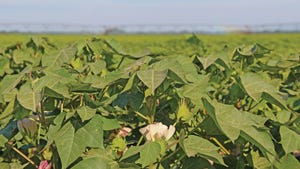
The International Cotton Advisory Committee says that genetically altered cotton varieties were planted on 24 percent of the world’s cotton acres during 2004-05, an increase of 3 percent over the previous year.

Those acres accounted for 35 percent of world production and 31 percent of cotton trade in the international market, according to the ICAC, an organization representing 44 of the world’s cotton producing countries. It said nine countries representing 60 percent of the world area have commercialized biotech cotton varieties.

The ICAC constituted an expert panel in 1999 to prepare a report on biotech cotton — in a language understandable to most people — to address questions about the benefits and risks of biotech cotton. That report was published in 2000.

Last year, ICAC formed the Second Expert Panel on Biotechnology of Cotton to update the first report and include information not covered in that report, including specifically addressing bio-safety issues and the potential benefits and challenges for biotech cotton adoption in the developing world.

The Second Export Panel included members from Australia, France, Greece, Pakistan, the United States and the International Service for the Acquisition of Agra-Biotech Applications. Among the U.S. members of the panel were Phillip Wakelyn, a scientist with the National Cotton Council, and Kater Hake, an agronomist with Delta and Pine Land Co.

The ICAC says the panel produced a thorough report with extensive references that should be informative to all interested in cotton and biotechnology. The Executive Summary is available at: (http://www.icac.org/icac/cotton_info/tis/biotech/documents/expert_panel_2/english.html).

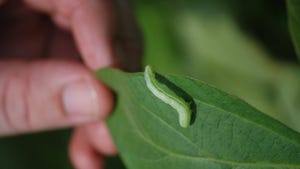
The panel found that while insect resistance and herbicide tolerance are the only traits currently available in biotech cottons, a broad range of other traits are under development using modern biotechnology.

Principle limitations to the easy and faster spread of biotechnology are identification of suitable genes, intellectual property rights and bio-safety regulations in various countries.

“The products of modern biotechnology are the most rigorously evaluated of any products ever introduced and rigorous assessment of the currently commercialized products (i.e., insect resistant and herbicide resistant cottons) have shown no human health risks or risks to the environment,” the report said.

The panel recommended that case-by-case assessment of new products should be undertaken in each geographical region being considered for utilization of a new biotech product. Pre-emptive resistance management strategy as a refuge crop has proved successful, and sustained use of the technology demands that resistance management strategies must be implemented according to local conditions.

A review of published literature from all countries growing biotech cottons indicates significant economic, environmental and social benefits, particularly for resource-poor small farmers in developing countries. Farmer benefits accrue through reductions in pesticide use, equal or higher yields, no impact on fiber quality and increased income, while clear environmental benefits are delivered through reduced pesticide input.

“Many countries in Asia, Africa and South America are experimenting with biotech varieties of cotton,” the report said. “The results are encouraging everywhere, but most governments are slow in deciding protocol for importing, experimenting and commercializing release of biotech products.

“The technology has tremendous potential, and countries slow in adoption are depriving their farmers of benefits already availed in numbers of countries,” it noted. “All countries should to be free to make their own decisions about adoption of biotech cotton or other products of modern biotechnology, unconstrained by philosophical, ideological, or economic pressures from the outside.”

The panel made specific recommendations for the adoption of biotechnology products by developing countries:

• Develop a centralized regulatory process that is clear, rigorous, expeditious, harmonized and science-based and that requires testing to demonstrate benefits and follow-up procedures to ensure sustainability;

• Insure that legislation is in place to protect both the germplasm and the technology;

• Develop technical teams that can educate farmers and support the use of new technology;

• Encourage the adoption of the best technology in varieties with demonstrated local performance; and

• Include biotech cotton as one component of an integrated farming system supporting adoption of IPM (Integrated Pest management) or IWM (Integrated Weed management), not as a replacement or alternative technology.

e-mail: flaws@primediabusiness.com

Get Copyright ClearanceWant to use this article? Click here for options!
© 2008 Penton Media, Inc.


Latest Jobs

Read More Daily News

Farm bill and flooding: economist Daryll Ray

Jul 3, 2008 12:08 PM

After the first round of producer organization-sponsored farm bill meetings, Mid-South farmers still have plenty of questions about the new legislation....

Long-time Arkansas goat rancher — Jack Black

Jul 3, 2008 12:06 PM

As Jack Black looks on in the afternoon’s fading light, a flock of guinea fowl fords tall pasture grass pecking at insects and weaving through 30, or so, multi-hued goats. ...

Peanuts appeal to Mississippi growers

Jul 3, 2008 12:04 PM

Strong market prices and the ability to cope with less moisture than most crops have Mississippi’s peanut growers expanding their acreage again this year....

Rice field day in Richland Parish set for July 21

Jul 3, 2008 12:02 PM

The LSU AgCenter’s annual Northeast Louisiana rice field day will be held July 21 at the Elliot Colvin farm and the Rayville Civic Center in Rayville, La....

LSU AgCenter to host more biodiesel workshops July 29-31

Jul 3, 2008 12:00 PM

By popular demand, the LSU AgCenter will host another set of one-day workshops on how to make your own biodiesel. ...

Delta Farm Press News

Southeast Farm Press News

Southwest Farm Press News

Western Farm Press News

resources

events icon events

product info icon tradeshows

tradeshow icon digests

research icon photos

Continuing Education

For Texas and Oklahoma Licensed Applicators

A free online continuing education course on spray drift management accredited by the Texas and Oklahoma departments of agriculture.

For National Certified Crop Advisers

A free American Society of Agronomy-accredited one-CEU course on spray drift management.

ACCREDITED IN CALIFORNIA ONLY:


Almond Pest Management

Get the latest info on almond insect pest management and earn 2 hrs. CE DPR and CCA credit in California.

California Groundwater Protection Regulations

Earn 2 hrs. in California laws and regs CE and learn how to protect California groundwater supplies.

Powdery Mildew Control in California Grapevines

Learn about the No. 1 grape disease in California; earn 2 California CE hours.

ACCREDITED IN CALIFORNIA AND ARIZONA:


Insecticide Resistance Management in Agronomic and Row Crops

A 3-hr. CE approved for California and Arizona licensees and CCAs in both states.

Agronomic Weed Resistance Management in Row Crops, Trees Nuts and Vines

Weeds Resistance Management is approved for 3 hours of CE credit for all California and Arizona licensees and Certified Crop Advisers.

Lepidopterous Pest Management/ Pesticide Safety

This course is approved for 2 hours in Arizona and California (1 hr. of laws/regs; 1 hour Other) and for CCAs.

Managing Spray Drift to Minimize Problems

2-hrs laws and regs for California licensees; 2 hours in Arizona and for CCAs.

Back to Top

Browse Print Issues

Additional Resources

subscribe to Farm Press Daily Southeast Farm Press Southwest Farm Press Western Farm Press