A surprising crop, the top 10 and resistance

Feb 18, 2005 9:42 AM, By David Bennett

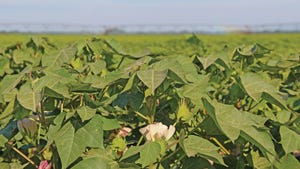
As an indicator of how good last fall was for cotton, some 75 percent of the state’s cotton classed white color grades of 21, 31 or 41.


Last cotton growing season, in the midst of miserably wet conditions, Sandy Stewart didn’t think he’d ever have anything positive to say about the crop. Things were bleak.

Come harvest, though, his mood — along with the mood of his state’s cotton farmers — brightened. Despite long spells of horrible weather, Louisiana’s yield averaged 862 pounds, “give or take a few pounds by the time all the numbers are crunched,” said the Extension cotton specialist. “This is the second-largest crop on record for Louisiana.”

What was the main cause of the turnaround?

“A particular piece of data stands out,” said Stewart, who spoke at the Louisiana Cotton Forum in Monroe, La., on Feb. 3. “The accumulated DD60s from Aug. 15 through Oct. 9… held steady much longer than in any other year in the last decade,” including 2003, the state’s best cotton-producing year ever.

“We set a tremendous amount of bolls at the top of the plant on outer positions. Driving down the road, I rarely saw buggy whips sticking up — we made bolls all the way up.”

The boll weevil eradication program was also a key in turning things around. “I think it’s obvious we wouldn’t have been as successful at the end of the year if we’d been battling weevils.

“If we combined the first half of 2003 with the second half of 2004, there’s no telling how much cotton we could produce in Louisiana.”

Almost 500,000 acres of cotton were certified in the state for 2004. “We expect that’ll go up to between 525,000 to 600,000 acres for 2005.”

As an indicator of how good last fall was for cotton, some 75 percent of the state’s cotton classed white color grades of 21, 31 or 41. “Those are high numbers if you look at what Louisiana has done historically.”

The top 10

It will surprise few, said Stewart, that the top two varieties planted last year were DP 555 BG/RR and ST 5599BR. According to the USDA, over 62 percent of Louisiana’s acres were planted in the two with 555 planted on nearly 52 percent. Rounding out the top 10: DP 444 BG/RR, FM 960 BR, PM 1218 BG/RR, DP 449 BG/RR, DP 5415 RR, FM 800 BR, DP 493, and DP 458 BG/RR.

“We do a pretty good job of choosing varieties. Doing so is going to become increasingly critical in the near future with the introduction of Roundup Ready Flex and some other technologies coming out.”

Herbicide resistance

“I wouldn’t be doing my job if I didn’t say something about the potential for herbicide resistance.”

With Roundup Ready Flex cotton soon to be on the market and increased acres of Roundup Ready corn being grown, glyphosate use will continue to surge.

“We’re putting a lot of glyphosate into our production systems. A diverse cropping system has a low potential for developing herbicide resistance, a monoculture has a higher potential. No-till has a higher potential to produce resistance.”

What about Louisiana’s cropping systems?

“We’re growing a lot of Roundup Ready cotton in continuous rotation. We have Roundup Ready cotton in rotation with corn, Roundup Ready cotton with Roundup Ready soybeans. Will we grow continuous Flex cotton?”

Whatever happens, said Stewart, the specter of “a lot more glyphosate” being sprayed looms. “We’re already reliant on glyphosate and will, very likely, become even more reliant on it.”

With that possibility, in conjunction with less tillage, weed resistance has become a real possibility.

“Losing Roundup technology is something none of us want… People are aware of insecticide resistance — we’ve gone through those issues. With weed resistance, though, we haven’t… Personally, I want to see glyphosate have a long life. It’s a cornerstone of our production system. (Protecting it and preventing weed resistance) is something we need to begin thinking about.”

e-mail: dbennett@primediabusiness.com

Get Copyright ClearanceWant to use this article? Click here for options!
© 2008 Penton Media, Inc.


Latest Jobs

Read More Daily News

Weed resistance issues increasing

Jul 23, 2008 10:21 AM

This year, there are some 1.4 million acres of rice in Arkansas. Given the new chemistries available, researchers say it’s surprising that growers continue to find more fields of propanil-resistant and Facet-resistant barnyardgrass....

National Cotton Council moves headquarters

Jul 23, 2008 10:18 AM

The National Cotton Council has closed the doors on one era and opened the doors to another. ...

Deltapine soybeans to transition to Asgrow

Jul 23, 2008 10:15 AM

Another well-known Mid-South brand will soon disappear into the new world of corporate mergers. ...

Strain challenge: eat local Louisiana

Jul 23, 2008 10:10 AM

Louisiana’s agriculture and forestry commissioner is challenging the residents of his state to eat local for one week....

Late Missouri corn most at risk to beetles

Jul 22, 2008 9:45 AM

After years of being primarily a horticultural pest, Japanese beetles are emerging as a threat to field crops across Missouri, said Wayne Bailey, University of Missouri Extension entomologist....

Delta Farm Press News

Southeast Farm Press News

Southwest Farm Press News
Western Farm Press News
resources

events icon events

product info icon tradeshows

tradeshow icon digests

research icon photos

Continuing Education

For Texas and Oklahoma Licensed Applicators

A free online continuing education course on spray drift management accredited by the Texas and Oklahoma departments of agriculture.

For National Certified Crop Advisers

A free American Society of Agronomy-accredited one-CEU course on spray drift management.

ACCREDITED IN CALIFORNIA ONLY:


Almond Pest Management

Get the latest info on almond insect pest management and earn 2 hrs. CE DPR and CCA credit in California.

California Groundwater Protection Regulations

Earn 2 hrs. in California laws and regs CE and learn how to protect California groundwater supplies.

Powdery Mildew Control in California Grapevines

Learn about the No. 1 grape disease in California; earn 2 California CE hours.

ACCREDITED IN CALIFORNIA AND ARIZONA:


Insecticide Resistance Management in Agronomic and Row Crops

A 3-hr. CE approved for California and Arizona licensees and CCAs in both states.

Agronomic Weed Resistance Management in Row Crops, Trees Nuts and Vines

Weeds Resistance Management is approved for 3 hours of CE credit for all California and Arizona licensees and Certified Crop Advisers.

Lepidopterous Pest Management/ Pesticide Safety

This course is approved for 2 hours in Arizona and California (1 hr. of laws/regs; 1 hour Other) and for CCAs.

Managing Spray Drift to Minimize Problems

2-hrs laws and regs for California licensees; 2 hours in Arizona and for CCAs.

Back to Top

Browse Print Issues

Additional Resources

subscribe to Farm Press Daily Southeast Farm Press Southwest Farm Press Western Farm Press