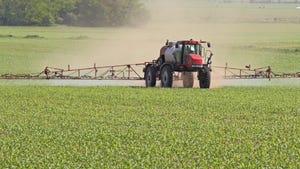
Will weed shifts hurt glyphosate’s effectiveness?

Feb 16, 2005 8:27 AM, By Elton Robinson


UNIVERSAL CITY, Calif. — Roundup Ready cropping systems have made streams cleaner, soils stronger, growers more profitable and crops easier to manage. But is this unique technology in danger of losing some of its effectiveness due to herbicide resistance or weed shifts to more tolerant species?

The answer lies in industry and grower efforts to improve stewardship of all herbicides, not just glyphosate, according to John Wilcut, North Carolina State University weed scientist.

The need for this broad focus is underscored by the dearth of new herbicides with new sites of action over the last decade, a lack of research and development effort toward that end and documented resistance in several weed species.

There’s no doubt that the Roundup Ready system brought rapid change in herbicide use patterns, noted Wilcut, speaking at the National Alliance of Independent Crop Consultants annual meeting here.

An estimated 60 million acres are planted in the United States to Roundup Ready crops and use of glyphosate is over 100 million tons of active ingredient per year. In 2002, glyphosate was used on nearly twice the soybean acreage as Pursuit during its peak use in 1995.

“Accompanying this change has been a rapid increase in production systems with more reduced-tillage and total-post systems and a tremendous reduction in the use of residual herbicides, either soil-applied or postemergence. As a result, environmental loading of herbicides into ground and surface waters has been reduced as has loss of topsoil.

In addition, “research has shown the best and most cost-effective way to improve weed control and maximize yield potential is to spray more glyphosate.”

But this advantage may be slipping, according to Wilcut. “The number of glyphosate applications and rates of application have started increasing. This is perhaps indicating weed shifts to more tolerant species and less to development of resistant species. These changes suggest that economic returns from Roundup Ready crops are eroding for the grower.”

Glyphosate resistance is found in several ryegrass populations in the United States, common ragweed in Arkansas and Missouri and horseweed in Delaware, Ohio, Pennsylvania, North Carolina, Tennessee, Arkansas and Mississippi. Resistance has also been reported in Malaysia in goosegrass and in fleabane in South Africa and Chile.

Wilcut said the use patterns of glyphosate and the fact that it is non-residual “will likely result in a change of emergence patterns within a weed species, to biotypes that germinate later and thus have a greater potential for escaping and setting seed for subsequent germination. Some weed scientists in the United States think that this is already occurring.”

Wilcut said the overuse of Liberty Link technology could also lead to resistance in certain weeds.

Resistance is most likely to occur in weeds that have a history of developing resistance to multiple herbicide modes or sites of action, according to Wilcut. Here are a few:

Ambrosia species (common ragweed and giant ragweed): resistance to glyphosate; ALS herbicides; triazine and other PSII inhibitors (Cotoran, Direx, Lexone/Sencor); and Protox inhibitors (Blazer, Spartan, Reflex and Valor). At least six species are found in the United States.

Chenopodium species (lambquarters): resistance to ALS; triazine and other PSII inhibitors; likely resistance to glyphosate; Protox inhibitors; and dinitroanilines. At least four species in the United States.

Amaranthus species (pigweeds, including waterhemps and Palmer amaranth): resistance to ALS; triazine and other PSII inhibitors; dinitroanilines; at risk for resistance to glyphosate in waterhemp, Palmer amaranth and smooth pigweed. At least 10 species in the United States and approximately 50 species worldwide.

Annual grasses including goosegrass, foxtails, crowfootgrass, signal grasses, panicums and crabgrasses. Resistance to ACCase inhibitors; ALS; dinitroanilines; triazine and other PSII inhibitors. Ten-plus species at a minimum in the United States.

Johnsongrass, resistance to ALS; ACCase inhibitors; and dinitroanilines.

Conyza species (horseweed and fleabane family): resistance to a number of different sites of action, including glyphosate. At least four species in the United States.

Ryegrasses have developed resistance to every current herbicide site of action. Likely four or more species in the United States.

Another possible at risk weed are the Xanthium species, or cockleburs.

Wilcut is also concerned that there are no new efforts under way for biotechnological registrations for herbicides in cotton. “None of the companies I’ve talked to are optimistic about new herbicide sites of action being discovered for use in cotton.”

This underscores the need to pay more attention to managing resistance in glyphosate and other herbicides. Certain herbicides can improve stewardship for at-risk weeds or weeds with resistance. For example:

Dual Magnum — for resistance management in annual grasses, pigweeds, and some help with ragweeds and lambsquarters. There has never been a documented case of herbicide resistance to this herbicide family (other members include Outlook, acetochlor and Lasso).

Protox inhibitors like Valor and Spartan are good choices for resistance management in ragweed, lambsquarters, and Amaranthus species. Blazer and Cobra are good for resistance management in pigweeds and common ragweed.

Other options include Cotoran, Direx, atrazine and Lexone/Sencor for resistance management in ragweed, pigweeds, and lambsquarters and FirstRate for short-term management of resistant and non-resistant horseweed and some dayflower species.

The good news is that herbicide resistance has not occurred in the Ipomoea annual morningglory complex, sicklepod or Florida pusley.

Glyphosate has improved stewardship of a number of other herbicides, including ALS herbicides, ACCase inhibitors (Assure, Fusilade, Fusion, Poast and Select), PSII inhibitors and Protox inhibitors, according to Wilcut.

“Glyphosate and the Roundup Ready crops are among the most important technologies we have for weed management in agronomic crops. We cannot afford to lose the effectiveness of these products. Glyphosate stewardship is important for all of us, but it is more important to have stewardship for all herbicides.”

e-mail: erobinson@primediabusiness.com

Get Copyright ClearanceWant to use this article? Click here for options!
© 2008 Penton Media, Inc.


Latest Jobs

Read More Daily News

Farm bill and flooding: economist Daryll Ray

Jul 3, 2008 12:08 PM

After the first round of producer organization-sponsored farm bill meetings, Mid-South farmers still have plenty of questions about the new legislation....

Long-time Arkansas goat rancher — Jack Black

Jul 3, 2008 12:06 PM

As Jack Black looks on in the afternoon’s fading light, a flock of guinea fowl fords tall pasture grass pecking at insects and weaving through 30, or so, multi-hued goats. ...

Peanuts appeal to Mississippi growers

Jul 3, 2008 12:04 PM

Strong market prices and the ability to cope with less moisture than most crops have Mississippi’s peanut growers expanding their acreage again this year....

Rice field day in Richland Parish set for July 21

Jul 3, 2008 12:02 PM

The LSU AgCenter’s annual Northeast Louisiana rice field day will be held July 21 at the Elliot Colvin farm and the Rayville Civic Center in Rayville, La....

LSU AgCenter to host more biodiesel workshops July 29-31

Jul 3, 2008 12:00 PM

By popular demand, the LSU AgCenter will host another set of one-day workshops on how to make your own biodiesel. ...

Delta Farm Press News

Southeast Farm Press News

Southwest Farm Press News
Western Farm Press News
resources

events icon events

product info icon tradeshows

tradeshow icon digests

research icon photos

Continuing Education

For Texas and Oklahoma Licensed Applicators

A free online continuing education course on spray drift management accredited by the Texas and Oklahoma departments of agriculture.

For National Certified Crop Advisers

A free American Society of Agronomy-accredited one-CEU course on spray drift management.

ACCREDITED IN CALIFORNIA ONLY:


Almond Pest Management

Get the latest info on almond insect pest management and earn 2 hrs. CE DPR and CCA credit in California.

California Groundwater Protection Regulations

Earn 2 hrs. in California laws and regs CE and learn how to protect California groundwater supplies.

Powdery Mildew Control in California Grapevines

Learn about the No. 1 grape disease in California; earn 2 California CE hours.

ACCREDITED IN CALIFORNIA AND ARIZONA:


Insecticide Resistance Management in Agronomic and Row Crops

A 3-hr. CE approved for California and Arizona licensees and CCAs in both states.

Agronomic Weed Resistance Management in Row Crops, Trees Nuts and Vines

Weeds Resistance Management is approved for 3 hours of CE credit for all California and Arizona licensees and Certified Crop Advisers.

Lepidopterous Pest Management/ Pesticide Safety

This course is approved for 2 hours in Arizona and California (1 hr. of laws/regs; 1 hour Other) and for CCAs.

Managing Spray Drift to Minimize Problems

2-hrs laws and regs for California licensees; 2 hours in Arizona and for CCAs.

Back to Top

Browse Print Issues

Additional Resources

subscribe to Farm Press Daily Southeast Farm Press Southwest Farm Press Western Farm Press