Louisiana considering 2 percent biofuel mandate

Apr 22, 2006 6:21 PM, By Forrest Laws

Louisiana Farm Bureau urging farmers to support Thompson bill

The Louisiana Legislature is preparing to debate a bill that would require a 2 percent use of biofuels by the state’s motorists if production of products such as ethanol and biodiesel reach 20 million to 50 million gallons annually.

Supporters say House Bill 685 would create investment opportunities, while giving Louisiana farmers another market to sell corn, soybeans and sugarcane. The bill, sponsored by Rep. Francis Thompson, D-Delhi, is scheduled to be debated in the House Tuesday.

“This is the best way we know to begin reducing our dependence on foreign oil,” said Ronnie Anderson, president of the Louisiana Farm Bureau, one of the bill’s supporters. “As gas and diesel prices close in on $3 per gallon, now is the time to seriously consider a renewal fuels standard that begins at the farm gate.”

The legislation would establish minimum requirements for ethanol and biodiesel sold in Louisiana. Ethanol is typically blended with gasoline to form a product called E-85 while soy oil and other vegetable oils are added at rates of 2 to 20 percent to form biodiesel.

Currently, most of the ethanol production in the United States is located in the Midwest, but a number of biodiesel manufacturing facilities are springing up in Arkansas and Mississippi and other southern states.

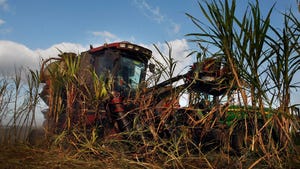
While most of the nation’s ethanol plants use primarily corn, Anderson said plants in Louisiana could be geared to use a host of domestic crops. “Corn, soybeans, sugarcane, all these could be used to create bio-fuels that help farmers, their local economies and the state as a whole,” he said.

Besides the Louisiana Farm Bureau, the bill is supported by Louisiana Department of Agriculture and Forestry, the Louisiana Department of Environmental Quality and the Clean Cities Program.

Anderson said support of the bill now positions Louisiana to reap the benefits of biofuel production in the wake of federal mandates, which call for nationwide use of renewable fuels.

“Federal law is going to require that 2 percent of available fuel be ethanol or biodiesel,” Anderson said. “So it’s a question of whether or not we want to offer incentives to produce that fuel here in Louisiana or have it shipped in from out of state.”

The Thompson bill mandates that a percentage of gas and diesel sold in Louisiana come from biomass sources, said Brian Breaux, the Farm Bureau’s associate commodity director.

“The bill imposes a 2 percent standard that all gasoline sold in the state be ethanol and 2 percent of the diesel be biodiesel,” he said. “The standards will not be imposed, however, until facilities in the state are able to produce those fuels. That will give us some measure of security for investment in biofuel facilities here in Louisiana.”

Breaux said HB 685 calls for production of 10 million gallons of ethanol and a similar amount of biodiesel before the 2 percent standard would be triggered. That production amount could be subject to change, however.

“That’s what the bill currently calls for,” Breaux continued. “However, amendments from the House floor will likely raise the bar for ethanol to 50 million gallons as a concession to the oil and gas industry.”

Anderson said ethanol and biodiesel facilities in the state would be another market for agricultural commodities grown here, while keeping Louisiana competitive on the world marketplace.

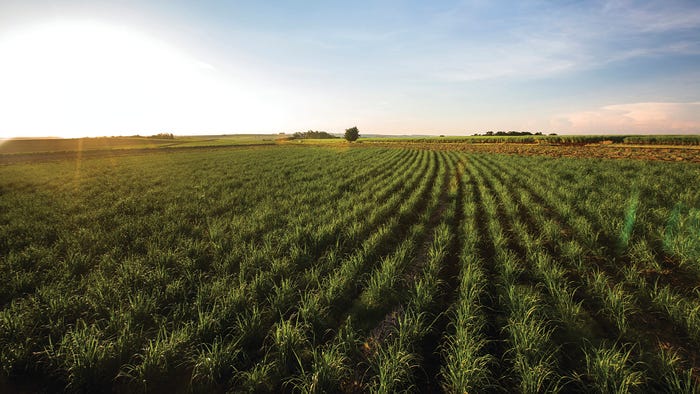
“These refineries would likely use our grains and sugar to make biofuels, which would give our farmers a place to sell their crops,” Anderson said. “Brazil’s sugarcane industry is equally capable of producing refined sugar or ethanol at its mills. There’s no reason why we can’t do the same here.”

With oil prices climbing above $75 a barrel in recent days, Anderson says the Louisiana Farm Bureau is encouraging Louisiana farmers contact their representatives in support of the HB685.

“This is not just good for our farmers, but for all of us hit by high fuel prices,” Anderson said. “Federal mandates are pushing America away from dependence on fossil fuels and this bill will put Louisiana ahead of this trend.”

The Legislatures in Arkansas and Mississippi considered biofuel bills with varying degrees of success in their just-completed sessions.

The Arkansas General Assembly passed a “technical correction” amendment that will allow all blends of biodiesel consumed in the state to be eligible for a tax refund on a 2-percent blend of the fuel.

Mississippi legislators also attempted to pass a bill requiring a 2 percent blend of biodiesel be used in the state, but ran into opposition from petroleum distributors and trucking company interests.

Supporters of biofuel in both states say they believe they will be better positioned to pass legislation mandating the use of biofuel blends in 2007.

e-mail: flaws@farmpress.com

Get Copyright ClearanceWant to use this article? Click here for options!
© 2009 Penton Media, Inc.


Latest Jobs

Read More Daily News

WTO awards Brazil retaliation authority

Nov 20, 2009 11:01 AM

The World Trade Organization has authorized Brazil to seek retaliation against the United States for it support of two U.S. commodity programs....

Precision ag – online course

Nov 20, 2009 10:53 AM

University of Missouri Extension is offering an eight-week online course on managing farm machinery using precision agriculture, Jan. 12 through March 4....

Soybeans — U.S. key export supplier

Nov 20, 2009 10:48 AM

Weather problems are now thought to be factored into market prices. ...

$485 million loss – Mississippi

Nov 19, 2009 3:57 PM

Mississippi State University agricultural economists calculate Mississippi farmers are suffering an estimated $485 million value loss in 2009. ...

Biofuels goal beyond ethanol

Nov 19, 2009 10:05 AM

If the U.S. is to reach the government-mandated target of producing 36 billion gallons of biofuels annually by 2022, “We will need to change the way we do business,” says a USDA official....

Delta Farm Press News

Southeast Farm Press News

Southwest Farm Press News
Western Farm Press News

resources

events icon events

product info icon tradeshows

tradeshow icon digests

research icon photos

Continuing Education


(New Course)
Weed Resistance Management in Cotton

This course covers a wide range of options to effectively control weeds in cotton and reduce the risk of weed resistance management. It is accredited for hours/units for licensed/accredited applicators in 7 U.S. Cotton Belt states (Florida, Georgia, New Mexico, Oklahoma, Texas, South Carolina an d Tennessee. CCA credit is pending).

This course is accredited in Texas, Oklahoma, New Mexico, Virginia, West Virginia and Wyoming as well as for CCA credits:

(New Course)
Spray Drift Management

Keeping crop protection chemicals on the crop for which they are intended has been a cornerstone of farming not only to protect neighboring crops, but to not waste money allowing products to drift off the intended target. This accredited online continuing education course covers the critical elements of spray drift management.

Back to Top

Continuing Education


(New Course)
Weed Resistance Management in Cotton

This course covers a wide range of options to effectively control weeds in cotton and reduce the risk of weed resistance management. It is accredited for hours/units for licensed/accredited applicators in 7 U.S. Cotton Belt states (Florida, Georgia, New Mexico, Oklahoma, Texas, South Carolina an d Tennessee. CCA credit is pending).

This course is accredited in Texas, Oklahoma, New Mexico, Virginia, West Virginia and Wyoming as well as for CCA credits:

(New Course)
Spray Drift Management

Keeping crop protection chemicals on the crop for which they are intended has been a cornerstone of farming not only to protect neighboring crops, but to not waste money allowing products to drift off the intended target. This accredited online continuing education course covers the critical elements of spray drift management.

Browse Print Issues

Additional Resources

subscribe to Farm Press Daily Southeast Farm Press Southwest Farm Press Western Farm Press