Scientists study potential value of switchgrass in Louisiana

  • Michael Blazier, LSU AgCenter forestry researcher, has been involved in many timber-related projects that have helped determine the most efficient methods for producing quality lumber.
  • Blazier working on growing switchgrass, a fast-growing native plant that shows promise as a biofuel feedstock.

Michael Blazier is familiar with growing trees. As an LSU AgCenter forestry researcher, he has been involved in many timber-related projects that have helped determine the most efficient methods for producing quality lumber. Now, he is working on growing switchgrass, a fast-growing native plant that shows promise as a biofuel feedstock.

“Switchgrass is native to nearly the entirety of North America. In Louisiana, it is native to the Cajun prairie ecosystem,” Blazier said.

Switchgrass can be grown on marginal lands that are not as productive for typical row crops, such as soybeans or corn. It also needs less fertilizer and is tolerant of both flooding and drought.

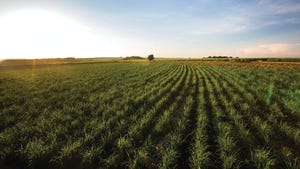
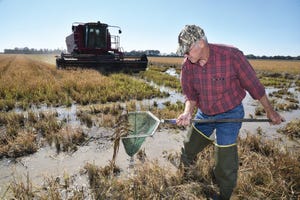
Blazier was taking switchgrass samples in a field near Archibald in Richland Parish with scientists from the University of Arkansas and the University of Arkansas-Monticello. The samples were to help determine switchgrass yields on various plots.

“Yields vary depending on the quality of the land it’s being grown on and the amount of inputs, such as fertilization. We’ve had yields as high as 10 dry tons per acre with only one application of fertilizer on these marginal lands that were idled for producing crops like soybeans due to their low yields,” Blazier said.

In research conducted at the LSU AgCenter Hill Farm Research Station near Homer in Claiborne Parish, Blazier has been working on growing switchgrass among pine trees. This system would give the landowner revenue from switchgrass as a biofuel and trees for lumber.

Early findings indicate that shading provided by pine trees can help establish switchgrass by preventing competition from other native species such as crabgrass. At the Archibald site, researchers are conducting a similar study using eastern cottonwood trees. A major difference is that the cottonwood trees will not be used for lumber but are being considered as a biofuel feedstock.

Hal Liechty, a forest ecologist and hydrologist at the University of Arkansas-Monticello and the University of Arkansas’s Division of Agriculture, is examining the retention of nutrients in switchgrass and cottonwood trees and comparing that to traditional row crops.

“Nutrient retention is a problem in the lower Mississippi River valley,” Liechty said. “One of the things we see with the bioenergy crops that we’re looking at, cottonwood and switchgrass is they are really good at retaining nutrients.”

Liechty is also trying to determine how much carbon is being sequestered and the potential economic benefits from carbon credits a landowner may receive by growing crops such as switchgrass and cottonwoods.

One advantage of the switchgrass system is that the carbon is stored in the soil through the roots of the switchgrass. Increasing carbon in the soil can potentially improve soil quality and crop productivity.

Discuss this Article 3

Ron Wagner (not verified)
on Nov 2, 2012

I was once a fan of biomass. Before I realized how cheap natural gas could be. Manure can be made to biomass and easily processed for use in a biodigester. Natural gas can also be transported to the farm in modules. Farm equipment can be converted to natural gas. Steyer already offers a natural gas tractor in Europe. Caterpillar has an ag division. Cat has said it is "all in" on natural gas equipment. Here is the Steyer tractor link:http://www.ngvglobal.com/steyr-presents-dedicated-natural-gas-tractor-1130

Ron Wagner (not verified)
on Nov 2, 2012

Natural gas is the future of energy. It is replacing dirty old coal plants, and dangerous expensive nuclear plants. It will fuel cars, vans, buses, locomotives, aircraft, ships, tractors, engines of all kinds. It costs far less. It will help keep us out of more useless wars, where we shed our blood and money. It lowers CO2 emissions. Over 2,400 natural gas story links on my blog. An annotated bibliography of live links, updated daily. The big picture of natural gas.
Ron Wagner

M Wood (not verified)
on Nov 4, 2012

How much can you sell a ton of switchgrass for?

Post new comment
Sign In or register to use your Delta Farm Press ID
(optional)

Continuing Education
Potassium nitrate has a positive effect in controlling plant pests and diseases when applied...

This online CE course details sound mechanical irrigation design and management practices to...

Newsletter Signup