Glyphosate-resistant ryegrass, one hard-to-kill weed

Glyphosate-Resistant Ryegrass Field Day

What is in this article?:

  • Glyphosate-resistant biotypes of Italian ryegrass have been documented in Mississippi, Arkansas and North Carolina.
  • The best timing for control of glyphosate-resistant Italian ryegrass is before it ever comes up.
  • There are very few postemergence options for control of glyphosate-resistant Italian ryegrass, and once it's in crop, there's nothing producers can do.

Glyphosate-resistant Italian ryegrass may not be as prolific a seed producer as glyphosate-resistant pigweed. Nor does it spread as ferociously. But in many fields, it can be just as hard to kill.

Weed scientists from three states discussed the weed in March, at the Glyphosate-Resistant Ryegrass Field Day at the Delta Research and Extension Center.

Twelve counties in Mississippi are currently the epicenter of glyphosate-resistant Italian ryegrass, but resistant biotypes have been discovered also in Arkansas and North Carolina.

DREC weed scientist Jason Bond says glyphosate-resistant Italian ryegrass shares another control characteristic with glyphosate-resistant pigweed. The best time to control it is before it ever comes up. But Bond believes that Mid-South farmers can bring glyphosate-resistant Italian ryegrass under control “if we really hammer it for a couple of years in a row.”

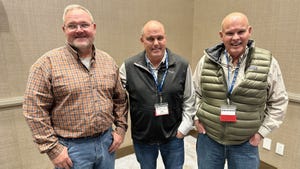
At the field day, which was moved indoors due to muddy conditions, Bond and fellow DREC weed scientist Tom Eubank described their research and recommendations for control of glyphosate-resistant Italian ryegrass.

Fall recommendations: For corn, Dual Magnum at 1.33 pints per acre; cotton, Dual Magnum at 1.33 pints per acre, or Treflan incorporated at 3 pints per acre, or double disking; soybeans, Dual Magnum at 1.33 pints per acre, or Treflan incorporated at 3 pints per acre, or double disking; and rice, Command at 2 pints per acre.

“The best timing for a fall application is from mid-October to mid-November,” Bond said. “None of these products are going to have post emergence activity on ryegrass. So if there is any ryegrass up, you have to kill it before you put a pre-emergence down or you’re going to be extremely disappointed in the spring.”

Winter application: Herbicide applications should be based on careful scouting for emerged glyphosate-resistant Italian ryegrass. Bond and Eubank suggest Select Max at 12 ounces to 16 ounces, or an equivalent rate of 2 pounds of clethodim for fields going to corn, soybean, cotton or rice. The best timing for winter applications are from mid-January to mid-February, when Italian ryegrass is less than 6 inches tall. Preplant applications of Select Max should be made at least 30 days prior to planting corn or rice. The higher rate of Select Max should be used if no residual herbicide was applied in the fall or if used in combination with 2,4-D or dicamba.

“Select does look good,” said Eubank. “But it is under the ACCase umbrella and we do have resistance to this family of chemistry. So we don’t need to depend on it too much. If we continue to put pressure on this herbicide, we will see resistance.”

Spring applications: Eubank said paraquat (Gramoxone Inteon) “is the best product we have right now for emerged Italian ryegrass, but control may be poor on larger plants. Spring applications of Gramoxone Inteon at 3 pints to 4 pints or two applications of Gramoxone Inteon spaced 10 to 14 days apart are recommended for cotton, corn, soybean and rice. A spring application should be made from March 1 to March 20 based on careful scouting for emerged glyphosate-resistant Italian ryegrass.

Research indicates that the addition of atrazine in corn at 1 quart, Sencor in soybean at 4 ounces, or Direx in cotton at 1.5 pints will increase the efficacy of Gramoxone Inteon against emerged glyphosate-resistant Italian ryegrass.

Discuss this Article 1

Will Smart (not verified)
on Mar 24, 2011

For the second time in a month, an article in DFP is suggesting that farmers "need to get away from AI sprayer tips" (2-28) and "use spray nozzles such as flat fan or twin jet to ensure thorough coverage of the weed" (above article). Researchers, crop consultants and even the press need to focus on droplet size when it comes to nozzles and proper coverage with contact chemicals. Our TurboDrop and AirMix nozzles were designed for contact coverage and can provide a consistent Medium droplet size in both a single flat fan and twin fan pattern. These nozzles are actually recommended on the Ignite label! Farmers have been using these nozzles in the Midsouth for 15 years with excellent results with fungicides, insecticides and contact herbicides, and also getting good drift control. Please don't lump all air induction nozzles into one category. Take a look at the droplet size generated by each nozzle. Coarse sprays are good for glyphosate, and Medium droplets are required by Ignite (and other contact chemicals). Our air induction nozzles deliver Medium droplets, and are proven and recommended in these applications.

Post new comment
Sign In or register to use your Delta Farm Press ID
(optional)

Continuing Education
Potassium nitrate has a positive effect in controlling plant pests and diseases when applied...
This online CE course details sound mechanical irrigation design and management practices to...

Newsletter Signup