Obama budget cuts farm programs
Feb 2, 2010 2:51 PM, By David Bennett, Farm Press Editorial Staff
Agriculture advocacy groups have reacted with a flurry of unhappy responses to President Obama’s Feb. 1 release of his proposed 2011 budget.
The proposed budget “reflects the serious challenges facing the country,” said Obama the day of its release. “We’re at war. Our economy has lost 7 million jobs over the last two years. And our government is deeply in debt after what can only be described as a decade of profligacy.” Read Obama’s full statement on page 2
Obama’s attempt to control government spending (pegged at over $1.5 trillion for this year) would mean payment cuts not only to large farmers (more than $2 billion over a decade) and agriculture-related insurance (some $8 billion over a decade) — but also, to the consternation of some environmental groups, would reduce the growth of conservation programs.
For the full budget proposal, see USDA 2011 Budget.
Crop insurance has been on the Obama administration’s radar for months. The latest budget comes after the December release of a proposal for a new Federal Crop Insurance Program. According to the budget proposal “crop-insurance companies currently benefit from huge windfall profits due to the structure and terms of the government’s contract with the companies, called the Standard Reinsurance Agreement.”
In the budget proposal, the USDA would receive $26 billion. Of that total, over $8 billion would be targeted for nutrition programs and more than $400 million would go to building broadband networks in rural areas.
Two other proposals sure to draw growers’ ire:
• Cotton and/or grain farmers, despite market prices, would collect $30,000 or less annually in direct-payment subsidies. That would mean a potential drop of $10,000.
• Current farm payment eligibility caps of $750,000 (for farm income) and $500,000 (for non-farm income) would drop to $500,000 and $250,000, respectively.
Such actions, according to the budget proposal, “would allow USDA to target payments to those who need and can benefit from them most, while at the same time preserving the safety net that protects farmers against low prices and natural disasters.”
Like the advocacy groups, prominent farm-state lawmakers — many facing re-election fights in 2010 — were unswayed by the Obama administration’s effort and arguments.
“Put simply the president’s proposal picks winners and losers,” said Arkansas Sen. Blanche Lincoln, chairman of the Senate Agriculture Committee. “By targeting policies that rural America relies upon, this proposal places a disproportionate burden on the backs of farmers and rural communities. While I too believe we must reduce the federal deficit, we must all share in this responsibility.”
The latest farm bill “contained over $4 billion worth of cuts to farm programs, was completely paid for and did not contribute to the deficit. … Changing the rules in the middle of the game would be detrimental to their operations and would cost us even more jobs in rural America.”
Obama’s 2010 budget called for similar cuts in agriculture, which were derailed by Congress. Lincoln was ready to remind him of that. ”I thank the president for his recommendations,” she said, “but Congress writes the budget. I intend to support measures to reduce the deficit but fight many of the president’s proposed cuts that will harm farmers, ranchers and rural communities.”

Tom Vilsack, USDA secretary, defending Obama’s budget, said problems in the United States’ rural areas “have grown more acute, which is why the Obama administration is committed to new approaches to strengthen rural America.” Read Vilsack’s full statement on page 3.
As a reflection of needed financial constraint, Vilsack said, the proposed budget “essentially (freezes) funding for discretionary programs at the FY 2010 level. However, limits we placed on select programs and efforts to eliminate earmarks and one-time funding actually result in a bottom line reduction to our discretionary budget authority of over $1 billion.”
Further, “we care deeply about farmers and ranchers and have worked hard to maintain the agricultural safety net, while instituting some targeted reductions in farm program payments.”
Walking a tightrope between his state’s farmers and his party’s recent mantra of controlled spending, Georgia Sen. Saxby Chambliss, ranking Republican on the Senate Agriculture Committee, commended Obama’s “effort to reign in government spending,” but said “we need to examine where resources are truly needed. As with last year, the (Obama) administration unfairly targets farmers and ranchers to achieve savings and fund Washington-based programs.
“I will continue to examine the budget along with my colleagues to ensure we are spending hard earned taxpayer dollars efficiently and effectively. In the weeks and months ahead, we will have to make some hard choices. It is my hope we can produce a budget that mirrors what Americans have to struggle with every day.”
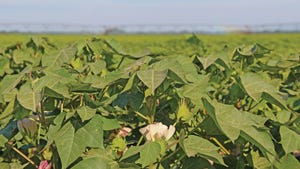
The National Cotton Council (NCC) warned that cotton will be a loser under Obama’s proposal. If it is adopted, not only would farmers lose payments but storage and marketing issues would arise.
“The financing demands of commercial agriculture require a high level of confidence by lenders in program availability,” said Jay Hardwick, a Louisiana farmer and NCC chairman. “In the midst of a credit crisis, it makes no sense to threaten a vital component of the borrower’s cash flow.”
The NCC said further proposals to eliminate upland cotton storage credits and reduce funding for the Market Access Program fails to take the whole picture into account. Read the NCC’s full statement on page 5.

The American Soybean Association (ASA) “opposed similar proposals by the (Obama) administration last year that would have reopened the 2008 farm bill and undercut long-term economic decisions by soybean producers,” said Rob Joslin, Ohio soybean producer and ASA president.
“They were bad ideas then, and they are bad ideas now. Agriculture spending, not including nutrition programs, is projected to account for just over one-half of one percent of next year’s $3.8 trillion budget. Cutting the farm safety net to achieve minimal savings would jeopardize an industry that continues to be a key driver for U.S. economic recovery and export growth.” Read the full ASA statement on page 4.
Next page: President Obama’s Feb. 1 statement on his budget proposal