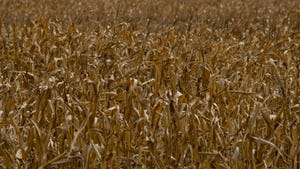
Will House Agriculture Committee rectify Senate farm bill flaws?

Arkansas Farm Bureau president goes on the record

What is in this article?:

  • Arkansas Farm Bureau president discusses Senate farm bill.
  • House Agriculture Committee expected to produce farm bill version friendlier to southern agriculture.
  • Senate version impacts to southern agriculture, farm organization, landlord relationships, rice, cotton, peanuts, irrigation and more.  

After a farm bill passed out of the Senate Agriculture Committee on April 26, focus has shifted to the House version. That’s especially true in the South, where agriculture leaders expect the House bill to be friendlier to the region than what will soon hit the Senate floor.

“I think it’s pretty telling that four of the five ‘no’ votes on the (Senate Agriculture) Committee were from southern senators,” said Randy Veach, Arkansas Farm Bureau President, the day after the bill’s passage. “That sends a message that this bill does not contain an adequate safety net for southern agriculture.”

For more, see here and here.

Veach, who farms in northeast Arkansas, also spoke on new qualifying requirements for government programs, how farms will be impacted and holding House Agriculture Committee leadership to past promises. Among his comments:

On the Adjusted Gross Income (AGI) test dropping to $750,000 and the qualifying wording changing from “active personal management” to “actively engaged”…

“The $900,000 (qualifying amount) was a concern and the $750,000 is of even greater concern. With the extremely high input costs in southern agriculture, the cost of making payments on a $700,000 cotton picker and $500,000 combine, … land payments, you have to have an AGI of a high amount to make those payments. That AGI is of great concern…

“As for ‘actively engaged,’ I’ll use myself as an example of what can happen. I crop-rent over 2,000 acres in my operation.   

“This is a big change – the landlords won’t be able to participate. When that happens, they won’t take less rent. That means I’ll have to make up the difference.

“So, not only am I losing a lot of the benefits of a safety net – like a direct payment and counter-cyclical payment – but I’ll have to turn around and compensate my crop-rent landlords for their inability to draw any kind of money from the safety net for their portion of the crop. That’s a big, significant problem.”

On H2A and the Arkansas Farm Bureau’s position on farm labor…

“We need a good guest worker program that isn’t cumbersome. We want people to be legal in order to work in agriculture. But we can’t continue to operate without a good guest worker program.”

For more on farm labor and guest workers, see here.

More on the safety net…

“This bill does not provide an adequate safety net for southern commodities. It eliminates direct payments, counter-cyclical payments and a couple of other programs that aren’t as big a problem for us. But (the elimination) of direct and counter-cyclical payments (is a big problem).

“Direct payments are decoupled as far as WTO goes. But the big impact – on the state of Arkansas, for instance – is that’s $244 million that goes out of the agricultural and state economies. That (impacts) about 1,952 jobs.

“This bill doesn’t replace any of that money in any way. There’s (nothing) that will help take care of the loss of direct payments and counter-cyclical. Of course, counter-cyclical payments haven’t come into play lately because of high market prices.

“But when we cripple southern agriculture with a non-safety net-type program … it will directly affect the availability and affordability of food, fiber and shelter. When that happens it will affect the whole economy of this nation drastically.

“Southern agriculture provides a large, large percentage of the products that allows our nation a great, affordable, safe, abundant supply of food, fiber and shelter. When you cripple agriculture financially then you’ll lose those wonderful products we have out there. Southern agriculture is a huge player in that.

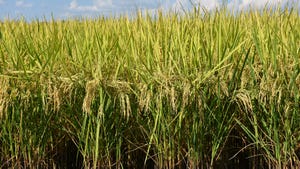
“Arkansas is the Number One rice-producing state in the United States. It (produces) almost 50 percent of the rice produced in the nation. Rice is a staple for the entire world and we export about 50 percent of that (crop).

“So, not only will it affect the nation but the world, as well. As a whole, the world is looking at one of the greatest hunger crisis that we’ve seen. (The Senate bill) would hurt not only the state of Arkansas, southern agriculture … and our nation, but people around the world.”

Discuss this Article 2

Anonymous (not verified)
on Apr 30, 2012

They should do away with farm subsidies now. They will have to anyway, becuase we cannot aford them anymore. Ironically, it is exactly due to global economic hardship that the 150% rise in food prices since 2000 caused that make it hard for government to continue subsidizing farming.

http://zoltansustainableecon.blogspot.com/2012/04/food-price-index-rose-...

Sandy Kimball (not verified)
on May 1, 2012

We cannot do away with farm subsidies as long as the US government has a cheap food policy. If we wish to continue to have the safest, most abundant food supply on earth at 12% of our average income then we must continue to provide a safety net to those that produce it.
Sandy Kimball, President
Bigham Brothers, Inc.
Lubbock, TX

Post new comment
Sign In or register to use your Delta Farm Press ID
(optional)

Continuing Education
Potassium nitrate has a positive effect in controlling plant pests and diseases when applied...

This online CE course details sound mechanical irrigation design and management practices to...

Newsletter Signup