Major moth flight moves to cotton, soybeans: Arkansas

Jul 8, 2008 10:52 AM, By Lamar James
Arkansas Extension Specialist

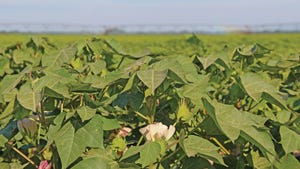
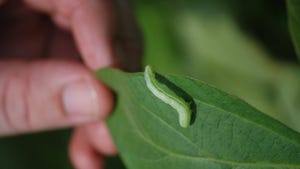
Large numbers of moths that can quickly develop into crop-damaging worms are moving into cotton and soybean fields all across Arkansas’ Delta.

“A major league moth flight is coming from corn fields and moving into cotton, soybeans and irrigated grain sorghum fields,” said Gus Lorenz, Extension entomologist with the University of Arkansas Division of Agriculture.

“We’re finding up to 500 per trap on a three-day catch,” he said. Extension specialists in those crops are also concerned.

Lorenz said traps in cotton fields “blew up in the last few days.” Fortunately, he said, there’s a lot of cotton still not blooming.

“That’s good because if any eggs are laid on non-blooming Bollgard or Bollgard II, the larvae that develop won’t fare well,” he said. “If the cotton is blooming, growers need to be watching closely for developing populations of bollworms.”

Major numbers of moths are also turning up in soybean fields. If beans are blooming and setting pods, those fields need to be watched closely, he advised.

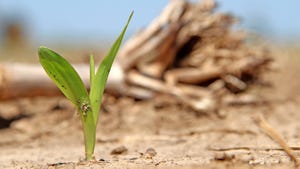
In young, late-planted soybeans, farmers and county Extension agents are finding yellow stripes — another insect pest — fall armyworms and bollworms.

“Many late-planted fields are getting hit and damaged across the Delta and even into the Arkansas River Valley,” Lorenz said.

Bollworms have many names, depending on the crop they’re eating. In corn, they’re known as corn earworms; in cotton, they’re called cotton bollworms; in soybeans, they’re known as soybean podworms; and in tomatoes, they’re called tomato fruitworms.

“It’s all the same critter, and because it jumps from crop to crop, it’s the No. 1 pest of Arkansas row crops,” the entomologist said.

Lorenz said moths mate and lay eggs on all parts of a plant. The eggs hatch in three days, and the larvae began feeding.

He recommended that farmers scout fields closely and treat with insecticides when worms reach treatment levels recommended by the University of Arkansas. The level for Bollgard cotton is two or three bollworms per 14 row-feet, and in soybeans, when the level is nine per 25 sweeps with a net.

e-mail: ljames@uaex.edu


Commenting terms of use blog comments powered by Disqus

Get Copyright ClearanceWant to use this article? Click here for options!
© 2008 Penton Media, Inc.


Latest Jobs

resources

events icon events

product info icon tradeshows

tradeshow icon digests

research icon photos

Continuing Education

Accredited in Florida, Georgia, New Mexico, Oklahoma, Texas, South Carolina and Tennessee:


(New Course)
Weed Resistance Management in Cotton

This course covers a wide range of options to effectively control weeds in cotton and reduce the risk of weed resistance management. It is accredited for hours/units for licensed/accredited applicators in 7 U.S. Cotton Belt states (Florida, Georgia, New Mexico, Oklahoma, Texas, South Carolina an d Tennessee. CCA credit is pending).

For National Certified Crop Advisers

A free American Society of Agronomy-accredited one-CEU course on spray drift management.

Back to Top

Continuing Education

Accredited in Florida, Georgia, New Mexico, Oklahoma, Texas, South Carolina and Tennessee:


(New Course)
Weed Resistance Management in Cotton

This course covers a wide range of options to effectively control weeds in cotton and reduce the risk of weed resistance management. It is accredited for hours/units for licensed/accredited applicators in 7 U.S. Cotton Belt states (Florida, Georgia, New Mexico, Oklahoma, Texas, South Carolina an d Tennessee. CCA credit is pending).

For National Certified Crop Advisers

A free American Society of Agronomy-accredited one-CEU course on spray drift management.

Browse Print Issues

Additional Resources

subscribe to Farm Press Daily Southeast Farm Press Southwest Farm Press Western Farm Press