Energy efficiency, fiber quality among targets of ginning research

"Our studies indicate that some gins use almost twice as much energy per bale as others, and there are things those gins can do to reduce their energy use and costs," says Rick Byler, research leader at the USDA-ARS Cotton Ginning Laboratory at Stoneville, Miss.

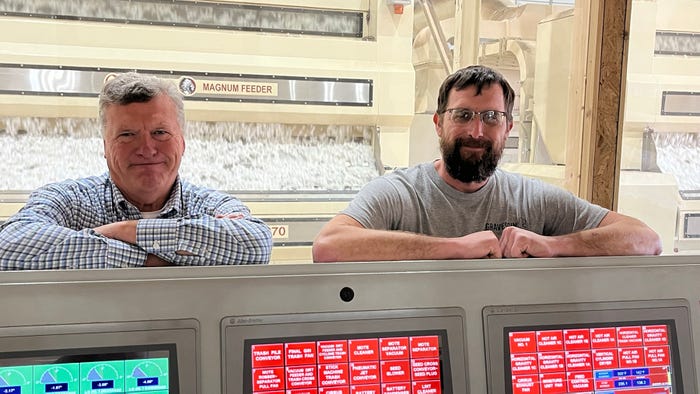
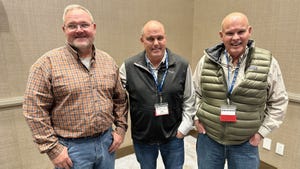
BUDDY COCHRAN, from left, Avon Gin, Avon, Miss.; Harris Swayze, and his father, John Swayze, Midway Gin of Yazoo City, Benton, Miss., were among those attending the joint annual meeting of the Southern Cotton Ginners Association and the Delta Council Ginning and Cotton Quality Committee.

Lower rates work best

While many gins have been increasing capacity in recent years, some haven’t expanded their seed cotton cleaning equipment, Byler says.

“In many cases, they are putting through considerably more seed cotton per foot of width than in previous years, and it’s often greater than the amount recommended by the manufacturer. Gins commonly operate at 3 to 4 bales per hour per foot of width. We’ve tested rates up to 6 bales per hour per foot of width — far higher than any gins presently operate.

“We found that more non-­lint was removed by the first stage cylinder cleaner and stick machine at the lower rates. When you load these machines up, as many gins are doing, you aren’t getting the trash out as efficiently. While most gins don’t have a problem with trash, the increased efficiency at the lower rates may merit consideration.

“We were concerned that we’d be pushing good lint down through the cleaners and would lose lint, but fiber loss was only affected by processing rate for one of six cultivars tested — significantly more fiber was lost at all rates for that particular cultivar. There was no effect on leaf grade after one lint cleaner, with the extractor feeder and lint cleaner operated at the low rate, and no effect on fiber quality.”

Cotton classing fee will remain unchanged at $2.20

Other research is on ways to improve lint quality, moisture content, bale packaging, and automated gin controls.

“One areas we’re studying is reclaiming lint from material rejected by the seed cotton cleaners,” Byler says. “We found there was about 19 pounds of cleaned-up material per bale from the trash. It wasn’t as good as the regular lint, but it was pretty good. Of that, 7 pounds was loose lint, 7 pounds was motes, and 2 pounds was seed cotton (mostly seed).

“About 10 pounds of this material was retained after the gin stand lint cleaner, and could be added back to the bale and sold. There was no scientifically significant difference in HVI APHIS or spinning data whether or not this material was added back to the bale.

“However, mills have made a fuss about it, and there are some who really don’t want gins to do this. They say if they find out it’s being done, they won’t buy the bales. They don’t object to using the material for the manufacture of certain products, but they want to buy it separately and add it themselves.

“We’re going to continue to work on this to see where this material is coming from. We haven’t analyzed enough data, but doesn’t appear that it’s because too much seed cotton is being pushed through the lint cleaners; rather, it may be related to variety.”

Bale moisture content continues to be an issue for ginners, Byler says.

“Some gins are adding moisture to lint after it has been ginned. If you add moisture after ginning by any method, you need to manage the process at all times, especially during slow ginning.

“Bales have been ruined by adding moisture. When you slow the ginning process, you should also slow down, reduce, or turn off moisture restoration.”

Studies are continuing, Byler says, to collect data on moisture measurement systems.

Excessive short fiber continues to be a complaint by mill buyers, he notes.

“They’re very complimentary of most other aspects of U.S. cotton. Short fiber content is related to cotton variety — some varieties will just naturally be lower than others — but it also is affected by the ginning process.

“If you over-dry and gin at low moisture, you’ll have lower uniformity and more broken/short fibers. This problem can be addressed by the gin. We’ve been talking about this for years, and our advice still is: Gin at as high moisture level as you can and keep drying to a minimum.”


Discuss this Article 1

Somaiah Sirigiri (not verified)
on Aug 23, 2012

Energy consumption is one of the major cost in ginning process.
Kindly let me know standard power consumption for the LUMMS plant
96'' Unloading separator
144'' Incline cleaner and trash master
158 saws gin stands - 2 nos
Bale press
without dryer and humidifiers

Post new comment
Sign In or register to use your Delta Farm Press ID

(optional)

Continuing Education
Potassium nitrate has a positive effect in controlling plant pests and diseases when applied...
This online CE course details sound mechanical irrigation design and management practices to...

Newsletter Signup