Energy efficiency, fiber quality among targets of ginning research

What is in this article?:

"Our studies indicate that some gins use almost twice as much energy per bale as others, and there are things those gins can do to reduce their energy use and costs," says Rick Byler, research leader at the USDA-ARS Cotton Ginning Laboratory at Stoneville, Miss.

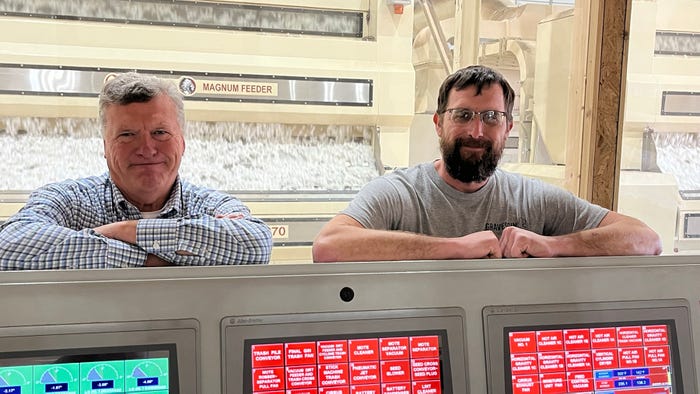
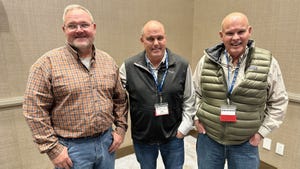
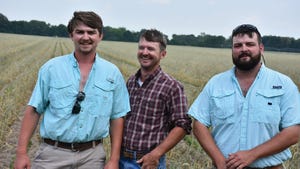
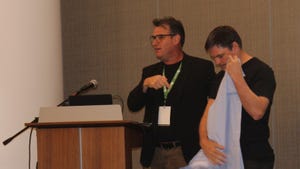
BUDDY COCHRAN, from left, Avon Gin, Avon, Miss.; Harris Swayze, and his father, John Swayze, Midway Gin of Yazoo City, Benton, Miss., were among those attending the joint annual meeting of the Southern Cotton Ginners Association and the Delta Council Ginning and Cotton Quality Committee.

Be proactive against contamination

“Be careful to remove all the plastic cover material to prevent it from going through the ginning process and contaminating the bale.”

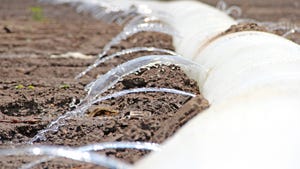
U.S. cotton has a reputation with mills for having low contamination levels, Byler says, “But gins must continue to be vigilant to keep contamination at a minimum. Some of the major contaminants that get through lint cleaners and into cotton bales are plastic mulch, irrigation tubing, grocery bags, and flagging tape.”

Among research projects under way at the Stoneville, Laboratory, he says, are a number of studies examining non-lint content sources at the gin.

“Cliff Boykin, an agricultural engineer, is studying seed coat fragments, which are a problem for mills. They come from a number of different places in the gin and on the farm.

“He is also looking at the effect variety cultivars — genetic properties of cotton — have on ginning. Every ginner has long known that some cotton varieties gin easier than others, but we’ve never tried to pinpoint what makes that difference. The harder it is to pull fiber off the seed at the gin stand, the more energy it takes for ginning.

“Can a geneticist enhance cotton varieties with properties that will make ginning easier? Research indicates it can be done, and genetics/DNA studies are under way with ARS collaborators Efrem Bechere and David Fang.”

While dust from gins hasn’t been a significant problem in the Delta, Byler says, “The EPA has rules about dust, and in some areas of the country it is a big problem. But, we haven’t had much good, solid data on what constitutes a dust problem. If we want to change the EPA rules, we have to prove that our data are scientifically sound.

“We’ve been collecting data from all over the cotton belt, spanning several years, and now have a huge amount of data that are being analyzed and papers being written. We would hope to have some definitive conclusions within the next year or so.”

Discuss this Article 1

Somaiah Sirigiri (not verified)
on Aug 23, 2012

Energy consumption is one of the major cost in ginning process.
Kindly let me know standard power consumption for the LUMMS plant
96'' Unloading separator
144'' Incline cleaner and trash master
158 saws gin stands - 2 nos
Bale press
without dryer and humidifiers

Post new comment
Sign In or register to use your Delta Farm Press ID
(optional)

Continuing Education
Potassium nitrate has a positive effect in controlling plant pests and diseases when applied...

This online CE course details sound mechanical irrigation design and management practices to...

Newsletter Signup